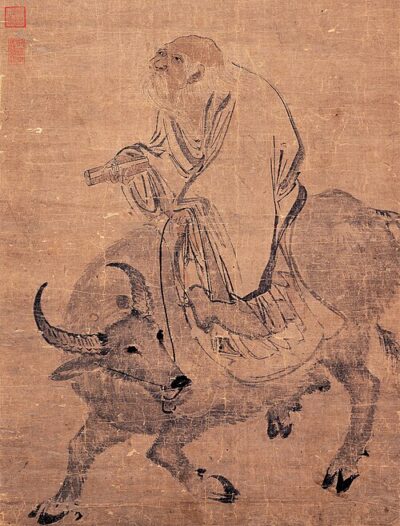
Tao Te Ching
Tao Te Ching is a Chinese classic text. It was written by Laozi.
- Written by
- Laozi
- Genre
- religious text
- Country of origin
- Eastern Zhou
All 8 facts, and where they come from
Facts
8 facts · 0 confirmed by two sources · 0 cited · 8 from one source
Where this comes from
Papalocal keeps its own record. It started from these sources; what each one said is kept here as it was copied, so a change on their side never changes this page by itself. Tap one to read its version.
What Wikidata says · copied November 17, 2026 · revision 2539965548
- Described as
- Chinese classic text
- Other names
- Laozi, Lao-tzu, Classic of the Way and Its Power, The Way and Its Power, Classic of the Way and Virtue, Classic of the Way and Natural Virtue, Classic of the Way of Power, The Way to Goodness and Power, The Book of the Way, The Way of Integrity, The Way of Life, The Way and Its Virtues
- What it is
- literary work; Chinese classics; religious text
- Written by
- Laozi
- Genre
- religious text; Taoist literature
- Language
- Classical Chinese
- Country of origin
- Eastern Zhou
- Wikipedias with a page
- 95
Wikidata item Q134425 (wikidata.org/wiki/Q134425), public domain (CC0). Copied 2026-11-17.
What Wikipedia says · copied November 17, 2026 · revision 1386183271
The Tao Te Ching or Dào Dé Jīng, (traditional Chinese: 道德經; simplified Chinese: 道德经; lit. 'Classic of the Way and its Virtue') also known simply as the Laozi, is an ancient Chinese classic text traditionally attributed to the sage Laozi. It is regarded as the foundational Taoist text alongside the Zhuangzi. Central to both philosophical and religious Taoism, it has been "profoundly influential" more broadly in Chinese culture, art and medicine.
The texts' authorship and dating is debated, with several similar early versions recovered. Traceable as far back as the early to mid fourth century BCE, Alan Chan of the Stanford Encyclopedia argues that archaeology indicates that "bodies of sayings" attributed to Laozi were put into writing probably from "the second half of the fifth century B.C.E.", with different overlapping collections gradually consolidated during the fourth century BCE. Questionable as a single unified text, it's oldest excavated manuscript fragments, the Guodian Chu slips, date to the latter half of the Warring States period (475 – 221 BCE), around 300 BCE, but are taken as dating to the fourth century BCE (400-300 BCE). A conservative estimation would date modern versions of the text to the mid third century BCE, or late warring States period.
Terminology originating within the text has been reinterpreted and elaborated upon by Legalist thinkers, Confucianists, and particularly through Chinese Buddhism, which arrived well after the formation and wide spread societal use of this text within Chinese culture. First translated into French in the early nineteenth century, it is one of the most translated texts in world literature, next to the Bible.
From the Wikipedia article “Tao Te Ching” (en.wikipedia.org/wiki/Tao_Te_Ching), by its contributors, under CC BY-SA 4.0 (creativecommons.org/licenses/by-sa/4.0/). Copied 2026-11-17; not changed.
Confirmed Two sources agree. Cited One source, and it names where it got it. One source One source, without a reference of its own. Sources disagree The sources disagree. We show the best-supported value and keep theirs below.
Picture: Wikimedia Commons: Mawangdui LaoTsu Ms2.JPG · See Commons file page