
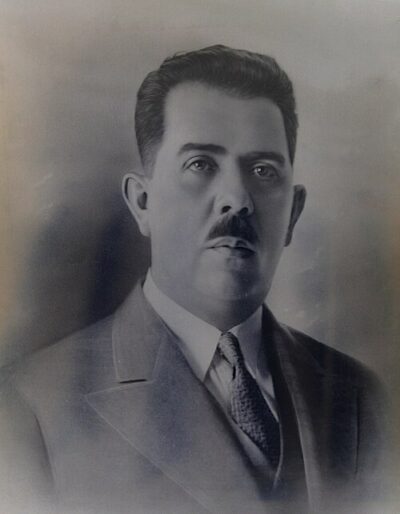
Lázaro Cárdenas
Lázaro Cárdenas was the 51st President of Mexico. Born May 21, 1895, in Jiquilpan de Juárez. Died October 19, 1970, in Mexico City. Positions held include President of Mexico (1934–1940), Governor of Michoacán (1928–1932) and Secretary of National Defense (1942–1945). Awards include Lenin Peace Prize, Order of the Aztec Eagle and Order of Playa Girón.
Facts
24 facts · 2 confirmed by two sources · 5 cited · 16 from one source · 1 where the sources disagree
What’s different
- Cause of death: we show cancer (Sources disagree). Wikidata also lists diabetes
Where this comes from
Papalocal keeps its own record. It started from these sources; what each one said is kept here as it was copied, so a change on their side never changes this page by itself. Tap one to read its version.
What Wikidata says · copied November 16, 2026 · revision 2565847510
- Described as
- 51st President of Mexico
- Other names
- Lázaro Cárdenas del Río
- Born
- May 21, 1895 · 2 references
- Died
- October 19, 1970 · 2 references
- Born in
- Jiquilpan de Juárez · 1 reference
- Died in
- Mexico City · 1 reference
- Cause of death
- cancer; diabetes
- Citizen of
- Mexico
- Occupation
- politician · 1 reference; military personnel
- Positions held
- President of Mexico (1934–1940); Governor of Michoacán (1928–1932); Secretary of National Defense (1942–1945) · 1 reference
- Political party
- Institutional Revolutionary Party
- Member of
- Order of Isabella the Catholic
- Awards
- Lenin Peace Prize; Order of the Aztec Eagle; Order of Playa Girón; National Order of Merit Carlos Manuel de Céspedes; Grand Cross of the Order of Isabella the Catholic (1995) · 1 reference
- Spouse
- Amalia Solórzano
- Children
- Cuauhtémoc Cárdenas Solórzano · 1 reference
- Siblings
- Dámaso Cárdenas del Río · 1 reference
- Military branch
- Constitutional Army · 1 reference
- Military rank
- Insano; general · 1 reference
- Wikipedias with a page
- 58
Wikidata item Q296718 (wikidata.org/wiki/Q296718), public domain (CC0). Copied November 16, 2026.
What Wikipedia says · copied November 16, 2026 · revision 1384465322
Lázaro Cárdenas del Río (Spanish: [ˈlasaɾo ˈkaɾðenas] ; 21 May 1895 – 19 October 1970) was a Mexican general, statesman, and revolutionary who served as the 51st president of Mexico from 1934 to 1940. Previously, he served as a general in the Constitutional Army during the Mexican Revolution and as Governor of Michoacán and President of the Institutional Revolutionary Party. He later served as the Secretary of National Defence. During his presidency, which is considered the end of the Maximato, he implemented massive land reform programs, led the nationalization of the country's oil industry, and implemented a welfare state.
Born in Jiquilpan, Michoacán, to a working-class family, Cárdenas joined the Mexican Revolution and became a general in the Constitutionalist Army. Although he was not from the state of Sonora, whose revolutionary generals dominated Mexican politics in the 1920s, Cárdenas was hand-picked by Plutarco Elías Calles, Sonoran general and former president of Mexico, as a presidential candidate and won in the 1934 general election.
After founding the National Revolutionary Party (PNR) in the wake of the assassination of president-elect Álvaro Obregón, Plutarco Elías Calles had unofficially remained in power during the Maximato (1928–1934) and expected to maintain that role when Cárdenas took office. Cárdenas, however, out-maneuvered him politically and forced Calles into exile. He established the structure of the National Revolutionary Party, eventually renamed the Party of the Mexican Revolution (PRM), on the sectoral representation of peasant leagues, labor union confederations, and the Mexican Army. Cárdenas's incorporation of the army into the party structure was a deliberate move to diminish the power of the military and prevent their intervention in politics through coups d'état.
A left-wing economic nationalist, Cárdenas led the expropriation of the Mexican oil industry and the creation of the state-owned oil company Pemex in 1938. He implemented large-scale land reform programs in Mexico, redistributing large estates to smallholders in lands termed ejidos. He created the National Polytechnic Institute (IPN) and El Colegio de México (Colmex). His foreign policy supported and gave asylum to Republicans during the Spanish Civil War. An achievement of Cárdenas was his complete surrender of power in December 1940 to his successor, Manuel Ávila Camacho, who was a political moderate without a distinguished military record.
Cárdenas has been praised as "the greatest constructive radical of the Mexican Revolution", for implementing its ideals, but has also been criticized as an "authoritarian populist". He was the first post-revolutionary Mexican president to serve for a sexenio, a practice that continues today. According to numerous opinion polls and analysts, Cárdenas is the most popular Mexican president of the 20th century.
- Born, in its opening lines
- May 21, 1895
- Died, in its opening lines
- October 19, 1970
From the Wikipedia article “Lázaro Cárdenas” (en.wikipedia.org/wiki/Lázaro_Cárdenas), by its contributors, under CC BY-SA 4.0 (creativecommons.org/licenses/by-sa/4.0/). Copied November 16, 2026; not changed.
Confirmed Two sources agree. Cited One source, and it names where it got it. One source One source, without a reference of its own. Sources disagree The sources disagree. We show the best-supported value and keep theirs below.
