
Institutional Revolutionary Party
The Institutional Revolutionary Party is a Mexican political party. It was founded in 1929 by Plutarco Elías Calles. Its headquarters are in Mexico City. It stands for constitutionalism, civic nationalism and liberalism.
- Country
- Mexico
- Founded
- March 4, 1929
- Ideology
- constitutionalism
- Chair
- Alejandro Moreno Cárdenas
All 11 facts, and where they come from
Facts
11 facts · 0 confirmed by two sources · 1 cited · 10 from one source
Where this comes from
Papalocal keeps its own record. It started from these sources; what each one said is kept here as it was copied, so a change on their side never changes this page by itself. Tap one to read its version.
What Wikidata says · copied November 16, 2026 · revision 2565847215
- Described as
- Mexican political party
- Other names
- Partido Constitucionalista, National Revolutionary Party, Party of the Mexican Revolution, PRI, P.R.I.
- What it is
- political party
- Founded
- March 4, 1929
- Founded by
- Plutarco Elías Calles
- Headquarters
- Mexico City
- Country
- Mexico
- Chair
- Alejandro Moreno Cárdenas
- Ideology
- constitutionalism; civic nationalism; liberalism (1983–) · 1 reference; corporatism (1938–1994)
- Official website
- http://pri.org.mx
- Wikipedias with a page
- 41
Wikidata item Q682969 (wikidata.org/wiki/Q682969), public domain (CC0). Copied 2026-11-16.
What Wikipedia says · copied November 16, 2026 · revision 1385624370
The Institutional Revolutionary Party (Spanish: Partido Revolucionario Institucional, pronounced [paɾˈtiðo reβolusjoˈnaɾjo jnstitusjoˈnal], PRI) is a political party in Mexico that was founded in 1929 as the National Revolutionary Party (Partido Nacional Revolucionario, PNR). It became the Party of the Mexican Revolution (Partido de la Revolución Mexicana, PRM) in 1938 and the PRI in 1946. The party held uninterrupted power in the country for 71 years, from 1929 to 2000.
The PNR was founded in 1929 by Plutarco Elías Calles, Mexico's paramount leader and self-proclaimed Jefe Máximo (Supreme Chief) of the Mexican Revolution. The party was created with the intent of providing a political space in which all the surviving leaders and combatants of the Mexican Revolution could participate to solve the severe political crisis caused by the assassination of president-elect Álvaro Obregón in 1928. Although Calles himself fell into political disgrace and was exiled in 1936, the party continued ruling Mexico until 2000, changing names twice until it became the PRI.
The PRI governed Mexico as a de-facto one-party state for the majority of the twentieth century. Not only were all presidents of Mexico members of the PRI, all members of the Senate belonged to the PRI until 1976, and all state governors were also from the party until 1989. Throughout the seven decades that the PRI governed Mexico, the party used corporatism, co-option, electoral fraud, and political repression to maintain political power. While Mexico benefited from an economic boom which improved the quality of life of most people and created political stability during the early decades of the party's rule, issues such as inequality, corruption, and a lack of political freedoms gave rise to growing opposition against the PRI. Amid the global climate of social unrest in 1968, dissidents, primarily students, protested during the Olympic Games held in Mexico City. Tensions escalated, culminating in the Tlatelolco massacre, in which the Mexican Army killed hundreds of unarmed demonstrators in Mexico City. Subsequently, a series of economic crises beginning in the 1970s affected the living standards of much of the population.
Throughout its nine-decade existence, the party has represented a very wide array of ideologies, typically following from the policies of the country's president. Starting as a social democratic party during the Maximato, it moved leftward in the 1930s during the presidency of Lázaro Cárdenas, and gradually shifted to the right starting from 1940 after Cárdenas left office and Manuel Ávila Camacho became president. PRI administrations controversially adopted neoliberal economic policies during the 1980s and 1990s, as well as during Enrique Peña Nieto's presidency (2012–2018). In 2024, the party formally renounced neoliberalism and rebranded itself as a "center-left" party.
In 1990, Peruvian writer Mario Vargas Llosa famously described Mexico under the PRI as being "the perfect dictatorship", stating: "I don't believe that there has been in Latin America any case of a system of dictatorship which has so efficiently recruited the intellectual milieu, bribing it with great subtlety. The perfect dictatorship is not communism, nor the USSR, nor Fidel Castro; the perfect dictatorship is Mexico. Because it is a camouflaged dictatorship." The phrase became popular in Mexico and around the world until the PRI fell from power in 2000.
Despite losing the presidency in the 2000 elections, and 2006 presidential candidate Roberto Madrazo finishing in third place without carrying a single state, the PRI continued to control most state governments through the 2000s and performed strongly at local levels. As a result, the PRI won the 2009 legislative election, and in 2012 its candidate Enrique Peña Nieto regained the presidency. However, dissatisfaction with the Peña Nieto administration led to the PRI's defeat in the 2018 and 2024 presidential elections with the worst performances in the party's history.
From the Wikipedia article “Institutional Revolutionary Party” (en.wikipedia.org/wiki/Institutional_Revolutionary_Party), by its contributors, under CC BY-SA 4.0 (creativecommons.org/licenses/by-sa/4.0/). Copied 2026-11-16; not changed.
Confirmed Two sources agree. Cited One source, and it names where it got it. One source One source, without a reference of its own. Sources disagree The sources disagree. We show the best-supported value and keep theirs below.
People connected 9
Party members
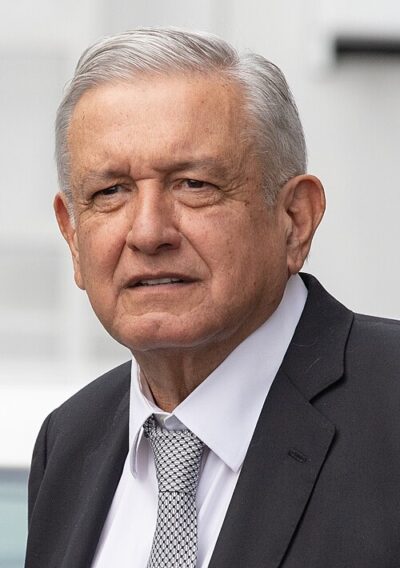 Andrés Manuel López Obrador (1970–1989)Mexican politician. President of Mexico from 2018 to 2024
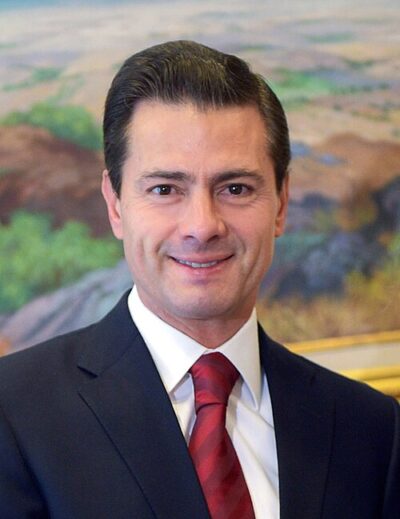 Enrique Peña Nieto64th President of Mexico
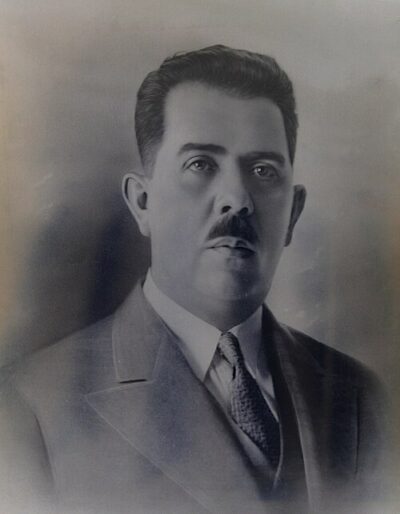 Lázaro Cárdenas51st President of Mexico
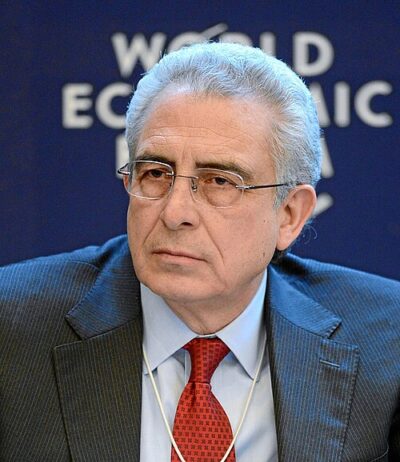 Ernesto Zedillo61st President of Mexico
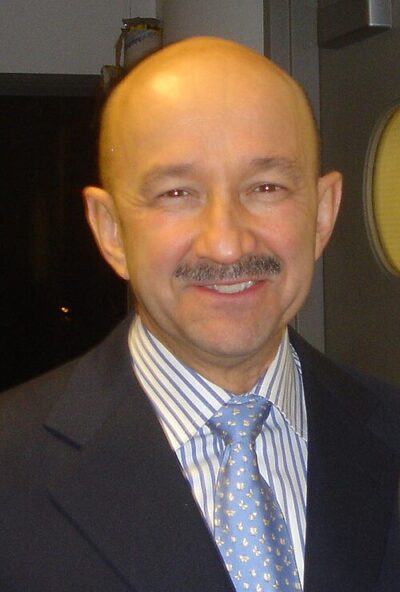 Carlos Salinas de Gortari60th President of Mexico
- JJosé López Portillo58th President of Mexico
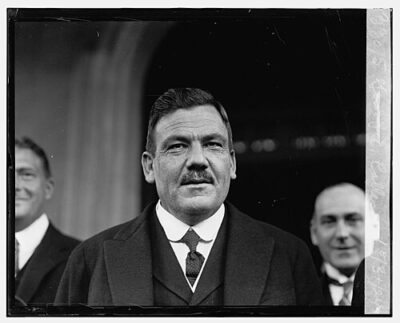 Plutarco Elías Calles47th President of Mexico
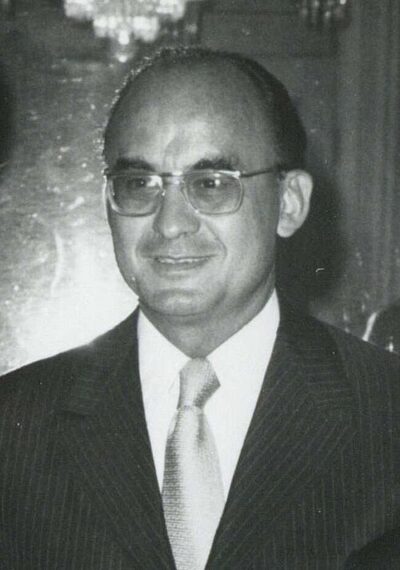 Luis Echeverría (1946–2022)57th President of Mexico
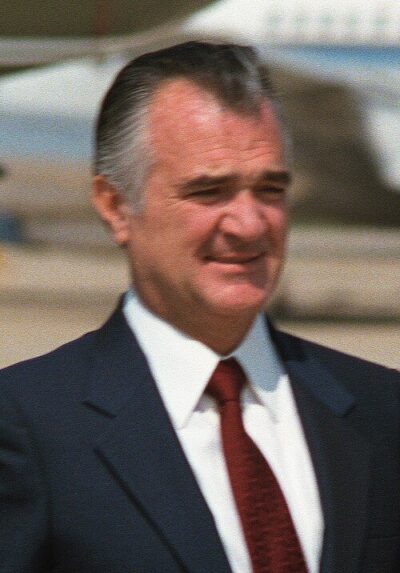 Miguel de la Madrid59th President of Mexico
