
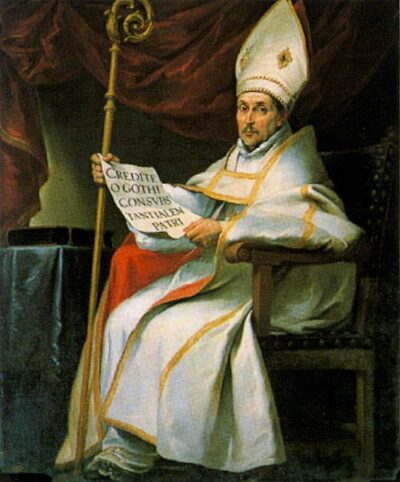
Leander of Seville
Leander of Seville was a bishop of Seville. Born 534, in Cartagena. Died March 13, 600, in Seville. Positions held include Roman Catholic Archbishop of Seville (579–600) and bishop. Known for Rule of St. Leander and Homilia de triumpho ecclesiae ob conversionem Gothorum.
Facts
15 facts · 0 confirmed by two sources · 7 cited · 8 from one source
Where this comes from
Papalocal keeps its own record. It started from these sources; what each one said is kept here as it was copied, so a change on their side never changes this page by itself. Tap one to read its version.
What Wikidata says · copied November 17, 2026 · revision 2567613478
- Described as
- bishop of Seville
- Other names
- Saint Leander
- Born
- 534 · 3 references
- Died
- March 13, 600
- Born in
- Cartagena · 1 reference
- Died in
- Seville · 1 reference
- Citizen of
- Kingdom of Toledo
- Occupation
- Catholic priest; writer · 1 reference
- Positions held
- Roman Catholic Archbishop of Seville (579–600); bishop · 1 reference
- Known for
- Rule of St. Leander; Homilia de triumpho ecclesiae ob conversionem Gothorum
- Siblings
- Florentina; Isidore of Seville · 1 reference; Fulgentius of Cartagena
- Religion
- Catholic Church · 1 reference
- Wikipedias with a page
- 27
Wikidata item Q577125 (wikidata.org/wiki/Q577125), public domain (CC0). Copied November 17, 2026.
What Wikipedia says · copied November 17, 2026 · revision 1385557820
Leander of Seville (Spanish: Leandro de Sevilla; Latin: Leandrus; c. 534 AD – 13 March 600 or 601) was a Hispano-Roman Catholic prelate who served as Bishop of Seville. He was instrumental in effecting the conversion of the Visigothic kings Hermenegild and Reccared to Catholicism. His brother (and successor as bishop) was the encyclopedist Isidore of Seville.
From the Wikipedia article “Leander of Seville” (en.wikipedia.org/wiki/Leander_of_Seville), by its contributors, under CC BY-SA 4.0 (creativecommons.org/licenses/by-sa/4.0/). Copied November 17, 2026; not changed.
Confirmed Two sources agree. Cited One source, and it names where it got it. One source One source, without a reference of its own. Sources disagree The sources disagree. We show the best-supported value and keep theirs below.
