
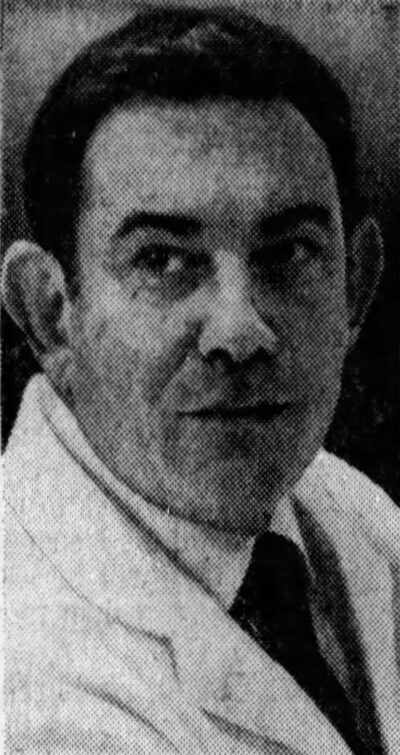
Leonard Hayflick
Leonard Hayflick was an American anatomist. Born May 20, 1928, in Philadelphia. Died August 1, 2024, in Sea Ranch. Educated at University of Pennsylvania. Awards include Lord Cohen Medal, John Scott Award and Irving S. Wright Award of Distinction.
Facts
23 facts · 2 confirmed by two sources · 10 cited · 11 from one source
Where this comes from
Papalocal keeps its own record. It started from these sources; what each one said is kept here as it was copied, so a change on their side never changes this page by itself. Tap one to read its version.
What Wikidata says · copied November 18, 2026 · revision 2558116675
- Described as
- American anatomist (1928–2024)
- Born
- May 20, 1928 · 2 references
- Died
- August 1, 2024 · 2 references
- Born in
- Philadelphia · 2 references
- Died in
- Sea Ranch · 2 references
- Citizen of
- United States
- Occupation
- university teacher; anatomist; physician · 1 reference; microbiologist · 1 reference; gerontologist · 1 reference
- Worked for
- University of California, San Francisco (1988–); Wistar Institute (–1968); Stanford University (1968–1976); University of Florida · 1 reference
- Education
- University of Pennsylvania (–1956)
- Awards
- Lord Cohen Medal · 1 reference; John Scott Award (2014) · 2 references; Irving S. Wright Award of Distinction (1984) · 1 reference
- Field
- gerontology; cell biology; medicine · 1 reference; anatomy · 1 reference; microbiology · 1 reference
- Wikipedias with a page
- 17
Wikidata item Q1819009 (wikidata.org/wiki/Q1819009), public domain (CC0). Copied November 18, 2026.
What Wikipedia says · copied November 18, 2026 · revision 1372379443
Leonard Hayflick (May 20, 1928 – August 1, 2024) was an American anatomist who was Professor of Anatomy at the UCSF School of Medicine, and was Professor of Medical Microbiology at Stanford University School of Medicine. He was also past president of the Gerontological Society of America and was a founding member of the council of the National Institute on Aging (NIA). The recipient of a number of research prizes and awards, including the 1991 Sandoz Prize for Gerontological Research, he studied the ageing process for more than fifty years. He is known for discovering that normal human cells divide for a limited number of times in vitro (refuting the contention by Alexis Carrel that normal body cells are immortal). This is known as the Hayflick limit. His discoveries overturned a 60-year old dogma that all cultured cells are immortal. Hayflick demonstrated that normal cells have a memory and can remember what doubling level they have reached. He demonstrated that his normal human cell strains were free from contaminating viruses. His cell strain WI-38 soon replaced primary monkey kidney cells and became the substrate for the production of most of the world's human virus vaccines. Hayflick discovered that the etiological agent of primary atypical pneumonia (also called "walking pneumonia") was not a virus as previously believed. He was the first to cultivate the causative organism called a mycoplasma, the smallest free-living organism, which Hayflick isolated on a unique culture medium that bears his name. He named the organism Mycoplasma pneumoniae.
In 1959, Hayflick developed the first inverted microscope for use in cell culture research. To this day, all inverted microscopes used in cell culture laboratories worldwide are descended from this prototype. His microscope was accessioned by the Smithsonian Institution in 2009.
Hayflick developed the first practical method for producing powdered cell culture media in 1965. This method is now used worldwide for the production of many tons of powdered media annually for use in research laboratories and commercial production facilities. The technique is not patented and Hayflick received no remuneration from this invention.
Hayflick was the author of the book, How and Why We Age, published in August 1994 by Ballantine Books, New York City and available since 1996 as a paperback. This book has been translated into nine languages and is published in Brazil, the Czech Republic, Germany, Hungary, Israel, Japan, Poland, Russia, and Spain. It was a selection of the Book of the Month Club and has sold over 50,000 copies worldwide.
Hayflick and his associates have vehemently condemned "anti-aging medicine" and criticized organizations such as the American Academy of Anti-Aging Medicine. Hayflick has written numerous articles criticizing both the feasibility and desirability of human life extension, which have provoked responses critical of his views.
- Born, in its opening lines
- May 20, 1928
- Died, in its opening lines
- August 1, 2024
From the Wikipedia article “Leonard Hayflick” (en.wikipedia.org/wiki/Leonard_Hayflick), by its contributors, under CC BY-SA 4.0 (creativecommons.org/licenses/by-sa/4.0/). Copied November 18, 2026; not changed.
Confirmed Two sources agree. Cited One source, and it names where it got it. One source One source, without a reference of its own. Sources disagree The sources disagree. We show the best-supported value and keep theirs below.
