
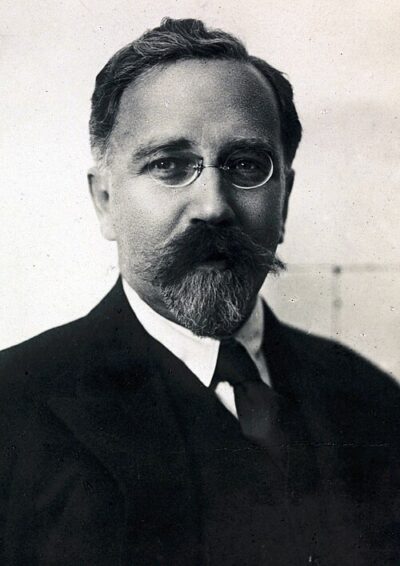
Lev Kamenev
Lev Kamenev was a Russian revolutionary and Soviet politician. Born July 6, 1883, in Moscow. Died August 25, 1936, in Lubyanka Building. Positions held include Member of the Russian Constituent Assembly, Member of the Politburo of the CPSU Central Committee (2 times) (1917–1925) and Deputy Chairman of the Council of People's Commissars (1923–1926). Educated at Lomonosov Moscow State University.
Facts
25 facts · 1 confirmed by two sources · 4 cited · 19 from one source · 1 where the sources disagree
What’s different
- Born: we show July 6, 1883 (Sources disagree). Wikipedia says July 18, 1883
Where this comes from
Papalocal keeps its own record. It started from these sources; what each one said is kept here as it was copied, so a change on their side never changes this page by itself. Tap one to read its version.
What Wikidata says · copied November 16, 2026 · revision 2563731304
- Described as
- Russian revolutionary and Soviet politician (1883–1936)
- Other names
- Lev Borisovich Kamenev, Leon Kamenev
- Born
- July 6, 1883 · 1 reference
- Died
- August 25, 1936 · 5 references
- Born in
- Moscow · 1 reference
- Died in
- Lubyanka Building
- Cause of death
- gunshot wound · 1 reference
- Name at birth
- Лев Розенфельд
- Citizen of
- Russian Empire; Soviet Union
- Occupation
- writer; politician · 2 references; revolutionary · 1 reference
- Positions held
- Member of the Russian Constituent Assembly; Member of the Politburo of the CPSU Central Committee (2 times) (1917–1925); Deputy Chairman of the Council of People's Commissars (1923–1926); president of the Council of Labour and Defence of the USSR (1924–1926); Candidate member of the Politburo of the CPSU Central Committee (1926)
- Political party
- Communist Party of the Soviet Union; Bolsheviks; Russian Social Democratic Labour Party (bolshevik)
- Worked for
- Pushkin House; Academia
- Education
- Lomonosov Moscow State University
- Field
- political activity · 1 reference
- Spouse
- Olga Kameneva
- Children
- Aleksandr Kamenev
- Wikipedias with a page
- 67
Wikidata item Q165854 (wikidata.org/wiki/Q165854), public domain (CC0). Copied November 16, 2026.
What Wikipedia says · copied November 16, 2026 · revision 1385184161
Lev Borisovich Kamenev (né Rozenfeld; 18 July [O.S. 6 July] 1883 – 25 August 1936) was a Russian revolutionary and Soviet politician. A prominent Old Bolshevik, Kamenev was a leading figure in the early Soviet government and served as a deputy premier of the Soviet Union from 1923 to 1926.
Born in Moscow to a family active in revolutionary politics, Lev Kamenev joined the Russian Social Democratic Labour Party in 1901 and sided with Vladimir Lenin's Bolshevik faction after the party's 1903 split. He was arrested several times and participated in the failed Revolution of 1905, after which he moved abroad and became one of Lenin's close associates. In 1914, Kamenev was arrested upon returning to Saint Petersburg and exiled to Siberia. He returned after the February Revolution of 1917, which overthrew the monarchy, and joined Grigory Zinoviev in opposing Lenin's "April Theses" and an armed seizure of power within the former Russian Empire. Nevertheless, when Lenin came to power in Russia following the success of the October Revolution, Kamenev briefly served as chairman of the All-Russian Congress of Soviets along with a number of senior posts, including chairman of the Moscow Soviet and Deputy Chairman of the Council of People's Commissars. In 1919, he was elected as a full member of the first Central Committee Politburo, the supreme decision-making body of the emerging Communist Party of the Soviet Union.
When Vladimir Lenin suffered a stroke in May 1922, Lev Kamenev formed a triumvirate alongside Zinoviev and the ruling party's General Secretary, Joseph Stalin, that led Soviet Russia until Lenin returned to work later in the year. After Lenin sustained a second stroke in December 1922, Kamenev became the country's acting Premier and chairman of the Politburo for the rest of the Soviet leader's lifetime. Just as a third stroke in March 1923 definitively ruled out any prospect of Lenin returning to government, the aforementioned triumvirate proceeded to consolidate power within the regime by marginalizing Leon Trotsky and his allies.
After being decisively eclipsed by Stalin within the Soviet leadership by 1925, Kamenev was stripped of his offices in 1926 before being expelled from the party altogether in 1927. While readmitted to the party's membership, he never again occupied a position of power in the Soviet Union. In 1934, Kamenev was arrested in response to allegations of complicity in Sergei Kirov's assassination and sentenced to ten years in prison. He was ultimately made a chief defendant in the Trial of the Sixteen (the show trial at the beginning of Stalin's Great Purge), found guilty of treason, and executed in August 1936.
- Born, in its opening lines
- July 18, 1883
- Died, in its opening lines
- August 25, 1936
From the Wikipedia article “Lev Kamenev” (en.wikipedia.org/wiki/Lev_Kamenev), by its contributors, under CC BY-SA 4.0 (creativecommons.org/licenses/by-sa/4.0/). Copied November 16, 2026; not changed.
Confirmed Two sources agree. Cited One source, and it names where it got it. One source One source, without a reference of its own. Sources disagree The sources disagree. We show the best-supported value and keep theirs below.
