
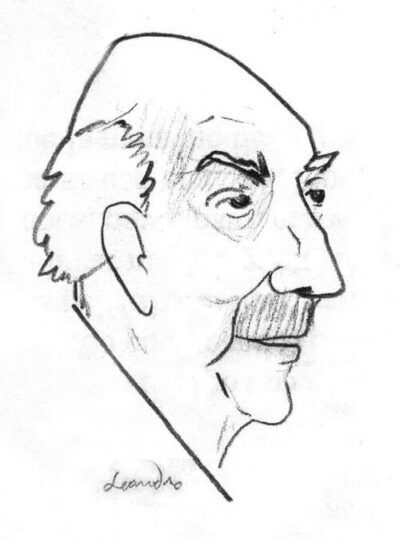
Lewis Mumford
Lewis Mumford was an American historian, sociologist, philosopher of technology and literary critic. Born October 19, 1895, in Flushing. Died January 26, 1990, in Amenia. Known for The City in History, The Myth of the Machine and Technics and Civilization. Educated at City College of New York and The New School. Awards include Guggenheim Fellowship, Knight Commander of the Order of the British Empire and Prix mondial Cino Del Duca.
Facts
39 facts · 2 confirmed by two sources · 19 cited · 18 from one source
Where this comes from
Papalocal keeps its own record. It started from these sources; what each one said is kept here as it was copied, so a change on their side never changes this page by itself. Tap one to read its version.
What Wikidata says · copied November 13, 2026 · revision 2565598642
- Described as
- American historian, sociologist, philosopher of technology and literary critic (1895-1990)
- Born
- October 19, 1895 · 12 references
- Died
- January 26, 1990 · 10 references
- Born in
- Flushing · 2 references
- Died in
- Amenia · 1 reference
- Citizen of
- United States · 2 references
- Occupation
- architect · 1 reference; historian of technology; historian · 4 references; sociologist · 1 reference; screenwriter · 2 references; literary critic · 2 references; philosopher · 2 references; journalist
- Worked for
- The Dial; The New Yorker
- Education
- City College of New York · 1 reference; The New School · 1 reference; Stuyvesant High School; New York University · 1 reference; Columbia University · 1 reference
- Member of
- American Academy of Arts and Letters; American Academy of Arts and Sciences
- Known for
- The City in History; The Myth of the Machine; Technics and Civilization
- Awards
- Guggenheim Fellowship (1932) · 1 reference; Knight Commander of the Order of the British Empire; Prix mondial Cino Del Duca (1976) · 1 reference; National Medal of Arts; Royal Gold Medal (1961); National Book Award for Nonfiction (1962) · 1 reference; Presidential Medal of Freedom (1964) · 1 reference; Emerson-Thoreau Medal (1965); Hodgkins Medal (1971) · 1 reference; Benjamin Franklin Medal (1983); Leonardo da Vinci Medal (1969)
- Religion
- atheism
- Lived in
- Amenia (1936–1990); Lewis Mumford House · 1 reference
- Wikipedias with a page
- 46
Wikidata item Q469888 (wikidata.org/wiki/Q469888), public domain (CC0). Copied November 13, 2026.
What Wikipedia says · copied November 13, 2026 · revision 1385485953
Lewis Mumford (October 19, 1895 – January 26, 1990) was an American historian, sociologist, philosopher of technology, and literary critic. Particularly noted for his study of cities and urban architecture, he had a broad career as a writer. He made significant contributions to social philosophy, American literary and cultural history, and the history of technology.
Mumford was influenced by the work of Scottish theorist Sir Patrick Geddes and worked closely with his associate the British sociologist Victor Branford. Mumford was also a contemporary and friend of Frank Lloyd Wright, Clarence Stein, Frederic Osborn, Edmund N. Bacon, and Vannevar Bush.
- Born, in its opening lines
- October 19, 1895
- Died, in its opening lines
- January 26, 1990
From the Wikipedia article “Lewis Mumford” (en.wikipedia.org/wiki/Lewis_Mumford), by its contributors, under CC BY-SA 4.0 (creativecommons.org/licenses/by-sa/4.0/). Copied November 13, 2026; not changed.
Confirmed Two sources agree. Cited One source, and it names where it got it. One source One source, without a reference of its own. Sources disagree The sources disagree. We show the best-supported value and keep theirs below.
