
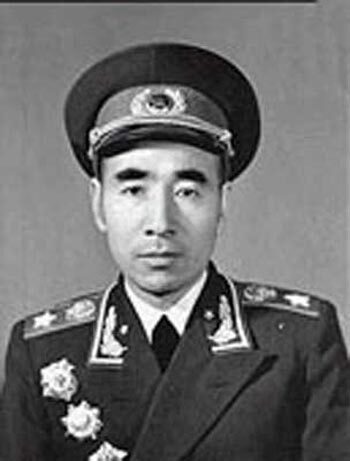
Lin Biao
Lin Biao was a Chinese Communist military commander and politician. Born December 5, 1907, in Huanggang. Died September 13, 1971, in Chinggis City. Positions held include Vice Premier of the State Council of the People's Republic of China (1954–1971), Vice Chairman of the Chinese Communist Party (1958–1971) and Minister of National Defense of the People's Republic of China (1959–1971). Educated at Whampoa Military Academy. Awards include First Class Red Star Medal and People's Liberation Army Strategist.
Facts
28 facts · 2 confirmed by two sources · 5 cited · 21 from one source
Where this comes from
Papalocal keeps its own record. It started from these sources; what each one said is kept here as it was copied, so a change on their side never changes this page by itself. Tap one to read its version.
What Wikidata says · copied November 16, 2026 · revision 2562945663
- Described as
- Chinese Communist military commander and politician
- Other names
- Lin Yurong, Lin Piao
- Born
- December 5, 1907 · 4 references
- Died
- September 13, 1971 · 6 references
- Born in
- Huanggang · 2 references
- Died in
- Chinggis City
- Buried in
- Subraga Basin
- Cause of death
- aviation accident · 1 reference
- Name at birth
- 林育蓉
- Citizen of
- Qing dynasty (–1912); Republic of China (1912–1949); People's Republic of China (1949–); Chinese Soviet Republic
- Occupation
- politician · 1 reference; military personnel
- Positions held
- Vice Premier of the State Council of the People's Republic of China (1954–1971); Vice Chairman of the Chinese Communist Party (1958–1971); Minister of National Defense of the People's Republic of China (1959–1971); member of the Politburo Standing Committee of the Chinese Communist Party (1958–1971)
- Political party
- Chinese Communist Party
- Education
- Whampoa Military Academy
- Awards
- First Class Red Star Medal (1933) · 1 reference; People's Liberation Army Strategist
- Spouse
- Ye Qun (1941–1971) · 1 reference; Zhang Mei (1937–1946)
- Children
- Lin Liguo · 1 reference; Lin Liheng; Lin Xiaolin
- Military branch
- National Revolutionary Army · 1 reference
- Military rank
- Marshal of the People's Republic of China
- Wikipedias with a page
- 56
Wikidata item Q315475 (wikidata.org/wiki/Q315475), public domain (CC0). Copied November 16, 2026.
What Wikipedia says · copied November 16, 2026 · revision 1383986951
Lin Biao (Chinese: 林彪; 5 December 1907 – 13 September 1971) was a Chinese military commander and politician. Pivotal to the Communist victory in the Chinese Civil War, he commanded the Liaoshen and Pingjin campaigns at the head of the Manchurian Field Army, led the People's Liberation Army into Beijing, and swept the Kuomintang from the coastal provinces of Southeast China. He was ranked third among the Ten Marshals of the People's Republic of China, behind Zhu De and Peng Dehuai.
After 1949, Lin initially withdrew from active politics. He served as a Vice Premier from 1954 and as one of the Vice Chairmen of the Chinese Communist Party from 1958, before assuming the additional post of Minister of National Defense in 1959. In the early 1960s he played a key role in cultivating Mao Zedong's cult of personality, and was rewarded during the Cultural Revolution by being designated Mao's sole successor as the Party's only Vice Chairman, a position he held from 1966 until his death.
Lin died on 13 September 1971 when a Hawker Siddeley Trident crashed near Öndörkhaan, Mongolia, in circumstances that remain disputed. The official Chinese account of the "Lin Biao incident" holds that Lin and his family were fleeing after a failed coup attempt against Mao; others contend they fled fearing imminent purge. He was posthumously condemned as a traitor, and since the late 1970s has been officially grouped with Jiang Qing as one of the two principal "counter-revolutionary" forces held responsible for the worst excesses of the Cultural Revolution.
- Born, in its opening lines
- December 5, 1907
- Died, in its opening lines
- September 13, 1971
From the Wikipedia article “Lin Biao” (en.wikipedia.org/wiki/Lin_Biao), by its contributors, under CC BY-SA 4.0 (creativecommons.org/licenses/by-sa/4.0/). Copied November 16, 2026; not changed.
Confirmed Two sources agree. Cited One source, and it names where it got it. One source One source, without a reference of its own. Sources disagree The sources disagree. We show the best-supported value and keep theirs below.
