
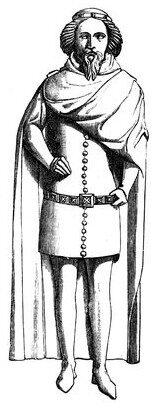
Lionel of Antwerp, 1st Duke of Clarence
Lionel of Antwerp, 1st Duke of Clarence was a Prince of England. Born November 29, 1338, in Antwerp. Died October 17, 1368, in Alba. Positions held include Lord Lieutenant of Ireland (2 times) (1361–) and regent (1345–). Awards include Knight of the Garter.
Facts
23 facts · 2 confirmed by two sources · 13 cited · 8 from one source
Where this comes from
Papalocal keeps its own record. It started from these sources; what each one said is kept here as it was copied, so a change on their side never changes this page by itself. Tap one to read its version.
What Wikidata says · copied November 16, 2026 · revision 2556203452
- Described as
- Prince of England
- Other names
- Lionel of Antwerp, Duke of Clarence, Lionel of Antwerp
- Born
- November 29, 1338 · 2 references
- Died
- October 17, 1368 · 3 references
- Born in
- Antwerp
- Died in
- Alba · 1 reference
- Buried in
- Clare Priory · 1 reference
- Citizen of
- Kingdom of England
- Occupation
- military personnel
- Positions held
- Lord Lieutenant of Ireland (2 times) (1361–) · 1 reference; regent (1345–) · 1 reference
- Awards
- Knight of the Garter (1361–) · 2 references
- Spouse
- Elizabeth de Burgh, 4th Countess of Ulster (1342–1363) · 3 references; Violante Visconti (1368) · 2 references
- Children
- Philippa, 5th Countess of Ulster · 1 reference
- Father
- Edward III of England · 1 reference
- Mother
- Philippa of Hainault · 1 reference
- Siblings
- Margaret, Countess of Pembroke; Mary of Waltham; Joan of England; Isabella de Coucy; Edward, the Black Prince · 1 reference; John of Gaunt · 1 reference; Edmund of Langley, 1st Duke of York · 1 reference; Thomas of Woodstock, 1st Duke of Gloucester · 1 reference
- Wikipedias with a page
- 33
Wikidata item Q313846 (wikidata.org/wiki/Q313846), public domain (CC0). Copied November 16, 2026.
What Wikipedia says · copied November 16, 2026 · revision 1381203451
Lionel of Antwerp, Duke of Clarence (Norman: Leonell Duc de Clarence; 29 November 1338 – 17 October 1368) was an English prince, Earl of Ulster jure uxoris from 1347, Duke of Clarence from 1362, Guardian of England in 1345–46, Lord Lieutenant of Ireland in 1361–66, Knight of the Garter from 1361, third son (second surviving) of King Edward III of England and Philippa of Hainault. He was named after his birthplace, at Antwerp in the Duchy of Brabant.
In 1355–60, Lionel took part in the Hundred Years' War with France and the Second War of Scottish Independence. After the Treaty of Brétigny, much of the Prince's later career was linked to Ireland. Through his first marriage to Elizabeth de Burgh, 4th Countess of Ulster, he inherited large holdings in Northern, Western and South-Western Ireland, as well as the title of Earl of Ulster. In 1361, Edward III appointed his son the royal lieutenant (viceroy) of Ireland, and in 1362 he created the title of Duke of Clarence for him, making Lionel the first among the Irish peers. The prince remained viceroy until 1366 (with two short breaks in 1364 and 1365, when he went to England). During this time, Lionel led several military campaigns on the island and adopted the Statutes of Kilkenny in February 1366, which became his most important legacy for the Irish government.
Lionel's first wife died in 1363. In 1367, Edward III arranged a new marriage for his son with Violante Visconti, whose father was the ruler of Milan. A lavish marriage ceremony took place in May or June 1368, but Lionel died soon after, possibly poisoned by his father-in-law. He left one daughter, Philippa, from his first marriage. In the 15th century, the House of York justified their preemptive right to the English throne through their descent from Lionel and Philippa.
- Born, in its opening lines
- November 29, 1338
- Died, in its opening lines
- October 17, 1368
From the Wikipedia article “Lionel of Antwerp, Duke of Clarence” (en.wikipedia.org/wiki/Lionel_of_Antwerp,_Duke_of_Clarence), by its contributors, under CC BY-SA 4.0 (creativecommons.org/licenses/by-sa/4.0/). Copied November 16, 2026; not changed.
Confirmed Two sources agree. Cited One source, and it names where it got it. One source One source, without a reference of its own. Sources disagree The sources disagree. We show the best-supported value and keep theirs below.
