
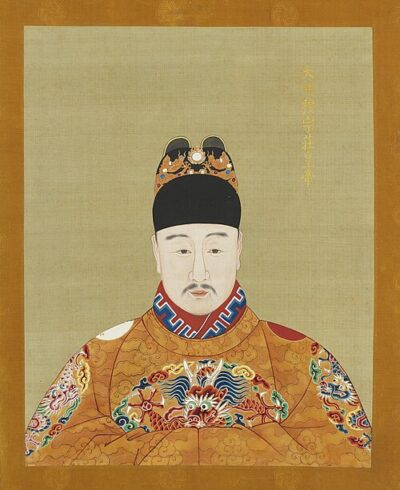
Longqing Emperor
Longqing Emperor was the 13th Emperor of the Ming dynasty. Born March 4, 1537, in Beijing. Died July 5, 2021, in Beijing. Positions held include Emperor of China (1567–1572).
Facts
34 facts · 1 confirmed by two sources · 3 cited · 29 from one source · 1 where the sources disagree
What’s different
- Died: we show July 5, 2021 (Sources disagree). Wikipedia says July 5, 1572
Where this comes from
Papalocal keeps its own record. It started from these sources; what each one said is kept here as it was copied, so a change on their side never changes this page by itself. Tap one to read its version.
What Wikidata says · copied November 16, 2026 · revision 2570132568
- Described as
- 13th Emperor of the Ming dynasty
- Other names
- Mu Zong, Zhuang Di, Zhu Zaihou, Longqing, Qitianlongdaoyuanyikuanrenxianwenguangwuchundehongxiaozhuanghuangdi
- Born
- March 4, 1537
- Died
- July 5, 2021
- Born in
- Beijing
- Died in
- Beijing
- Buried in
- Zhaoling Mausoleum (Ming dynasty)
- Citizen of
- Ming dynasty · 1 reference
- Occupation
- ruler
- Positions held
- Emperor of China (1567–1572)
- Spouse
- Empress Xiaoyizhuang, of the Li clan; Empress Dowager Xiaoding; Empress Xiaoan
- Children
- Wanli · 1 reference; Zhu Yiyi; Zhu Yiling; Princess Penglai; Zhu Yiliu; Princess Shouyang; Princess Yongning; Princess Rui'an; Princess Taihe; Princess Qixia; Princess Yanqing
- Father
- Jiajing Emperor of Ming · 1 reference
- Mother
- Empress Xiaoke
- Siblings
- Princess Chang'an; Princess Sirou; Zhu Suzhen; Princess Guishan; Princess Ning'an; Zhu Zaiji; Zhu Zaihe; Zhu Zaizhen; Prince Shang of Ying; Prince Qihuai
- Wikipedias with a page
- 33
Wikidata item Q10059 (wikidata.org/wiki/Q10059), public domain (CC0). Copied November 16, 2026.
What Wikipedia says · copied November 16, 2026 · revision 1384304352
The Longqing Emperor (4 March 1537 – 5 July 1572), personal name Zhu Zaiji, was the 13th emperor of the Ming dynasty of China, reigning from 1567 to 1572. He was initially known as the Prince of Yu from 1539 to 1567 before he became the emperor. He succeeded his father, the Jiajing Emperor.
After the death of the Jiajing Emperor, the Longqing Emperor inherited a country in turmoil due to years of mismanagement and corruption. Recognizing the extent of the chaos caused during his father's lengthy reign, the Emperor worked to restore order in the state administration. He reinstated talented officials who had been previously exiled and dismissed corrupt officials and Taoist priests who had surrounded the Jiajing Emperor. Additionally, he lifted the ban on foreign trade, boosting the empire's economy, and reorganized the border troops to strengthen security on the inland and coastal borders. The seaports of Zhejiang and Fujian were fortified to defend against coastal pirates, who had been a constant nuisance during the previous government. The Emperor also successfully repelled Altan Khan's Mongol army, which had breached the Great Wall and reached Beijing. A peace treaty was signed shortly after, allowing for the resumption of the exchange of horses for silk. Despite a promising start, the Longqing Emperor quickly neglected his duties as a ruler and instead focused on personal pleasures.
- Born, in its opening lines
- March 4, 1537
- Died, in its opening lines
- July 5, 1572
From the Wikipedia article “Longqing Emperor” (en.wikipedia.org/wiki/Longqing_Emperor), by its contributors, under CC BY-SA 4.0 (creativecommons.org/licenses/by-sa/4.0/). Copied November 16, 2026; not changed.
Confirmed Two sources agree. Cited One source, and it names where it got it. One source One source, without a reference of its own. Sources disagree The sources disagree. We show the best-supported value and keep theirs below.
