
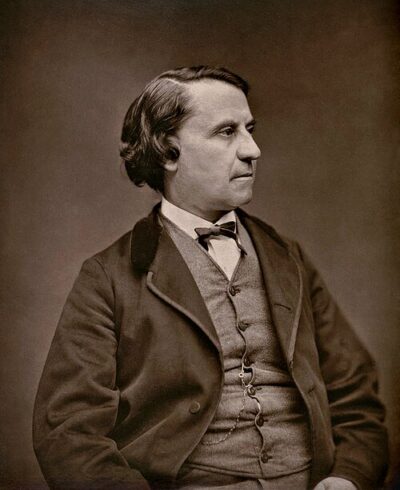
Louis Blanc
Louis Blanc was a French politician and historian. Born October 29, 1811, in Madrid. Died December 6, 1882, in Cannes. Positions held include member of the French National Assembly (1871–1882) and Member of the 1848 Constituent Assembly (1848–1849). Known for right to work and National Workshops.
Facts
18 facts · 2 confirmed by two sources · 6 cited · 9 from one source · 1 where the sources disagree
What’s different
- Buried in: we show Père Lachaise Cemetery (Sources disagree). Wikidata also lists Grave of Blanc
Where this comes from
Papalocal keeps its own record. It started from these sources; what each one said is kept here as it was copied, so a change on their side never changes this page by itself. Tap one to read its version.
What Wikidata says · copied November 16, 2026 · revision 2568747010
- Described as
- French politician and historian (1811-1882)
- Other names
- Jean Joseph Louis Blanc, Louis Jean Joseph Charles Blanc
- Born
- October 29, 1811 · 9 references
- Died
- December 6, 1882 · 10 references
- Born in
- Madrid · 2 references
- Died in
- Cannes · 1 reference
- Buried in
- Père Lachaise Cemetery · 1 reference; Grave of Blanc
- Name at birth
- Louis Jean Joseph Charles Blanc
- Citizen of
- France
- Occupation
- journalist; politician · 1 reference; historian · 1 reference; writer · 1 reference; editor-in-chief (1839–1848) · 1 reference
- Positions held
- member of the French National Assembly (1871–1882) · 1 reference; Member of the 1848 Constituent Assembly (1848–1849) · 1 reference
- Member of
- Freemasonry · 1 reference
- Known for
- right to work; National Workshops
- Siblings
- Charles Blanc
- Wikipedias with a page
- 46
Wikidata item Q355112 (wikidata.org/wiki/Q355112), public domain (CC0). Copied November 16, 2026.
What Wikipedia says · copied November 16, 2026 · revision 1379317741
Louis Jean Joseph Charles Blanc ( BLAHN; French: [blɑ̃]; 29 October 1811 – 6 December 1882) was a French socialist politician, journalist and historian. He called for the creation of cooperatives in order to guarantee employment for the urban poor. Although Blanc's ideas of the workers' cooperatives were never realized, his political and social ideas greatly contributed to the development of socialism in France. He wanted the government to encourage cooperatives and replace capitalist enterprises. These cooperatives were to be associations of people who produced together and divided the profit accordingly.
Following the Revolution of 1848, Blanc became a member of the provisional government and began advocating for cooperatives which would be initially aided by the government but ultimately controlled by the workers themselves. Blanc's advocacy failed; caught between radical worker tendencies and the National Guard, he was forced into exile. Blanc returned to France in 1870, shortly before the conclusion of the Franco-Prussian War, and served as a member of the National Assembly for Seine. He did not support the Paris Commune but later he successfully proposed amnesty to the Communards.
- Born, in its opening lines
- October 29, 1811
- Died, in its opening lines
- December 6, 1882
From the Wikipedia article “Louis Blanc” (en.wikipedia.org/wiki/Louis_Blanc), by its contributors, under CC BY-SA 4.0 (creativecommons.org/licenses/by-sa/4.0/). Copied November 16, 2026; not changed.
Confirmed Two sources agree. Cited One source, and it names where it got it. One source One source, without a reference of its own. Sources disagree The sources disagree. We show the best-supported value and keep theirs below.
