
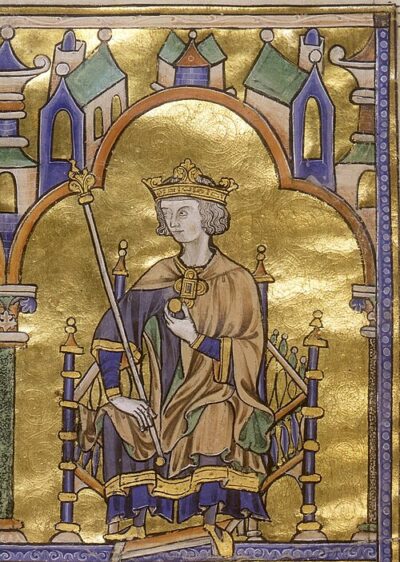
Louis IX of France
Louis IX of France was a King of France from 1226 to 1270. Born April 25, 1214, in Poissy. Died August 25, 1270, in Tunis. Positions held include King of France (1226–1270). Known for Les enseignements de saint Louis à son fils and Les enseignements de saint Louis à sa fille.
Facts
34 facts · 2 confirmed by two sources · 12 cited · 19 from one source · 1 where the sources disagree
What’s different
- Born: we show April 25, 1214 (Confirmed). Wikidata also lists April 25, 1215
- Cause of death: we show scurvy (Sources disagree). Wikidata also lists dysentery
Where this comes from
Papalocal keeps its own record. It started from these sources; what each one said is kept here as it was copied, so a change on their side never changes this page by itself. Tap one to read its version.
What Wikidata says · copied November 16, 2026 · revision 2569840561
- Described as
- King of France from 1226 to 1270 (1214–1270)
- Other names
- Saint Louis IX of France, Louis IX, Louis IX the Saint, Solomon of France, Saint Louis
- Born
- April 25, 1214 · 3 references; April 25, 1215 · 2 references
- Died
- August 25, 1270 · 2 references
- Born in
- Poissy · 1 reference
- Died in
- Tunis · 1 reference
- Buried in
- Basilica of Saint-Denis
- Cause of death
- dysentery; scurvy · 1 reference
- Citizen of
- France
- Occupation
- ruler; Miles Christianus; monarch
- Positions held
- King of France (1226–1270)
- Known for
- Les enseignements de saint Louis à son fils; Les enseignements de saint Louis à sa fille
- Spouse
- Margaret of Provence (1234–1270) · 2 references
- Children
- Blanche de France · 1 reference; Isabella of France, Queen of Navarre; Louis of France; Philip III of France · 1 reference; John of France · 1 reference; John Tristan, Count of Valois · 1 reference; Peter, Count of Perche and Alençon; Blanche of France, Infanta of Castile; Margaret of France, Duchess of Brabant · 1 reference; Robert; Agnes of France, Duchess of Burgundy · 1 reference
- Father
- Louis VIII of France · 1 reference
- Mother
- Blanche of Castile · 1 reference
- Siblings
- Isabelle of France; Robert I, Count of Artois; Alphonse, Count of Poitiers; Charles I of Naples · 1 reference; John Tristan, Count of Anjou and Maine; Philip of France
- Religion
- Catholic Church
- Wikipedias with a page
- 94
Wikidata item Q346 (wikidata.org/wiki/Q346), public domain (CC0). Copied November 16, 2026.
What Wikipedia says · copied November 16, 2026 · revision 1385940564
Louis IX (25 April 1214 – 25 August 1270), also known as Saint Louis, was King of France from 1226 until his death in 1270. He is widely recognized as the most distinguished of the Direct Capetians, is the sole king of France to be canonised as a saint of the Catholic Church, and is also the direct ancestor of all subsequent French kings. Following the death of his father, Louis VIII, he was crowned in Reims at the age of 12. His mother, Blanche of Castile, effectively ruled the kingdom as regent until he came of age, and continued to serve as his trusted adviser until her death.
During his formative years, Blanche successfully confronted rebellious vassals and championed the Capetian cause in the Albigensian Crusade, which had been ongoing for the past two decades.
As an adult, Louis IX grappled with persistent conflicts involving some of the most influential nobles in his kingdom, including Hugh X of Lusignan and Peter I of Brittany. Concurrently, England's Henry III sought to reclaim the Angevin continental holdings, only to be decisively defeated at the Battle of Taillebourg. Louis expanded his territory by annexing several provinces, including parts of Aquitaine, Maine, and Provence. Keeping a promise he made while praying for recovery from a grave illness, Louis led the ill-fated Seventh and Eighth Crusades against the Muslim dynasties that controlled North Africa, Egypt, and the Holy Land. He was captured by Egyptian forces and ransomed during the Seventh Crusade, and later succumbed to dysentery during the Eighth Crusade. His son, Philip III, succeeded him.
Louis instigated significant reforms in the French legal system, creating a royal justice mechanism that allowed petitioners to appeal judgments directly to the monarch. He abolished trials by ordeal, endeavored to terminate private wars, and incorporated the presumption of innocence into criminal proceedings. To implement his new legal framework, he established the offices of provosts and bailiffs. Louis IX's reign is often marked as an economic and political zenith for medieval France, and he held immense respect throughout Christendom. His reputation as a fair and judicious ruler led to his being solicited to mediate disputes beyond his own kingdom. Louis IX expanded upon the work of his predecessors, especially his grandfather Philip II of France, and reformed the administrative institutions of the French crown. He re-introduced, and expanded the scope of, the enquêtes commissioned to investigate governmental abuses and provide monetary restitutions for the crown.
Louis's admirers through the centuries have celebrated him as the quintessential Christian monarch. His skill as a knight and engaging manner with the public contributed to his popularity. Saint Louis was extremely pious, earning the moniker of a "monk king". Louis was a staunch Christian and rigorously enforced Catholic orthodoxy. He enacted harsh laws against blasphemy, and he also launched actions against France's Jewish population, including ordering them to wear a yellow badge of shame, as well as the notorious burning of the Talmud following the Disputation of Paris.
- Born, in its opening lines
- April 25, 1214
- Died, in its opening lines
- August 25, 1270
From the Wikipedia article “Louis IX of France” (en.wikipedia.org/wiki/Louis_IX_of_France), by its contributors, under CC BY-SA 4.0 (creativecommons.org/licenses/by-sa/4.0/). Copied November 16, 2026; not changed.
Confirmed Two sources agree. Cited One source, and it names where it got it. One source One source, without a reference of its own. Sources disagree The sources disagree. We show the best-supported value and keep theirs below.
