
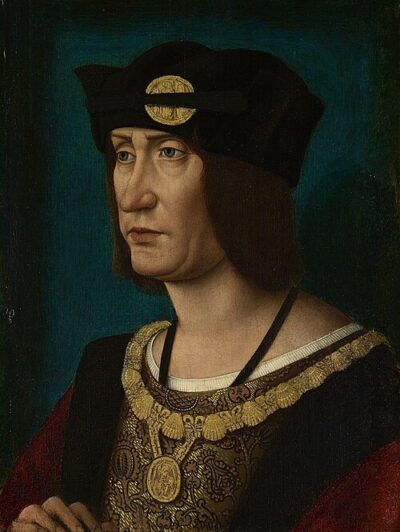
Louis XII of France
Louis XII of France was a King of France from 1498 to 1515. Born June 27, 1462, in Château de Blois. Died January 1, 1515, in Hôtel des Tournelles. Positions held include King of France (1498–1515). Awards include Order of Saint Michael.
Facts
21 facts · 2 confirmed by two sources · 7 cited · 12 from one source
Where this comes from
Papalocal keeps its own record. It started from these sources; what each one said is kept here as it was copied, so a change on their side never changes this page by itself. Tap one to read its version.
What Wikidata says · copied November 16, 2026 · revision 2569840740
- Described as
- King of France from 1498 to 1515
- Other names
- Père du Peuple
- Born
- June 27, 1462 · 3 references
- Died
- January 1, 1515 · 3 references
- Born in
- Château de Blois
- Died in
- Hôtel des Tournelles
- Buried in
- Basilica of Saint-Denis
- Citizen of
- France · 1 reference
- Occupation
- sovereign
- Positions held
- King of France (1498–1515)
- Awards
- Order of Saint Michael · 1 reference
- Spouse
- Joan of Valois (1476–1498) · 1 reference; Anne of Brittany (1499–1514) · 2 references; Mary Tudor (1514–1515) · 2 references
- Children
- Claude of France · 1 reference; Renee of France; Michel Bucy
- Father
- Charles I, Duke of Orléans · 1 reference
- Mother
- Maria of Cleves · 1 reference
- Siblings
- Marie of Orléans, Viscountess of Narbonne · 1 reference; Anne of Orléans, Abbess of Fontevraud; Joan of Valois, Duchess of Alençon
- Religion
- Catholic Church
- Wikipedias with a page
- 81
Wikidata item Q58514 (wikidata.org/wiki/Q58514), public domain (CC0). Copied November 16, 2026.
What Wikipedia says · copied November 16, 2026 · revision 1382266578
Louis XII (27 June 1462 – 1 January 1515), also known as Louis of Orléans, was King of France from 1498 to 1515 and King of Naples (as Louis III) from 1501 to 1504. The son of Charles I, Duke of Orléans, and Marie of Cleves, he succeeded his second cousin once removed and brother-in-law, Charles VIII, who died childless in 1498.
Louis was the second cousin of King Louis XI, who compelled him to marry the latter's disabled and supposedly sterile daughter Joan. By doing so, Louis XI hoped to extinguish the Orléans cadet branch of the House of Valois. When Louis XII became king in 1498, he had his marriage with Joan annulled by Pope Alexander VI and instead married Anne, Duchess of Brittany, the widow of Charles VIII. This marriage allowed Louis to reinforce the personal Union of Brittany and France.
Louis of Orléans was one of the great feudal lords who opposed the French monarchy in the conflict known as the Mad War. At the royal victory in the Battle of Saint-Aubin-du-Cormier in 1488, Louis was captured, but Charles VIII pardoned him and released him. He subsequently took part in the Italian Wars, initiating a second Italian campaign for the control of the Kingdom of Naples. Louis conquered the Duchy of Milan in 1500 and pushed forward to the Kingdom of Naples, which fell to him in 1501. Proclaimed King of Naples, Louis faced a new coalition gathered by Ferdinand II of Aragon and was forced to cede Naples to Spain in 1504. Louis, who remained Duke of Milan after the second Italian War, was interested in further expansion in the Italian Peninsula and launched a third Italian War (1508–1516), which was marked by the military prowess of the Chevalier de Bayard.
Louis XII did not encroach on the power of local governments or the privileges of the nobility, in opposition with the long tradition of the French kings to attempt to impose absolute monarchy in France. A popular king, Louis was proclaimed "Father of the People" (French: Le Père du Peuple) for his reduction of the tax known as taille, legal reforms, and civil peace within France. Louis XII died in 1515 without a male heir. He was succeeded by his cousin and son-in-law Francis I from the Angoulême cadet branch of the House of Valois.
- Born, in its opening lines
- June 27, 1462
- Died, in its opening lines
- January 1, 1515
From the Wikipedia article “Louis XII” (en.wikipedia.org/wiki/Louis_XII), by its contributors, under CC BY-SA 4.0 (creativecommons.org/licenses/by-sa/4.0/). Copied November 16, 2026; not changed.
Confirmed Two sources agree. Cited One source, and it names where it got it. One source One source, without a reference of its own. Sources disagree The sources disagree. We show the best-supported value and keep theirs below.
