
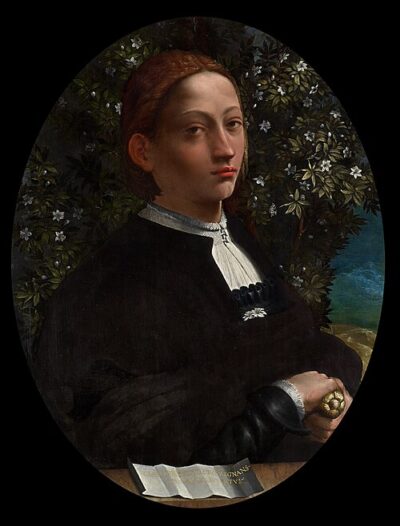
Lucrezia Borgia
Lucrezia Borgia was a Spanish-Italian duchess-consort of Ferrara, Modena and Reggio. Born April 18, 1480, in Subiaco. Died June 24, 1519, in Ferrara.
Facts
28 facts · 2 confirmed by two sources · 9 cited · 16 from one source · 1 where the sources disagree
What’s different
- Buried in: we show Tomb of Lucrezia Borgia and Alfonso I d'Este (Sources disagree). Wikidata also lists Corpus Domini Monastery and Sala del Coro
Where this comes from
Papalocal keeps its own record. It started from these sources; what each one said is kept here as it was copied, so a change on their side never changes this page by itself. Tap one to read its version.
What Wikidata says · copied November 16, 2026 · revision 2565533004
- Described as
- Spanish-Italian duchess-consort of Ferrara, Modena and Reggio (1480-1519)
- Other names
- Lucretia Borgia, Lucrecia Borgia
- Born
- April 18, 1480 · 1 reference
- Died
- June 24, 1519 · 2 references
- Born in
- Subiaco
- Died in
- Ferrara · 1 reference
- Buried in
- Corpus Domini Monastery; Tomb of Lucrezia Borgia and Alfonso I d'Este · 1 reference; Sala del Coro · 1 reference
- Cause of death
- childbirth
- Citizen of
- Papal States
- Occupation
- consort; ruler
- Spouse
- Alfonso I d'Este (1502–1519) · 1 reference; Alfonso of Aragon (1498–1500) · 1 reference; Giovanni Sforza (1493–1497) · 1 reference
- Children
- Ercole II d'Este, Duke of Ferrara; Rodrigo of Aragon · 1 reference; Ippolito II d'Este; Francesco d'Este · 1 reference; Isabella Maria d'Este · 1 reference; Alessandro d'Este; Eleonora d’Este · 1 reference; Giovanni Borgia · 1 reference; Alessandro d'Este · 1 reference
- Father
- Alexander VI · 1 reference
- Mother
- Vannozza dei Cattanei · 1 reference
- Siblings
- Pier Luigi de Borgia; Cesare Borgia · 1 reference; Giovanni Borgia, 2nd Duke of Gandia; Gioffre Borgia
- Religion
- Catholic Church
- Wikipedias with a page
- 78
Wikidata item Q191103 (wikidata.org/wiki/Q191103), public domain (CC0). Copied November 16, 2026.
What Wikipedia says · copied November 16, 2026 · revision 1385930601
Lucrezia Borgia (18 April 1480 – 24 June 1519) was an Italian-Spanish noblewoman of the House of Borgia who was the illegitimate daughter of Pope Alexander VI and Vannozza dei Cattanei. She was a former governor of Spoleto.
Her family arranged several marriages for her that advanced their own political position, including to Giovanni Sforza, Lord of Pesaro and Gradara, Count of Cotignola; Alfonso of Aragon, Duke of Bisceglie and Prince of Salerno; and Alfonso I d'Este, Duke of Ferrara. Alfonso of Aragon was an illegitimate son of the King of Naples, and tradition has it that Lucrezia's brother Cesare may have had him murdered after his political value waned.
Notorious tales about her family have cast Lucrezia as a femme fatale, a controversial role in which she has been portrayed in many artworks, novels, and films.
- Born, in its opening lines
- April 18, 1480
- Died, in its opening lines
- June 24, 1519
From the Wikipedia article “Lucrezia Borgia” (en.wikipedia.org/wiki/Lucrezia_Borgia), by its contributors, under CC BY-SA 4.0 (creativecommons.org/licenses/by-sa/4.0/). Copied November 16, 2026; not changed.
Confirmed Two sources agree. Cited One source, and it names where it got it. One source One source, without a reference of its own. Sources disagree The sources disagree. We show the best-supported value and keep theirs below.
