
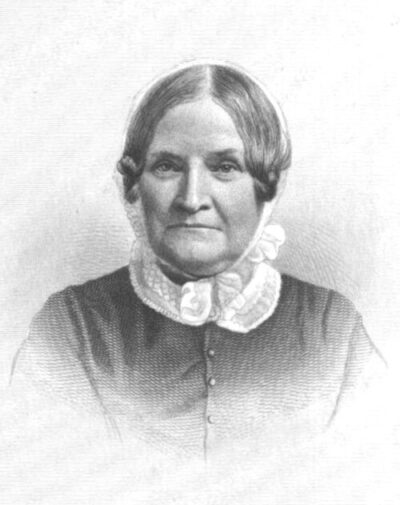
Lydia Maria Child
Lydia Maria Child was an American abolitionist, author and women's rights activist. Born February 11, 1802, in Medford. Died October 20, 1880, in Wayland. Known for An Appeal in Favor of that Class of Americans Called Africans and Hobomok: A Tale of Early Times. Awards include National Women's Hall of Fame.
Facts
25 facts · 2 confirmed by two sources · 18 cited · 5 from one source
Where this comes from
Papalocal keeps its own record. It started from these sources; what each one said is kept here as it was copied, so a change on their side never changes this page by itself. Tap one to read its version.
What Wikidata says · copied November 15, 2026 · revision 2563088609
- Described as
- American abolitionist, author and women's rights activist (1802-1880)
- Other names
- Lydia Maria Francis Child, Lydia Maria Francis, L. Maria Child
- Born
- February 11, 1802 · 9 references
- Died
- October 20, 1880 · 6 references
- Born in
- Medford · 3 references
- Died in
- Wayland · 2 references
- Buried in
- North Cemetery · 1 reference
- Name at birth
- Lydia Maria Francis · 1 reference
- Citizen of
- United States
- Occupation
- novelist; poet · 1 reference; journalist · 1 reference; writer · 5 references; geologist · 1 reference; philosopher
- Known for
- An Appeal in Favor of that Class of Americans Called Africans · 1 reference; Hobomok: A Tale of Early Times · 1 reference
- Awards
- National Women's Hall of Fame (2001) · 1 reference
- Field
- poetry; novel
- Spouse
- David Lee Child (1828–1874) · 1 reference
- Father
- Converse Francis · 1 reference
- Mother
- Susannah Francis · 1 reference
- Siblings
- Convers Francis · 1 reference
- Lived in
- Norridgewock · 1 reference; Watertown · 1 reference; Wayland · 1 reference
- Wikipedias with a page
- 37
Wikidata item Q443132 (wikidata.org/wiki/Q443132), public domain (CC0). Copied November 15, 2026.
What Wikipedia says · copied November 15, 2026 · revision 1383244058
Lydia Maria Child (née Francis; February 11, 1802 – October 20, 1880) was an American abolitionist, feminist, Native American rights activist, novelist, journalist, and opponent of American expansionism. Her journals, both fiction and domestic manuals, reached wide audiences from the 1820s through the 1850s. At times she shocked her audience as she tried to take on issues of both male dominance and white supremacy in some of her stories.
Despite these challenges, Child may be most remembered for her poem "Over the River and Through the Wood". Her grandparents' house, which she wrote about visiting, was restored by Tufts University in 1976 and stands near the Mystic River on South Street, in Medford, Massachusetts.
- Born, in its opening lines
- February 11, 1802
- Died, in its opening lines
- October 20, 1880
From the Wikipedia article “Lydia Maria Child” (en.wikipedia.org/wiki/Lydia_Maria_Child), by its contributors, under CC BY-SA 4.0 (creativecommons.org/licenses/by-sa/4.0/). Copied November 15, 2026; not changed.
Confirmed Two sources agree. Cited One source, and it names where it got it. One source One source, without a reference of its own. Sources disagree The sources disagree. We show the best-supported value and keep theirs below.
