
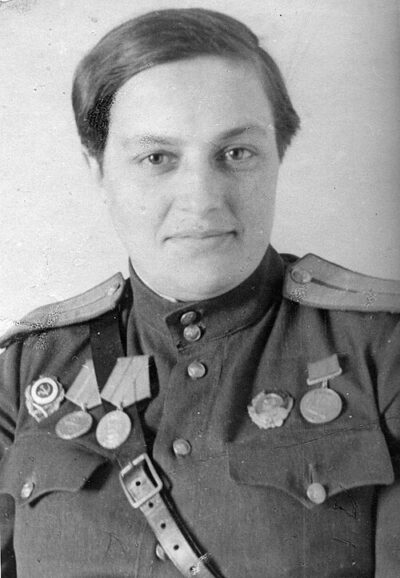
Lyudmila Pavlichenko
Lyudmila Pavlichenko was a Soviet sniper. Born July 12, 1916, in Bila Tserkva. Died October 10, 1974, in Moscow. Educated at Historical Department of the National University of Kyiv and Taras Shevchenko National University of Kyiv. Awards include Order of Lenin (2 times), Hero of the Soviet Union and Gold Star medal.
Facts
30 facts · 2 confirmed by two sources · 4 cited · 24 from one source
What’s different
- Died: we show October 10, 1974 (Confirmed). Wikidata also lists October 27, 1974
Where this comes from
Papalocal keeps its own record. It started from these sources; what each one said is kept here as it was copied, so a change on their side never changes this page by itself. Tap one to read its version.
What Wikidata says · copied November 16, 2026 · revision 2569128706
- Described as
- Soviet sniper (1916–1974)
- Other names
- Lyudmila Mykhailivna Pavlichenko, Ludmila Mihaylovna Pavlichenko, Pavlichenko, Lady Death, Lyudmila Mikhailovna Pavlichenko
- Born
- July 12, 1916 · 2 references
- Died
- October 10, 1974 · 1 reference; October 27, 1974 · 1 reference
- Born in
- Bila Tserkva
- Died in
- Moscow · 1 reference
- Buried in
- Novodevichy Cemetery
- Cause of death
- stroke
- Name at birth
- Людмила Михайловна Белова
- Citizen of
- Soviet Union
- Occupation
- sniper · 1 reference; historian · 1 reference; military personnel
- Political party
- Communist Party of the Soviet Union (1945–)
- Worked for
- Soviet Navy (1945–1953); Kyiv Arsenal · 1 reference
- Education
- Historical Department of the National University of Kyiv (1937–1945); Taras Shevchenko National University of Kyiv
- Member of
- OSOAVIAKhIM
- Awards
- Order of Lenin (2 times) (1942, 1943); Hero of the Soviet Union (1943) · 1 reference; Gold Star medal (1943); Medal "For Battle Merit" (2 times) (1942, 1952); Medal "For the Defence of Odessa"; Medal "For the Defence of Sevastopol"; Medal "For the Victory over Germany in the Great Patriotic War 1941–1945" (1945); Voroshilov Sharpshooter (1939)
- Field
- military service · 1 reference
- Military branch
- Red Army; Soviet Navy; infantry
- Military rank
- Major
- Wikipedias with a page
- 60
Wikidata item Q145065 (wikidata.org/wiki/Q145065), public domain (CC0). Copied November 16, 2026.
What Wikipedia says · copied November 16, 2026 · revision 1380421623
Lyudmila Mikhailovna Pavlichenko (née Belova; 12 July [O.S. 29 June] 1916 – 10 October 1974) was a Soviet sniper in the Red Army during World War II. She is the deadliest female sniper, and one of the deadliest snipers in history, with 309 confirmed kills. She served in the Red Army during the siege of Odessa and the siege of Sevastopol, during the early stages of the fighting on the Eastern Front.
After she was injured in battle by a mortar shell, she was evacuated to Moscow. After she recovered from her injuries, she trained other Red Army snipers and was a public spokeswoman for the Red Army. In 1942, she toured the United States, Canada, and the United Kingdom. After the war ended in 1945, she was reassigned as a senior researcher for the Soviet Navy. She died of a stroke at the age of 58.
- Born, in its opening lines
- July 12, 1916
- Died, in its opening lines
- October 10, 1974
From the Wikipedia article “Lyudmila Pavlichenko” (en.wikipedia.org/wiki/Lyudmila_Pavlichenko), by its contributors, under CC BY-SA 4.0 (creativecommons.org/licenses/by-sa/4.0/). Copied November 16, 2026; not changed.
Confirmed Two sources agree. Cited One source, and it names where it got it. One source One source, without a reference of its own. Sources disagree The sources disagree. We show the best-supported value and keep theirs below.
