
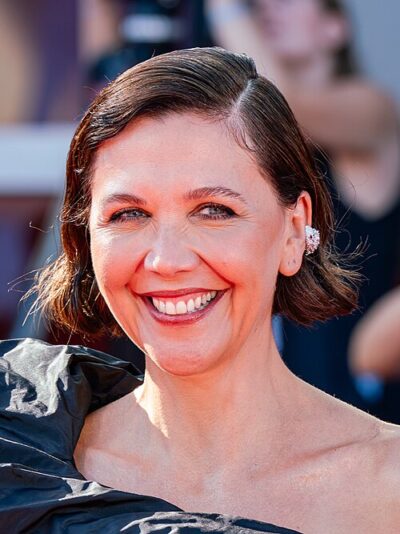
Maggie Gyllenhaal
Maggie Gyllenhaal is an American actress, singer and filmmaker. Born November 16, 1977, in Manhattan. Educated at Columbia University and Royal Academy of Dramatic Art. Awards include Golden Globes and John Jay Award.
Facts
29 facts · 1 confirmed by two sources · 5 cited · 23 from one source
Where this comes from
Papalocal keeps its own record. It started from these sources; what each one said is kept here as it was copied, so a change on their side never changes this page by itself. Tap one to read its version.
What Wikidata says · copied November 13, 2026 · revision 2565420951
- Described as
- American actress, singer and filmmaker (born 1977)
- Other names
- Margaret Ruth Gyllenhaal
- Born
- November 16, 1977 · 7 references
- Born in
- Manhattan
- Name at birth
- Margalit Ruth Gyllenhaal
- Citizen of
- United States
- Occupation
- film actor; stage actor; television actor; voice actor · 1 reference; film director; screenwriter; singer; actor · 1 reference
- Political party
- Democratic Party
- Education
- Columbia University; Royal Academy of Dramatic Art; Harvard-Westlake School (–1995); The Mountain School; The Center for Early Education
- Member of
- SAG-AFTRA
- Awards
- Golden Globes · 1 reference; John Jay Award
- Spouse
- Peter Sarsgaard (2009–) · 1 reference
- Children
- Ramona Sarsgaard; Gloria Sarsgaard
- Father
- Stephen Gyllenhaal · 1 reference
- Mother
- Naomi Foner Gyllenhaal · 1 reference
- Siblings
- Jake Gyllenhaal · 1 reference
- Religion
- Judaism; Christianity
- Wikipedias with a page
- 72
Wikidata item Q202381 (wikidata.org/wiki/Q202381), public domain (CC0). Copied November 13, 2026.
What Wikipedia says · copied November 13, 2026 · revision 1385290623
Margalit Ruth Gyllenhaal Sarsgaard (born November 16, 1977), known professionally as Maggie Gyllenhaal, is an American actress and filmmaker. Part of the Gyllenhaal family, she is the daughter of filmmakers Stephen Gyllenhaal and Naomi Achs, and the older sister of actor Jake Gyllenhaal. Her accolades include a Golden Globe Award, and nominations for two Academy Awards, and a BAFTA Awards.
Gyllenhaal began her career taking early roles in Donnie Darko (2001), Adaptation, Confessions of a Dangerous Mind (both 2002), and Mona Lisa Smile (2003). She received Golden Globe Award nominations for her roles in Secretary (2002) and Sherrybaby (2006) and an Academy Award for Best Supporting Actress nomination for playing a single mother in Crazy Heart (2009). She portrayed Rachel Dawes in the superhero film The Dark Knight (2008) and acted in such films as World Trade Center (2006), Nanny McPhee and the Big Bang (2010), Hysteria (2011), Won't Back Down (2012), White House Down (2013), Frank (2014), and The Kindergarten Teacher (2018).
She has starred in several television series, including the BBC political-thriller miniseries The Honourable Woman (2014), which won her a Golden Globe Award for Best Actress and a nomination for a Primetime Emmy Award. She also produced and starred in the HBO period drama series The Deuce (2017–2019). On stage, she made her Broadway debut in a revival of the Tom Stoppard play The Real Thing (2014).
Gyllenhaal made her writing and directing debut with the psychological drama The Lost Daughter (2021), for which she was nominated for the Academy Award for Best Adapted Screenplay and won the Venice Film Festival Award for Best Screenplay. She directed her sophomore film, the gothic romance The Bride! (2026), which she also wrote and produced; it received mixed reviews from critics and was a box office bomb. Later that year, she was named president of the International Jury of the Competition at the 83rd Venice International Film Festival.
- Born, in its opening lines
- November 16, 1977
From the Wikipedia article “Maggie Gyllenhaal” (en.wikipedia.org/wiki/Maggie_Gyllenhaal), by its contributors, under CC BY-SA 4.0 (creativecommons.org/licenses/by-sa/4.0/). Copied November 13, 2026; not changed.
Confirmed Two sources agree. Cited One source, and it names where it got it. One source One source, without a reference of its own. Sources disagree The sources disagree. We show the best-supported value and keep theirs below.
