
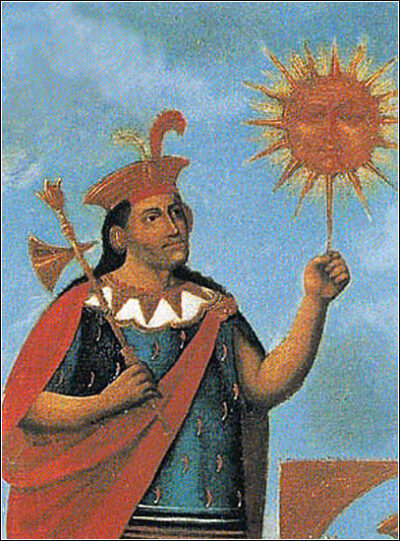
Manco Capac
Manco Capac was the 1st ruler of the Kingdom of Cuzco (Inca Emperor). Born 12th century, in Paruro Province. Died 1230, in Cusco. Positions held include Sapa Inca (1200–1230).
Facts
11 facts · 0 confirmed by two sources · 0 cited · 10 from one source · 1 where the sources disagree
What’s different
- Died: we show 1230 (Sources disagree). Wikidata also lists 13th century
Where this comes from
Papalocal keeps its own record. It started from these sources; what each one said is kept here as it was copied, so a change on their side never changes this page by itself. Tap one to read its version.
What Wikidata says · copied November 16, 2026 · revision 2553922308
- Described as
- 1st ruler of the Kingdom of Cuzco (Inca Emperor)
- Born
- 12th century
- Died
- 1230 · 1 reference; 13th century · 1 reference
- Born in
- Paruro Province
- Died in
- Cusco
- Buried in
- Cusco · 1 reference
- Citizen of
- Inca Empire
- Occupation
- monarch; ruler
- Positions held
- Sapa Inca (1200–1230)
- Spouse
- Mama Ocllo
- Children
- Sinchi Roca
- Wikipedias with a page
- 40
Wikidata item Q165968 (wikidata.org/wiki/Q165968), public domain (CC0). Copied November 16, 2026.
What Wikipedia says · copied November 16, 2026 · revision 1368317122
Manco Cápac (Quechua: Manqu Qhapaq, Cusco Quechua: [ˈmaɴqɔ ˈqʰapaχ]; born before c. 1200 – c. 1230) , also known as Manco Inca and Ayar Manco, was, according to some historians, the first governor and founder of the Inca civilisation in Cusco, possibly in the early 13th century. He is also a main figure of Inca mythology, being the protagonist of the two best known legends about the origin of the Inca, both of them connecting him to the foundation of Cusco. His main wife and the mother of his son and successor, Sinchi Ruq'a, was his sister Mama Uqllu. Even though his figure is mentioned in several chronicles, his actual existence remains uncertain.
From the Wikipedia article “Manco Cápac” (en.wikipedia.org/wiki/Manco_Cápac), by its contributors, under CC BY-SA 4.0 (creativecommons.org/licenses/by-sa/4.0/). Copied November 16, 2026; not changed.
Confirmed Two sources agree. Cited One source, and it names where it got it. One source One source, without a reference of its own. Sources disagree The sources disagree. We show the best-supported value and keep theirs below.
