
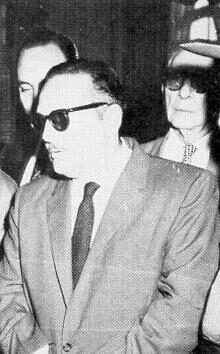
Manuel Urrutia Lleó
Manuel Urrutia Lleó was a President of Cuba. Born December 8, 1901, in Yaguajay. Died July 5, 1981, in Queens. Positions held include President of Cuba (1959).
Facts
10 facts · 2 confirmed by two sources · 3 cited · 5 from one source
Where this comes from
Papalocal keeps its own record. It started from these sources; what each one said is kept here as it was copied, so a change on their side never changes this page by itself. Tap one to read its version.
What Wikidata says · copied November 16, 2026 · revision 2556864786
- Described as
- President of Cuba (1901-1981)
- Other names
- Manuel Urrutia Lleo
- Born
- December 8, 1901 · 2 references
- Died
- July 5, 1981 · 2 references
- Born in
- Yaguajay
- Died in
- Queens
- Citizen of
- Cuba
- Occupation
- politician · 1 reference; judge · 1 reference; lawyer · 2 references
- Positions held
- President of Cuba (1959) · 1 reference
- Political party
- independent politician · 1 reference
- Wikipedias with a page
- 29
Wikidata item Q449356 (wikidata.org/wiki/Q449356), public domain (CC0). Copied November 16, 2026.
What Wikipedia says · copied November 16, 2026 · revision 1374695517
Manuel Urrutia Lleó (Latin American Spanish: [maˈnwel uˈrutja ʝeˈo]; December 8, 1901 – 5 July 1981) was a liberal Cuban lawyer and politician. He campaigned against the Gerardo Machado government and the dictatorial second presidency of Fulgencio Batista during the 1950s, before serving as president in the revolutionary government of 1959. Urrutia resigned his position after only seven months, owing to a series of disputes with revolutionary leader Fidel Castro, and emigrated to the United States shortly afterward.
- Born, in its opening lines
- December 8, 1901
- Died, in its opening lines
- July 5, 1981
From the Wikipedia article “Manuel Urrutia Lleó” (en.wikipedia.org/wiki/Manuel_Urrutia_Lleó), by its contributors, under CC BY-SA 4.0 (creativecommons.org/licenses/by-sa/4.0/). Copied November 16, 2026; not changed.
Confirmed Two sources agree. Cited One source, and it names where it got it. One source One source, without a reference of its own. Sources disagree The sources disagree. We show the best-supported value and keep theirs below.
