
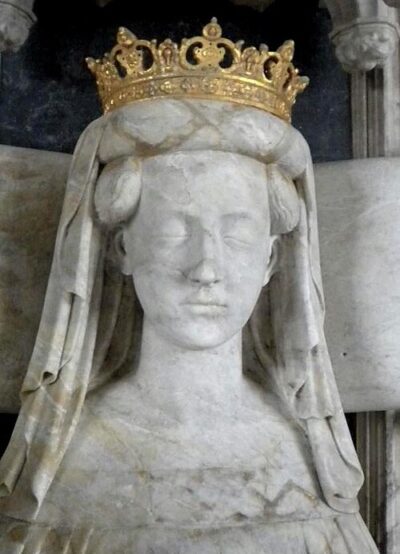
Margaret I of Denmark
Margaret I of Denmark was a Queen of Denmark, Norway, and Sweden. Born 1353, in Søborg Castle. Died October 28, 1412, in Flensburg. Positions held include queen consort, Monarch of Denmark (1387–1412) and Monarch of Norway (1388–1412).
Facts
20 facts · 2 confirmed by two sources · 1 cited · 17 from one source
Where this comes from
Papalocal keeps its own record. It started from these sources; what each one said is kept here as it was copied, so a change on their side never changes this page by itself. Tap one to read its version.
What Wikidata says · copied November 16, 2026 · revision 2567449284
- Described as
- Queen of Denmark, Norway, and Sweden
- Other names
- Margaret I of Scandinavia, Queen Margreth I, Margreth I of Denmark, Margaret of Denmark, Margrethe I, Margrete I, Margaret, Margaret I, Margaret Valdemarsdotter
- Born
- 1353 · 3 references
- Died
- October 28, 1412 · 5 references
- Born in
- Søborg Castle
- Died in
- Flensburg
- Buried in
- Roskilde Cathedral
- Cause of death
- plague
- Citizen of
- Norway
- Occupation
- queen regnant
- Positions held
- queen consort; Monarch of Denmark (1387–1412); Monarch of Norway (1388–1412); Monarch of Sweden (1389–1412); monarch
- Spouse
- Haakon VI of Norway (1363–) · 1 reference
- Children
- Olaf II of Denmark
- Father
- Valdemar IV of Denmark · 1 reference
- Mother
- Helvig of Schleswig
- Siblings
- Ingeborg of Denmark, Duchess of Mecklenburg; Christopher, Duke of Lolland
- Religion
- Christianity
- Wikipedias with a page
- 63
Wikidata item Q202266 (wikidata.org/wiki/Q202266), public domain (CC0). Copied November 16, 2026.
What Wikipedia says · copied November 16, 2026 · revision 1385021745
Margaret I (Danish: Margrete Valdemarsdatter; March 1353 – 28 October 1412) was queen regnant of Denmark, Norway, and Sweden from the late 1380s until her death, and the founder of the Kalmar Union that joined the Scandinavian kingdoms together for over a century. She had been queen consort of Norway from 1363 to 1380 and of Sweden from 1363 to 1364 by marriage to Haakon VI. Margaret was known as a wise, energetic and capable leader, who governed with "farsighted tact and caution", earning the nickname "Semiramis of the North". Also known famously and derisively as "King Breechless", one of several derogatory nicknames once thought to have been invented by her rival Albert, King of Sweden, she was also called "Lady King" by her subjects, widely used in recognition of her capabilities. Knut Gjerset calls her "the first great ruling queen in history".
The youngest daughter of Valdemar IV of Denmark, Margaret was born at Søborg Castle. She was a practical, patient administrator and diplomat, albeit one of high aspirations and a strong will, who intended to unite Scandinavia forever into one single entity with the strength to resist and compete against the might of the Hanseatic League. In 1363, aged ten, Margaret married Haakon VI. In 1370, they had a son, Olaf. Following the deaths of her husband and son, Margaret was proclaimed queen of the Scandinavian kingdoms. She was ultimately succeeded by a grandnephew, Erik of Pomerania. Although Erik came of age in 1401, Margaret continued for the remaining 11 years of her life to be sole ruler in all but name. Her regency marked the beginning of a Dano-Norwegian union which was to last for more than four centuries.
Some Norwegian and Swedish historians have criticized Margaret for favouring Denmark and being too autocratic, although she is generally thought to have been highly regarded in Norway and respected in Denmark and Sweden. She was painted in a negative light in contemporary religious chronicles, as she had no qualms suppressing the Church to promote royal power. Margaret is known in Denmark as Margrethe I to distinguish her from Margrethe II.
- Born, in its opening lines
- March 1353
- Died, in its opening lines
- October 28, 1412
From the Wikipedia article “Margaret I of Denmark” (en.wikipedia.org/wiki/Margaret_I_of_Denmark), by its contributors, under CC BY-SA 4.0 (creativecommons.org/licenses/by-sa/4.0/). Copied November 16, 2026; not changed.
Confirmed Two sources agree. Cited One source, and it names where it got it. One source One source, without a reference of its own. Sources disagree The sources disagree. We show the best-supported value and keep theirs below.
