
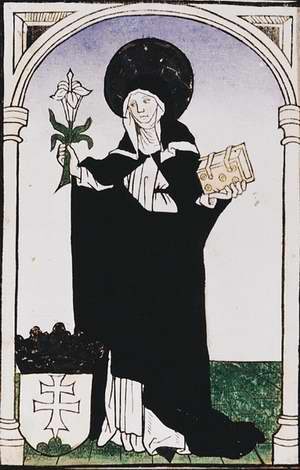
Margaret of Hungary
Margaret of Hungary was a Hungarian princess and saint. Born January 27, 1242, in Klis Fortress. Died January 18, 1270, in Margaret Island. Positions held include abbess.
Facts
17 facts · 2 confirmed by two sources · 0 cited · 15 from one source
Where this comes from
Papalocal keeps its own record. It started from these sources; what each one said is kept here as it was copied, so a change on their side never changes this page by itself. Tap one to read its version.
What Wikidata says · copied November 16, 2026 · revision 2558151927
- Described as
- Hungarian princess and saint (1242-1270)
- Born
- January 27, 1242
- Died
- January 18, 1270 · 2 references
- Born in
- Klis Fortress
- Died in
- Margaret Island
- Citizen of
- Hungary
- Occupation
- religious sister
- Positions held
- abbess
- Father
- Béla IV of Hungary
- Mother
- Maria Laskarina
- Siblings
- Yolanda of Poland; Kinga of Poland; Anna of Hungary; Elizabeth of Hungary, Duchess of Bavaria; Constance of Hungary, Queen of Galicia; Stephen V of Hungary; Béla, Duke of Slavonia
- Religion
- Catholic Church
- Wikipedias with a page
- 31
Wikidata item Q232031 (wikidata.org/wiki/Q232031), public domain (CC0). Copied November 16, 2026.
What Wikipedia says · copied November 16, 2026 · revision 1359664082
Margaret of Hungary, OP (Margit in Hungarian; 27 January 1242 – 18 January 1270) was a Dominican nun and the daughter of King Béla IV of Hungary and Maria Laskarina. She was the younger sister of Kinga of Poland (Kunegunda) and Yolanda of Poland and, through her father, the niece of the famed Elizabeth of Hungary. She also had an older sister with the same name, who died before she was born.
- Born, in its opening lines
- January 27, 1242
- Died, in its opening lines
- January 18, 1270
From the Wikipedia article “Margaret of Hungary (saint)” (en.wikipedia.org/wiki/Margaret_of_Hungary_(saint)), by its contributors, under CC BY-SA 4.0 (creativecommons.org/licenses/by-sa/4.0/). Copied November 16, 2026; not changed.
Confirmed Two sources agree. Cited One source, and it names where it got it. One source One source, without a reference of its own. Sources disagree The sources disagree. We show the best-supported value and keep theirs below.
