
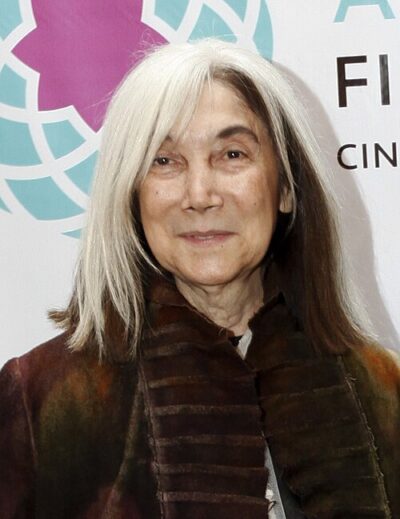
María Kodama
María Kodama was an Argentine writer. Born March 10, 1937, in Buenos Aires. Died March 26, 2023, in Vicente López. Educated at University of Buenos Aires.
Facts
13 facts · 2 confirmed by two sources · 8 cited · 3 from one source
Where this comes from
Papalocal keeps its own record. It started from these sources; what each one said is kept here as it was copied, so a change on their side never changes this page by itself. Tap one to read its version.
What Wikidata says · copied November 16, 2026 · revision 2567818000
- Described as
- Argentine writer (1937–2023)
- Other names
- Maria Kodama, María Kodama Schweizer
- Born
- March 10, 1937 · 1 reference
- Died
- March 26, 2023 · 1 reference
- Born in
- Buenos Aires · 1 reference
- Died in
- Vicente López · 1 reference
- Cause of death
- breast cancer · 1 reference
- Name at birth
- María Kodama Schweizer
- Citizen of
- Argentina
- Occupation
- writer; translator · 1 reference; literary scholar · 1 reference; author · 1 reference
- Education
- University of Buenos Aires · 1 reference
- Spouse
- Jorge Luis Borges (1986) · 1 reference
- Wikipedias with a page
- 29
Wikidata item Q448233 (wikidata.org/wiki/Q448233), public domain (CC0). Copied November 16, 2026.
What Wikipedia says · copied November 16, 2026 · revision 1365201586
María Kodama Schweizer (10 March 1937 – 26 March 2023) was an Argentine writer and translator. The widow of author Jorge Luis Borges, she was the sole owner of his estate after his death in 1986. Borges had bequeathed to Kodama his rights as author in a will written in 1979, when she was his literary secretary, and bequeathed to her his whole estate in 1985. They were married in 1986, shortly before Borges's death.
- Born, in its opening lines
- March 10, 1937
- Died, in its opening lines
- March 26, 2023
From the Wikipedia article “María Kodama” (en.wikipedia.org/wiki/María_Kodama), by its contributors, under CC BY-SA 4.0 (creativecommons.org/licenses/by-sa/4.0/). Copied November 16, 2026; not changed.
Confirmed Two sources agree. Cited One source, and it names where it got it. One source One source, without a reference of its own. Sources disagree The sources disagree. We show the best-supported value and keep theirs below.
