
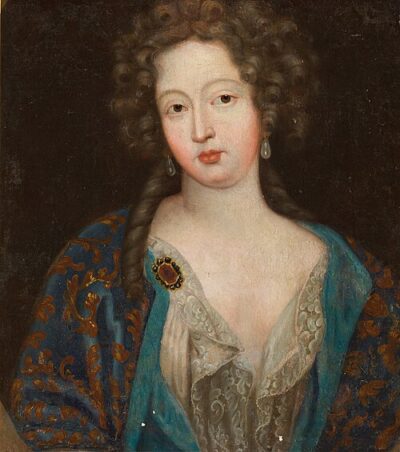
Marie Angélique de Scorailles, Duchess of Fontanges
Marie Angélique de Scorailles, Duchess of Fontanges was a mistress of Louis XIV. Born July 27, 1661, in Auvergne. Died June 28, 1681, in Port-Royal-des-Champs.
Facts
9 facts · 2 confirmed by two sources · 0 cited · 7 from one source
Where this comes from
Papalocal keeps its own record. It started from these sources; what each one said is kept here as it was copied, so a change on their side never changes this page by itself. Tap one to read its version.
What Wikidata says · copied November 18, 2026 · revision 2569150216
- Described as
- mistress of Louis XIV
- Other names
- Marie Angélique de Scorailles, Duchesse de Fontages, duquessa de Fontanges, Maria Angèlica de Scorailles
- Born
- July 27, 1661 · 1 reference
- Died
- June 28, 1681 · 3 references
- Born in
- Auvergne
- Died in
- Port-Royal-des-Champs
- Cause of death
- puerperal disorders
- Citizen of
- Kingdom of France
- Occupation
- lady-in-waiting; aristocrat
- Children
- unnamed son de Bourbon
- Wikipedias with a page
- 23
Wikidata item Q119920 (wikidata.org/wiki/Q119920), public domain (CC0). Copied November 18, 2026.
What Wikipedia says · copied November 18, 2026 · revision 1358274566
Marie Angélique de Scorailles, Duchess of Fontanges (French pronunciation: [maʁi ɑ̃ʒelik də skɔʁaj] ; July 1661 – 28 June 1681) was a French noblewoman and mistress of Louis XIV. Additionally she held the position of a lady-in-waiting to his sister-in-law Elizabeth Charlotte, Madame Palatine, the Duchess of Orléans. Marie caught the attention of the Sun King and began an affair with him in 1679. She died two years later, most probably as a result of complications arising from childbirth.
- Born, in its opening lines
- July 1661
- Died, in its opening lines
- June 28, 1681
From the Wikipedia article “Marie Angélique de Scorailles” (en.wikipedia.org/wiki/Marie_Angélique_de_Scorailles), by its contributors, under CC BY-SA 4.0 (creativecommons.org/licenses/by-sa/4.0/). Copied November 18, 2026; not changed.
Confirmed Two sources agree. Cited One source, and it names where it got it. One source One source, without a reference of its own. Sources disagree The sources disagree. We show the best-supported value and keep theirs below.
