
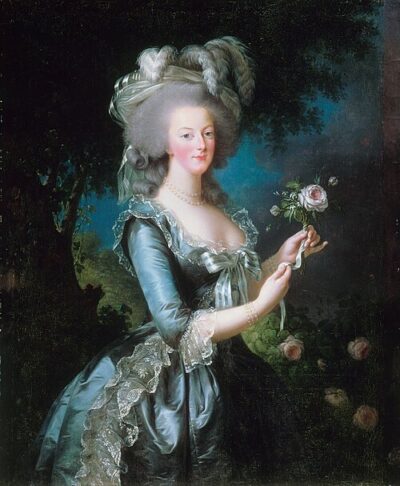
Marie Antoinette
Marie Antoinette was a last Queen of France prior to the French Revolution. Born November 2, 1755, in Hofburg Palace. Died October 16, 1793, in place de la Concorde. Positions held include Queen Consort of France. Awards include Order of the Starry Cross.
Facts
33 facts · 2 confirmed by two sources · 4 cited · 25 from one source · 2 where the sources disagree
What’s different
- Cause of death: we show decapitation by guillotine (Sources disagree). Wikidata also lists decapitation
- Name at birth: we show Maria Antonia Josepha Johanna (Sources disagree). Wikidata also lists Maria Antonia Josepha Johanna von Habsburg-Lothringen
Where this comes from
Papalocal keeps its own record. It started from these sources; what each one said is kept here as it was copied, so a change on their side never changes this page by itself. Tap one to read its version.
What Wikidata says · copied November 16, 2026 · revision 2568255705
- Described as
- last Queen of France prior to the French Revolution (1755–1793)
- Other names
- Marie-Antoinette Josephus Joan, Mary Antionette Queen, Queen of France Marie Antoinette, Marie-Antoinette, Queen, consort of Louis XVI, King of France Marie Antoinette, Marie Antoinette Joséphe Jeanne of Austria-Lorraine, Mary Antoinette, Maria Antonia Josepha Johanna, Archduchess Maria Antonia Josepha Johanna [House of Habsburg-Lorraine] von Habsburg-Lothringen, Maria Antonia, Queen Marie Antoinette consort of Louis XVI King of France, The Austrian Woman
- Born
- November 2, 1755 · 12 references
- Died
- October 16, 1793 · 11 references
- Born in
- Hofburg Palace · 1 reference
- Died in
- place de la Concorde · 1 reference
- Buried in
- Basilica of Saint-Denis
- Cause of death
- decapitation by guillotine · 1 reference; decapitation · 1 reference
- Name at birth
- Maria Antonia Josepha Johanna; Maria Antonia Josepha Johanna von Habsburg-Lothringen
- Citizen of
- France; Habsburg monarchy
- Occupation
- aristocrat; consort
- Positions held
- Queen Consort of France
- Member of
- Louis XVI and Marie Antoinette
- Awards
- Order of the Starry Cross · 1 reference
- Spouse
- Louis XVI of France (1770–1792) · 2 references; Axel von Fersen the Younger · 1 reference
- Children
- Marie Thérèse of France; Louis Joseph, Dauphin of France; Louis XVII of France · 1 reference; Princess Sophie of France
- Father
- Francis I, Holy Roman Emperor
- Mother
- Maria Theresa of Austria
- Siblings
- Archduchess Maria Carolina of Austria; Archduchess Maria Josepha of Austria; Maria Carolina of Austria; Maria Christina, Duchess of Teschen; Archduchess Maria Anna of Austria; Archduchess Maria Amalia of Austria; Archduchess Maria Elisabeth of Austria; Archduchess Maria Johanna Gabriela of Austria; Archduchess Maria Carolina of Austria; Archduchess Maria Elisabeth of Austria
- Religion
- Catholic Church
- Wikipedias with a page
- 135
Wikidata item Q47365 (wikidata.org/wiki/Q47365), public domain (CC0). Copied November 16, 2026.
What Wikipedia says · copied November 16, 2026 · revision 1385426985
Marie Antoinette (2 November 1755 – 16 October 1793) was the last queen of France before the abolition of the monarchy during the French Revolution. She served from 1774 to 1792, as the wife of King Louis XVI.
Marie was born in Vienna as an archduchess of the House of Habsburg-Lorraine. She was the youngest daughter of Maria Theresa and Francis I, Holy Roman Emperor. In 1769, Marie Antoinette was betrothed to Louis-Auguste, Dauphin of France, in order to strengthen the Franco-Austrian alliance. The two were married in 1770, thus making Marie Antoinette dauphine of France at the age of fourteen. In 1774, Louis-Auguste inherited the French throne as Louis XVI, becoming king of France, and Marie Antoinette queen consort.
As queen, Marie Antoinette became increasingly a target of criticism by opponents of the domestic and foreign policies of Louis XVI and those opposed to the monarchy in general. The French libelles accused her of being profligate, promiscuous, having illegitimate children, and harboring sympathies for France's perceived enemies, including her native Austria. She was falsely accused of defrauding the Crown's jewelers in the Affair of the Diamond Necklace, but the accusations still damaged her reputation. During the French Revolution, she became known as Madame Déficit because the country's financial crisis was blamed on her lavish spending and her opposition to social and financial reforms proposed by Anne Robert Jacques Turgot and Jacques Necker.
Several events were linked to Marie Antoinette during the Revolution after the government placed the royal family under house arrest in the Tuileries Palace in October 1789. The June 1791 attempted flight to Varennes and her role in the War of the First Coalition were immensely damaging to her image among French citizens. On 10 August 1792, the attack on the Tuileries forced the royal family to take refuge at the Legislative Assembly, and they were imprisoned in the Temple Prison on 13 August 1792. On 21 September 1792, France was declared a republic and the monarchy was abolished. Louis XVI was executed by guillotine on 21 January 1793 and Marie Antoinette moved to the Conciergerie. Her trial began on 14 October 1793; two days later, she was convicted by the Revolutionary Tribunal of high treason and executed by guillotine on 16 October 1793 at the Place de la Révolution.
- Born, in its opening lines
- November 2, 1755
- Died, in its opening lines
- October 16, 1793
From the Wikipedia article “Marie Antoinette” (en.wikipedia.org/wiki/Marie_Antoinette), by its contributors, under CC BY-SA 4.0 (creativecommons.org/licenses/by-sa/4.0/). Copied November 16, 2026; not changed.
Confirmed Two sources agree. Cited One source, and it names where it got it. One source One source, without a reference of its own. Sources disagree The sources disagree. We show the best-supported value and keep theirs below.
