
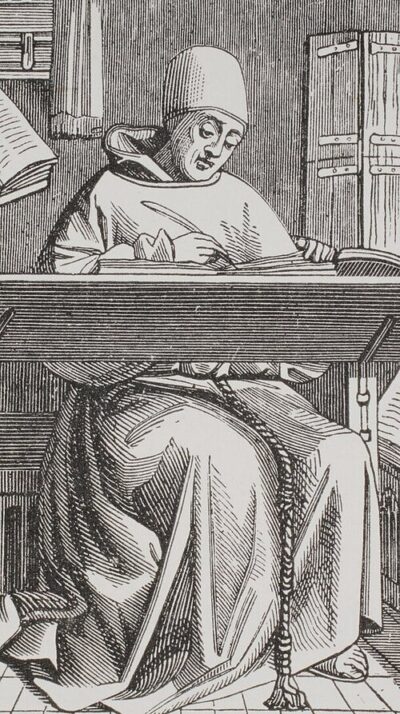
Marsilius of Padua
Marsilius of Padua was an Italian philosopher. Born 1275, in Padua. Died 1342, in Munich. Known for Defensor pacis, De translatione Imperii and Defensor minor. Educated at University of Paris and University of Padua.
Facts
20 facts · 0 confirmed by two sources · 11 cited · 9 from one source
Where this comes from
Papalocal keeps its own record. It started from these sources; what each one said is kept here as it was copied, so a change on their side never changes this page by itself. Tap one to read its version.
What Wikidata says · copied November 16, 2026 · revision 2568224511
- Described as
- Italian philosopher (1275–1342)
- Born
- 1275 · 2 references
- Died
- 1342 · 5 references
- Born in
- Padua · 1 reference
- Died in
- Munich · 1 reference
- Occupation
- philosopher · 1 reference; politician · 1 reference; writer; university teacher; opinion journalist · 1 reference; jurist · 1 reference
- Education
- University of Paris; University of Padua · 1 reference
- Known for
- Defensor pacis; De translatione Imperii; Defensor minor
- Field
- medieval philosophy; political philosophy · 1 reference; law · 1 reference; theology · 1 reference
- Religion
- Christianity
- Wikipedias with a page
- 42
Wikidata item Q315357 (wikidata.org/wiki/Q315357), public domain (CC0). Copied November 16, 2026.
What Wikipedia says · copied November 16, 2026 · revision 1385563131
Marsilius of Padua (Italian: Marsilio da Padova; born Marsilio Mainardi, Marsilio de i Mainardini or Marsilio Mainardini; c. 1275 – c. 1342) was an Italian scholar, trained in medicine, who practised a variety of professions. He was also an important 14th-century political figure. His political treatise Defensor pacis (The Defender of Peace), an attempt to refute papal claims to a "plenitude of power" in affairs of both church and state, is seen by some scholars as the most revolutionary political treatise written in the later Middle Ages. It is one of the first examples of a trenchant critique of ultramontanism in Western Europe. Marsilius is sometimes seen as a forerunner of the Protestant reformation, because many of his beliefs were later adopted by John Calvin and Martin Luther.
From the Wikipedia article “Marsilius of Padua” (en.wikipedia.org/wiki/Marsilius_of_Padua), by its contributors, under CC BY-SA 4.0 (creativecommons.org/licenses/by-sa/4.0/). Copied November 16, 2026; not changed.
Confirmed Two sources agree. Cited One source, and it names where it got it. One source One source, without a reference of its own. Sources disagree The sources disagree. We show the best-supported value and keep theirs below.
