
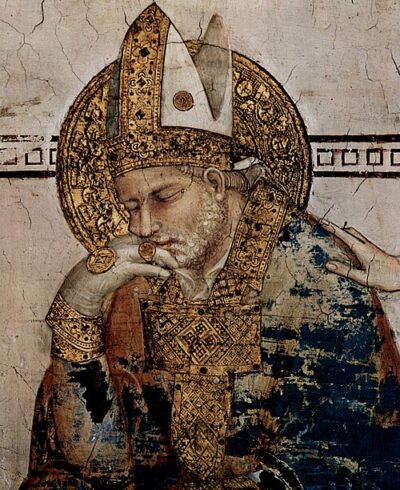
Martin of Tours
Martin of Tours was a Christian saint (c.316/336 - 397). Born 316, in Savaria. Died November 8, 397, in Candes-Saint-Martin. Positions held include Roman Catholic Bishop of Tours (371–397).
Facts
12 facts · 0 confirmed by two sources · 6 cited · 5 from one source · 1 where the sources disagree
What’s different
- Born: we show 316 (Sources disagree). Wikidata also lists 336
Where this comes from
Papalocal keeps its own record. It started from these sources; what each one said is kept here as it was copied, so a change on their side never changes this page by itself. Tap one to read its version.
What Wikidata says · copied November 16, 2026 · revision 2569058132
- Described as
- Christian saint (c.316/336 - 397)
- Other names
- Sanctus Martinus Turonensis, Martinus Turonensis, Saint Martin, St. Martin
- Born
- 316 · 6 references; 336
- Died
- November 8, 397 · 5 references
- Born in
- Savaria · 2 references
- Died in
- Candes-Saint-Martin · 1 reference
- Buried in
- Basilica of St. Martin, Tours
- Citizen of
- Ancient Rome
- Occupation
- soldier · 1 reference; Catholic bishop · 1 reference; bishop · 1 reference; monk · 1 reference
- Positions held
- Roman Catholic Bishop of Tours (371–397)
- Religion
- Catholicism · 1 reference
- Wikipedias with a page
- 83
Wikidata item Q133704 (wikidata.org/wiki/Q133704), public domain (CC0). Copied November 16, 2026.
What Wikipedia says · copied November 16, 2026 · revision 1385149939
Martin of Tours (Latin: Martinus Turonensis; 316/336 – 8 November 397) was the third bishop of Tours. He is the patron saint of many communities and organizations across Europe, including of the former French Third Republic. A native of Savaria, Pannonia, he converted to Christianity at a young age. He served in the Roman cavalry in Gaul, but left military service prior to 361, when he became a disciple of Hilary of Poitiers, establishing the monastery at Ligugé. He was consecrated as Bishop of Caesarodunum (Tours) in 371. As bishop, he was active in the expansion of the Nicene Creed, yet he was against the violent persecution that fellow nicenes launched against the Priscillianists.
The contemporary hagiographer Sulpicius Severus wrote a Life of St. Martin. He is best known for the account of his using his sword to cut his cloak in two, to give half to a beggar clad only in rags in winter. His shrine in Tours became an often-frequented stop for pilgrims on the road to Santiago de Compostela in Spain.
From the Wikipedia article “Martin of Tours” (en.wikipedia.org/wiki/Martin_of_Tours), by its contributors, under CC BY-SA 4.0 (creativecommons.org/licenses/by-sa/4.0/). Copied November 16, 2026; not changed.
Confirmed Two sources agree. Cited One source, and it names where it got it. One source One source, without a reference of its own. Sources disagree The sources disagree. We show the best-supported value and keep theirs below.
