
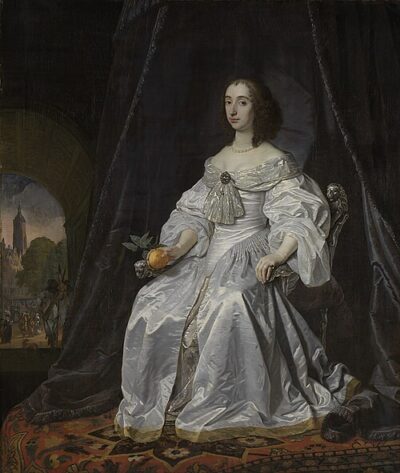
Mary Henrietta, Princess Royal
Mary Henrietta, Princess Royal was an eldest daughter of Charles I of England and his wife, Henrietta Maria of France; mother of William III of England. Born November 4, 1631, in St James's Palace. Died December 24, 1660, in Palace of Whitehall. Positions held include regent (1650–), Princess of Orange (1641–1650) and Princess Royal (1642–1660).
Facts
22 facts · 2 confirmed by two sources · 9 cited · 11 from one source
Where this comes from
Papalocal keeps its own record. It started from these sources; what each one said is kept here as it was copied, so a change on their side never changes this page by itself. Tap one to read its version.
What Wikidata says · copied November 16, 2026 · revision 2555066169
- Described as
- eldest daughter of Charles I of England and his wife, Henrietta Maria of France; mother of William III of England (1631-1660)
- Other names
- Mary, Princess Royal, Mary Stuart, Mary Henrietta Stuart, Princess Royal of Great Britain, Maria Henrietta Stuart, Maria Henrietta Stuart I
- Born
- November 4, 1631 · 3 references
- Died
- December 24, 1660 · 2 references
- Born in
- St James's Palace
- Died in
- Palace of Whitehall
- Buried in
- Westminster Abbey
- Cause of death
- smallpox
- Citizen of
- Kingdom of England; Dutch Republic · 1 reference
- Occupation
- aristocrat
- Positions held
- regent (1650–); Princess of Orange (1641–1650); Princess Royal (1642–1660)
- Spouse
- William II, Prince of Orange (1641–1650) · 2 references
- Children
- William III of England · 2 references
- Father
- Charles I of England · 3 references
- Mother
- Henrietta Maria of France · 3 references
- Siblings
- Princess Anne of England; Princess Elizabeth of England; Henrietta of England · 2 references; Henry Stuart, Duke of Gloucester · 1 reference; James II of England · 2 references; Charles II of England · 2 references
- Wikipedias with a page
- 38
Wikidata item Q236930 (wikidata.org/wiki/Q236930), public domain (CC0). Copied November 16, 2026.
What Wikipedia says · copied November 16, 2026 · revision 1381576851
Mary, Princess Royal (Mary Henrietta Stuart; 4 November 1631 – 24 December 1660), was a British princess, a member of the House of Stuart, and by marriage Princess of Orange and Countess of Nassau. She acted as regent for her minor son from 1651 to 1660. She was the first holder of the title Princess Royal.
Mary was the eldest daughter of King Charles I of England and Queen Henrietta Maria, and sister of Charles II and James II. She was married to the future stadtholder of the Netherlands, William II of Orange, in 1641 at the age of nine, while he was fourteen. Initially, she remained in England with her parents because of the heated political situation in England until early 1642, when she and her mother left for the Netherlands. Five years later in 1647, Mary's husband inherited the titles of Prince of Orange and Stadtholder of Holland, Zeeland, Utrecht, Guelders, Overijssel and Groningen in the United Provinces of the Netherlands.
Eight days after her husband's death in 1650, Mary gave birth to a son, William III of Orange, who later became king of England, Scotland and Ireland. Mary, who became the only guardian of her son, was not popular in the Netherlands because of her support of her brothers and her difficult relationship with her mother-in-law Amalia of Solms-Braunfels, who considered the princess young and inexperienced. After the restoration of the monarchy in England in 1660, Mary departed for celebrations in London, where she fell ill with smallpox and died.
- Born, in its opening lines
- November 4, 1631
- Died, in its opening lines
- December 24, 1660
From the Wikipedia article “Mary, Princess Royal and Princess of Orange” (en.wikipedia.org/wiki/Mary,_Princess_Royal_and_Princess_of_Orange), by its contributors, under CC BY-SA 4.0 (creativecommons.org/licenses/by-sa/4.0/). Copied November 16, 2026; not changed.
Confirmed Two sources agree. Cited One source, and it names where it got it. One source One source, without a reference of its own. Sources disagree The sources disagree. We show the best-supported value and keep theirs below.
