
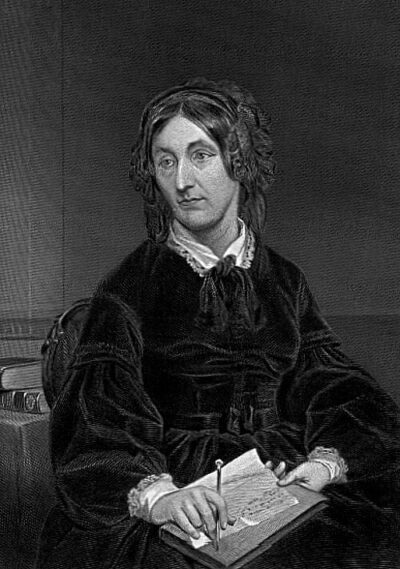
Mary Somerville
Mary Somerville was a Scottish scientist, writer and polymath. Born December 26, 1780, in Jedburgh. Died November 28, 1872, in Naples. Known for On the connection of the physical sciences, On molecular and microscopic science and Mechanism of the Heavens. Awards include Patron’s Medal.
Facts
32 facts · 2 confirmed by two sources · 14 cited · 16 from one source
What’s different
- Died: we show November 28, 1872 (Confirmed). Wikidata also lists November 29, 1872
Where this comes from
Papalocal keeps its own record. It started from these sources; what each one said is kept here as it was copied, so a change on their side never changes this page by itself. Tap one to read its version.
What Wikidata says · copied November 16, 2026 · revision 2568670913
- Described as
- Scottish scientist, writer and polymath (1780–1872)
- Other names
- Mrs. Mary Somerville, Mary Fairfax, Mary Greig, Mary Fairfax Greig Somerville, Mary Fairfax Somerville, Mary Sommerville
- Born
- December 26, 1780 · 5 references
- Died
- November 28, 1872 · 3 references; November 29, 1872 · 3 references
- Born in
- Jedburgh · 2 references
- Died in
- Naples · 2 references
- Buried in
- English Cemetery, Naples
- Name at birth
- Mary Fairfax · 1 reference
- Citizen of
- United Kingdom of Great Britain and Ireland
- Occupation
- mathematician · 1 reference; writer; scientist · 1 reference; physicist · 1 reference; geologist; astronomer · 1 reference
- Member of
- American Philosophical Society; Royal Astronomical Society; Accademia Pontaniana · 1 reference; Société de physique et d'histoire naturelle de Genève · 1 reference; Royal Irish Academy · 1 reference
- Known for
- On the connection of the physical sciences; On molecular and microscopic science; Mechanism of the Heavens
- Awards
- Patron’s Medal (1869) · 1 reference
- Field
- popularisation of science; mathematics
- Spouse
- William Somerville (1812–1860) · 2 references; Samuel Greig Jr. (1804–1807) · 2 references
- Children
- Woronzow Greig; Martha Somerville; Mary Charlotte Somerville
- Father
- William George Fairfax · 1 reference
- Mother
- Margaret Charters · 1 reference
- Lived in
- Scotland
- Wikipedias with a page
- 58
Wikidata item Q268702 (wikidata.org/wiki/Q268702), public domain (CC0). Copied November 16, 2026.
What Wikipedia says · copied November 16, 2026 · revision 1374535674
Mary Somerville (née Fairfax, formerly Greig; 1780–1872) was a Scottish scientist, writer, and polymath. She studied mathematics and astronomy, and in 1835 she and Caroline Herschel were elected as the first female Honorary Members of the Royal Astronomical Society.
In John Stuart Mill's 1866 mass petition to the UK Parliament to grant women the right to vote, the first signature on the petition was Somerville's, which she signed before the age of 86.
When she died in 1872, The Morning Post declared in her obituary that "Whatever difficulty we might experience in the middle of the nineteenth century in choosing a king of science, there could be no question whatever as to the queen of science". The first use of the word "scientist" in the English language was in a review by William Whewell of Somerville's second book On the Connexion of the Physical Sciences. Beyond her work as a scientist, she is known and celebrated as a mathematician and philosopher.
Somerville College, a college of the University of Oxford, is named after her, reflecting the virtues of liberalism and academic success that the college wished to embody. She is featured on the front of the Royal Bank of Scotland polymer £10 note launched in 2017 along with a quotation from On the Connexion of the Physical Sciences.
- Born, in its opening lines
- 1780
- Died, in its opening lines
- 1872
From the Wikipedia article “Mary Somerville” (en.wikipedia.org/wiki/Mary_Somerville), by its contributors, under CC BY-SA 4.0 (creativecommons.org/licenses/by-sa/4.0/). Copied November 16, 2026; not changed.
Confirmed Two sources agree. Cited One source, and it names where it got it. One source One source, without a reference of its own. Sources disagree The sources disagree. We show the best-supported value and keep theirs below.
