
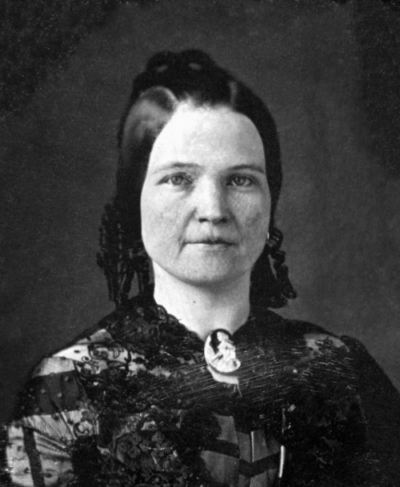
Mary Todd Lincoln
Mary Todd Lincoln was a First Lady of the United States from 1861 to 1865. Born December 13, 1818, in Lexington. Died July 16, 1882, in Springfield. Positions held include First Lady of the United States (1861–1865).
Facts
22 facts · 2 confirmed by two sources · 7 cited · 13 from one source
Where this comes from
Papalocal keeps its own record. It started from these sources; what each one said is kept here as it was copied, so a change on their side never changes this page by itself. Tap one to read its version.
What Wikidata says · copied November 13, 2026 · revision 2563176753
- Described as
- First Lady of the United States from 1861 to 1865
- Other names
- Mary Ann Lincoln, Mary Todd, Mary Ann Todd, Mary Ann Todd Lincoln, mary Todd Lincoln
- Born
- December 13, 1818 · 8 references
- Died
- July 16, 1882 · 7 references
- Born in
- Lexington
- Died in
- Springfield
- Buried in
- Lincoln Tomb
- Name at birth
- Mary Ann Todd
- Citizen of
- United States
- Occupation
- First Lady
- Positions held
- First Lady of the United States (1861–1865)
- Political party
- Republican Party
- Spouse
- Abraham Lincoln (1842–1865) · 1 reference
- Children
- Tad Lincoln · 1 reference; Edward Baker Lincoln · 1 reference; William Wallace Lincoln · 1 reference; Robert Todd Lincoln · 1 reference
- Father
- Robert Smith Todd · 1 reference
- Mother
- Ann Eliza Parker · 1 reference
- Siblings
- Elizabeth Todd Edwards; Emilie Todd Helm · 1 reference; George Rogers Clark Todd; Margaret Todd Kellogg
- Religion
- Presbyterianism
- Wikipedias with a page
- 57
Wikidata item Q215062 (wikidata.org/wiki/Q215062), public domain (CC0). Copied November 13, 2026.
What Wikipedia says · copied November 13, 2026 · revision 1379665003
Mary Ann Lincoln (née Todd; December 13, 1818 – July 16, 1882) was First Lady of the United States from 1861 until the assassination of her husband, President Abraham Lincoln, in 1865.
Mary Todd was born into a large and wealthy slave-owning family in Kentucky, although Mary never owned slaves and in her adulthood came to oppose slavery. Well educated, after finishing school in her late teens, she moved to Springfield, the capital of Illinois. She lived there with her married sister Elizabeth Todd Edwards, the wife of an Illinois congressman. Before she married Abraham Lincoln, Mary was courted by his long-time political opponent Stephen A. Douglas.
Mary Lincoln staunchly supported her husband's career and political ambitions, and throughout his presidency, she was active in keeping national morale high during the American Civil War. She acted as the White House social coordinator, throwing lavish balls and redecorating the White House at great expense; her spending was the source of much consternation. She was seated next to Abraham when he was assassinated in the President's Box at Ford's Theatre in Washington, D.C., on April 14, 1865.
The Lincolns had four sons, of whom only the eldest, Robert, survived both parents. The deaths of her husband and three of their sons weighed heavily on her. Young Thomas (Tad), who died suddenly in 1871, had just spent an extended time traveling with her after Robert married. Mary Lincoln suffered from physical and mental health issues. She had frequent headaches, which were exacerbated by a head injury in 1863.
She likely suffered from depression or possibly bipolar disorder. She was briefly institutionalized for psychiatric illness in 1875, and then spent several years traveling in Europe. She later retired to her sister's home in Springfield, where she died in 1882 at age 63. She is buried with her husband and three younger sons in the Lincoln Tomb, a National Historic Landmark.
- Born, in its opening lines
- December 13, 1818
- Died, in its opening lines
- July 16, 1882
From the Wikipedia article “Mary Todd Lincoln” (en.wikipedia.org/wiki/Mary_Todd_Lincoln), by its contributors, under CC BY-SA 4.0 (creativecommons.org/licenses/by-sa/4.0/). Copied November 13, 2026; not changed.
Confirmed Two sources agree. Cited One source, and it names where it got it. One source One source, without a reference of its own. Sources disagree The sources disagree. We show the best-supported value and keep theirs below.
