
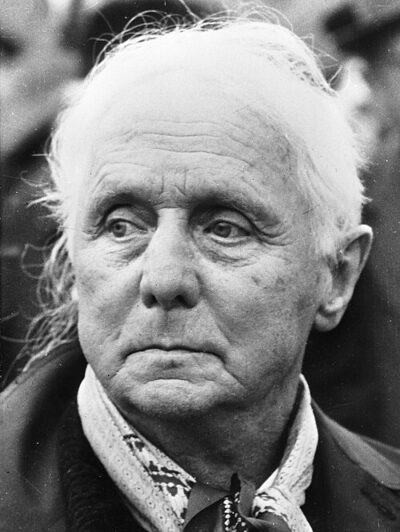
Max Ernst
Max Ernst was a German artist. Born April 2, 1891, in Brühl. Died April 1, 1976, in 7th arrondissement of Paris. Known for The Elephant Celebes, The Hat Makes the Man and The Robing of the Bride. Educated at University of Bonn. Awards include Venice Biennale, Goslarer Kaiserring and Lichtwark Prize.
Facts
44 facts · 2 confirmed by two sources · 23 cited · 18 from one source · 1 where the sources disagree
What’s different
- Buried in: we show Crématorium-columbarium du Père-Lachaise (Sources disagree). Wikidata also lists Grave of Ernst
Where this comes from
Papalocal keeps its own record. It started from these sources; what each one said is kept here as it was copied, so a change on their side never changes this page by itself. Tap one to read its version.
What Wikidata says · copied November 13, 2026 · revision 2564037868
- Described as
- German artist (1891–1976)
- Other names
- Max Ernest, Ernst Max, Mx Ernst, Erunsuto, Maximilian Ernst, Maximilian Maria Ernst
- Born
- April 2, 1891 · 26 references
- Died
- April 1, 1976 · 22 references
- Born in
- Brühl · 6 references
- Died in
- 7th arrondissement of Paris · 1 reference
- Buried in
- Crématorium-columbarium du Père-Lachaise · 2 references; Grave of Ernst
- Name at birth
- Maximilian Maria Ernst · 1 reference
- Citizen of
- Cuba (–1948) · 1 reference; United States (1949–) · 1 reference; France (1958–) · 2 references; Germany · 1 reference
- Occupation
- painter · 7 references; sculptor · 5 references; poet; lithographer · 2 references; collagist · 2 references; designer · 1 reference; jewelry designer · 1 reference; engraver · 1 reference
- Education
- University of Bonn
- Member of
- The Blue Rider; College of 'Pataphysics
- Genre
- portrait · 1 reference; landscape painting · 1 reference; animal art · 1 reference; figure · 1 reference; abstract art · 1 reference
- Known for
- The Elephant Celebes; The Hat Makes the Man; The Robing of the Bride
- Awards
- Venice Biennale; Goslarer Kaiserring (1976); Lichtwark Prize (1964) · 1 reference
- Field
- painting; art of sculpture; drip painting; frottage; collaging
- Spouse
- Peggy Guggenheim (1942–1946) · 1 reference; Luise Straus-Ernst (1918–1926) · 1 reference; Dorothea Tanning (1946–1976) · 1 reference; Marie-Berthe Aurenche (1927–1936)
- Children
- Jimmy Ernst · 1 reference
- Father
- Philipp Ernst
- Siblings
- Loni Pretzell
- Wikipedias with a page
- 72
Wikidata item Q154842 (wikidata.org/wiki/Q154842), public domain (CC0). Copied November 13, 2026.
What Wikipedia says · copied November 13, 2026 · revision 1377638217
Max Ernst (; German: [ɛʁnst] 2 April 1891 – 1 April 1976) was a German-born painter, sculptor, printmaker, graphic artist, and poet. A prolific artist, Ernst was a pioneer of the Dada movement and surrealism in Europe. He had no formal artistic training, but his experimental attitude toward the making of art resulted in his invention of frottage—a technique that uses pencil rubbings of textured objects and relief surfaces to create images—and grattage, an analogous technique in which paint is scraped across canvas to reveal the imprints of the objects placed beneath. Ernst is noted for his unconventional drawing methods as well as for creating novels and pamphlets using the method of collages. He served as a soldier for four years during World War I, which left him shocked and critical of the modern world. During World War II he was designated an "undesirable foreigner" while living in France.
Ernst was born in Brühl. He began painting in 1909 while studying at the University of Bonn, and later joined Die Rheinischen Expressionisten group of artists. Ernst's work often had ironic juxtapositions of grotesque elements with cubist and expressionist motifs. He had a fascination with birds, often including his alter ego, Loplop, a bird, in his work. He eventually settled in France and achieved financial success in the 1950s. He died in Paris on 1 April 1976.
- Born, in its opening lines
- April 2, 1891
- Died, in its opening lines
- April 1, 1976
From the Wikipedia article “Max Ernst” (en.wikipedia.org/wiki/Max_Ernst), by its contributors, under CC BY-SA 4.0 (creativecommons.org/licenses/by-sa/4.0/). Copied November 13, 2026; not changed.
Confirmed Two sources agree. Cited One source, and it names where it got it. One source One source, without a reference of its own. Sources disagree The sources disagree. We show the best-supported value and keep theirs below.
