
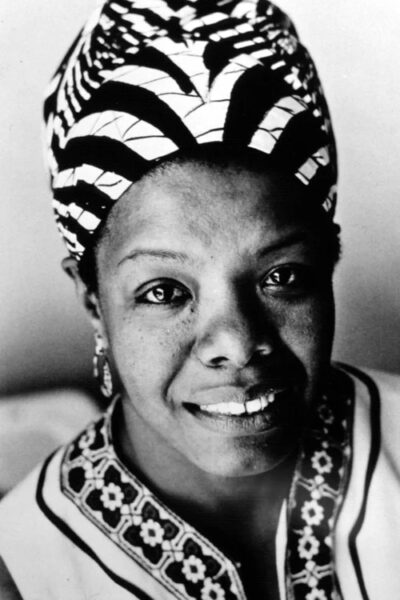
Maya Angelou
Maya Angelou was an American poet, author, and civil rights activist. Born April 4, 1928, in St. Louis. Died May 28, 2014, in Winston-Salem. Known for I Know Why the Caged Bird Sings, On the Pulse of Morning and And Still I Rise. Educated at George Washington High School and California Labor School. Awards include National Women's Hall of Fame, Langston Hughes Medal and Grammy Award for Best Audio Book, Narration & Storytelling Recording (3 times).
Facts
48 facts · 2 confirmed by two sources · 24 cited · 22 from one source
Where this comes from
Papalocal keeps its own record. It started from these sources; what each one said is kept here as it was copied, so a change on their side never changes this page by itself. Tap one to read its version.
What Wikipedia says · copied November 13, 2026 · revision 1384615153
Maya Angelou ( AN-jə-loh; born Marguerite Annie Johnson; April 4, 1928 – May 28, 2014) was an American memoirist, essayist, poet, and civil rights activist. She published seven autobiographies, three books of essays, several books of poetry, and is credited with a list of plays, movies, and television shows spanning more than 50 years. She received dozens of awards and more than 50 honorary degrees. Angelou's series of seven autobiographies focus on her childhood and early adult experiences. The first, I Know Why the Caged Bird Sings (1969), tells of her life up to the age of 17 and brought her international recognition and acclaim.
She became a poet and writer after a string of odd jobs during her young adulthood. In 1982, Angelou was named the first Reynolds Professor of American Studies at Wake Forest University in Winston-Salem, North Carolina. Angelou was active in the Civil Rights Movement and worked with Martin Luther King Jr. and Malcolm X. Beginning in the 1990s, she made approximately 80 appearances a year on the lecture circuit, something she continued into her eighties. In 1993, Angelou recited her poem "On the Pulse of Morning" (1993) at the first inauguration of Bill Clinton, making her the first poet to make an inaugural recitation since Robert Frost at the inauguration of John F. Kennedy in 1961.
With the publication of I Know Why the Caged Bird Sings, Angelou publicly discussed aspects of her personal life. She was respected as a spokesperson for African Americans and women, and her works have been considered a defense of African-American culture. Her works are widely used in schools and universities worldwide, although attempts have been made to ban her books from some U.S. libraries. Angelou's most celebrated works have been labeled as autobiographical fiction, but many critics consider them to be autobiographies. She made a deliberate attempt to challenge the common structure of the autobiography by critiquing, changing, and expanding the genre. Her books center on themes that include racism, identity, family, and travel.
- Born, in its opening lines
- April 4, 1928
- Died, in its opening lines
- May 28, 2014
From the Wikipedia article “Maya Angelou” (en.wikipedia.org/wiki/Maya_Angelou), by its contributors, under CC BY-SA 4.0 (creativecommons.org/licenses/by-sa/4.0/). Copied November 13, 2026; not changed.
What Wikidata says · copied November 14, 2026 · revision 2568935526
- Described as
- American poet, author, and civil rights activist (1928–2014)
- Other names
- Marguerite Annie Johnson, Marguerite Johnson, Marguerite Ann Johnson, Marguerite Anne Johnson
- Born
- April 4, 1928 · 11 references
- Died
- May 28, 2014 · 9 references
- Born in
- St. Louis · 3 references
- Died in
- Winston-Salem · 2 references
- Cause of death
- disease
- Name at birth
- Marguerite Annie Johnson · 1 reference
- Citizen of
- United States
- Occupation
- politician; dancer · 1 reference; film producer; television producer; playwright; film director · 1 reference; professor · 1 reference; screenwriter · 1 reference
- Worked for
- Wake Forest University · 1 reference
- Education
- George Washington High School; California Labor School
- Member of
- Alpha Kappa Alpha; Harlem Writers Guild · 1 reference; Southern Christian Leadership Conference · 1 reference
- Instrument
- voice
- Known for
- I Know Why the Caged Bird Sings; On the Pulse of Morning; And Still I Rise; Even the Stars Look Lonesome
- Awards
- National Women's Hall of Fame (1998) · 1 reference; Langston Hughes Medal (1991) · 1 reference; Grammy Award for Best Audio Book, Narration & Storytelling Recording (3 times) (1993, 1995, 2002); Spingarn Medal (1994) · 1 reference; NAACP Image Award for Outstanding Literary Work, Nonfiction (2 times) (2005, 2009); Marian Anderson Award (2008) · 1 reference; Presidential Medal of Freedom (2010) · 2 references; Literarian Award for Outstanding Service to the American Literary Community (2013) · 1 reference; Candace Award (1990); Horatio Alger Award (1992) · 1 reference; Arkansas Black Hall of Fame (1993) · 1 reference; Paul Robeson Award (1990); Crystal Award (1992) · 1 reference; National Medal of Arts (2000) · 1 reference; honorary doctorate of the University of South Carolina (1989)
- Field
- poetry · 1 reference; essay · 1 reference
- Spouse
- Paul du Feu (1974–1983) · 1 reference
- Lived in
- St. Louis · 1 reference; Stamps · 1 reference; New York City · 1 reference
- Website
- https://mayaangelou.com
- Wikipedias with a page
- 148
Wikidata item Q19526 (wikidata.org/wiki/Q19526), public domain (CC0). Copied November 14, 2026.
Confirmed Two sources agree. Cited One source, and it names where it got it. One source One source, without a reference of its own. Sources disagree The sources disagree. We show the best-supported value and keep theirs below.
