
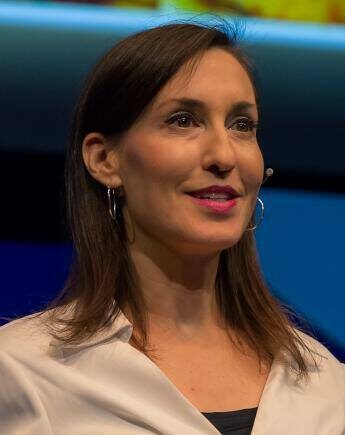
Melanie Joy
Melanie Joy is an American psychologist. Born September 2, 1966. Educated at Saybrook University and Harvard Graduate School of Education. Awards include Ahimsa Award.
Facts
14 facts · 1 confirmed by two sources · 5 cited · 8 from one source
Where this comes from
Papalocal keeps its own record. It started from these sources; what each one said is kept here as it was copied, so a change on their side never changes this page by itself. Tap one to read its version.
What Wikidata says · copied November 15, 2026 · revision 2550346281
- Described as
- American psychologist
- Born
- September 2, 1966 · 1 reference
- Citizen of
- United States
- Occupation
- psychologist · 1 reference; animal rights advocate; university teacher · 1 reference
- Worked for
- University of Massachusetts Boston
- Education
- Saybrook University; Harvard Graduate School of Education; Harvard University · 1 reference
- Awards
- Ahimsa Award (2013)
- Field
- social psychology · 1 reference; veganism · 1 reference; carnism · 1 reference
- Website
- https://www.melaniejoy.org
- Wikipedias with a page
- 26
Wikidata item Q6487319 (wikidata.org/wiki/Q6487319), public domain (CC0). Copied November 15, 2026.
What Wikipedia says · copied November 15, 2026 · revision 1381056365
Melanie Joy (born September 2, 1966) is an American social psychologist and author, primarily notable for coining the term carnism. She is the founding president of nonprofit advocacy group Beyond Carnism, previously known as Carnism Awareness & Action Network (CAAN), as well as a former professor of psychology and sociology at the University of Massachusetts Boston. She has published the books Strategic Action for Animals, Why We Love Dogs, Eat Pigs, and Wear Cows and Beyond Beliefs.
- Born, in its opening lines
- September 2, 1966
From the Wikipedia article “Melanie Joy” (en.wikipedia.org/wiki/Melanie_Joy), by its contributors, under CC BY-SA 4.0 (creativecommons.org/licenses/by-sa/4.0/). Copied November 15, 2026; not changed.
Confirmed Two sources agree. Cited One source, and it names where it got it. One source One source, without a reference of its own. Sources disagree The sources disagree. We show the best-supported value and keep theirs below.
