
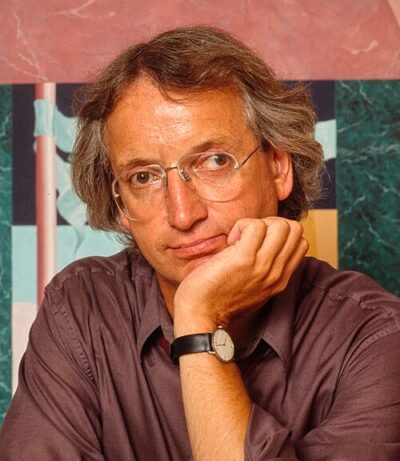
Michael Graves
Michael Graves was an American architect and designer of consumer products. Born July 9, 1934, in Indianapolis. Died March 12, 2015, in Princeton. Known for Walt Disney World Swan, Team Disney and Disney Hotel New York - The Art of Marvel. Educated at Harvard University and University of Cincinnati. Awards include Rome Prize, National Medal of Arts and New Jersey Hall of Fame.
Facts
29 facts · 2 confirmed by two sources · 11 cited · 16 from one source
Where this comes from
Papalocal keeps its own record. It started from these sources; what each one said is kept here as it was copied, so a change on their side never changes this page by itself. Tap one to read its version.
What Wikidata says · copied November 15, 2026 · revision 2567372714
- Described as
- American architect and designer of consumer products (1934-2015)
- Born
- July 9, 1934 · 4 references
- Died
- March 12, 2015 · 9 references
- Born in
- Indianapolis · 1 reference
- Died in
- Princeton · 1 reference
- Buried in
- Princeton Cemetery · 1 reference
- Citizen of
- United States · 1 reference
- Occupation
- architect · 4 references; university teacher; designer · 2 references; draftsperson · 1 reference; painter · 1 reference
- Worked for
- Princeton University
- Education
- Harvard University; University of Cincinnati; Harvard Graduate School of Design; Broad Ripple High School · 1 reference
- Member of
- American Academy of Arts and Letters; Memphis Group; The New York Five
- Known for
- Walt Disney World Swan; Team Disney; Disney Hotel New York - The Art of Marvel
- Awards
- Rome Prize; National Medal of Arts; New Jersey Hall of Fame (2010) · 1 reference; Fellow of the American Institute of Architects
- Field
- architecture · 1 reference; design · 1 reference
- Website
- https://www.michaelgraves.com/
- Wikipedias with a page
- 30
Wikidata item Q314636 (wikidata.org/wiki/Q314636), public domain (CC0). Copied November 15, 2026.
What Wikipedia says · copied November 15, 2026 · revision 1384387871
Michael Graves (July 9, 1934 – March 12, 2015) was an American architect, designer, and educator, and principal of Michael Graves and Associates and Michael Graves Design Group. He was a member of The New York Five and the Memphis Group and a professor of architecture at Princeton University for nearly forty years. Following his own partial paralysis in 2003, Graves became an internationally recognized advocate of health care design.
Graves' global portfolio of architectural work ranged from the Ministry of Culture in The Hague, a post office for Celebration, Florida, a prominent expansion of the Denver Public Library to numerous commissions for Disney and the scaffolding design for the 2000 Washington Monument restoration. He was recognized for his influence on architectural movements, including New Urbanism, New Classicism, and postmodernism. His postmodern buildings include the Portland Building in Portland, Oregon and the Humana Building in Louisville, Kentucky.
For his architectural work, Graves received a fellowship of the American Institute of Architects as well as its highest award, the AIA Gold Medal (2001). He was trustee of the American Academy in Rome and was the president of its Society of Fellows from 1980 to 1984. He received the American Prize for Architecture, the National Medal of Arts (1999) and the Driehaus Architecture Prize (2012).
Graves produced both high end and mass consumer product designs for several companies, including Alessi in Italy and Target and J. C. Penney in the United States. The New York Times described Graves as "one of the most prominent and prolific American architects of the latter 20th century, who designed more than 350 buildings around the world but was perhaps best known for [a] teakettle and pepper mill."
- Born, in its opening lines
- July 9, 1934
- Died, in its opening lines
- March 12, 2015
From the Wikipedia article “Michael Graves” (en.wikipedia.org/wiki/Michael_Graves), by its contributors, under CC BY-SA 4.0 (creativecommons.org/licenses/by-sa/4.0/). Copied November 15, 2026; not changed.
Confirmed Two sources agree. Cited One source, and it names where it got it. One source One source, without a reference of its own. Sources disagree The sources disagree. We show the best-supported value and keep theirs below.
