
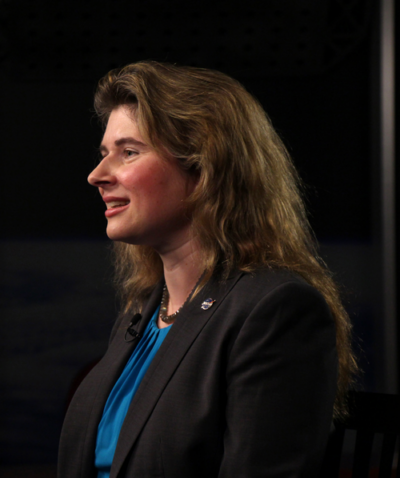
Michelle Thaller is an American astronomer. Born November 28, 1969, in Waukesha. Educated at Harvard University and Georgia State University.
Facts
15 facts · 0 confirmed by two sources · 0 cited · 15 from one source
Where this comes from
Papalocal keeps its own record. It started from these sources; what each one said is kept here as it was copied, so a change on their side never changes this page by itself. Tap one to read its version.
What Wikidata says · copied November 18, 2026 · revision 2559318663
- Described as
- American astronomer
- Other names
- Michelle L. Thaller, Michelle Lynn Thaller
- Born
- November 28, 1969
- Born in
- Waukesha
- Citizen of
- United States
- Occupation
- astronomer; university teacher; journalist; physicist
- Worked for
- San José State University; Goddard Space Flight Center · 1 reference; Jet Propulsion Laboratory
- Education
- Harvard University; Georgia State University; Waukesha South High School · 1 reference
- Spouse
- Andrew Booth (2000–2020)
- Lived in
- Maryland · 1 reference
- Wikipedias with a page
- 15
Wikidata item Q6837268 (wikidata.org/wiki/Q6837268), public domain (CC0). Copied November 18, 2026.
What Wikipedia says · copied November 18, 2026 · revision 1371188642
Michelle Thaller is an American astronomer, research scientist, and science communicator. Thaller is formerly the Assistant Director for Science Communication at NASA Goddard Space Flight Center. She retired in 2024 after 27 years at NASA.
From 1998 to 2009 she was a staff scientist at the Infrared Processing and Analysis Center, and later Manager of the Education and Public Outreach program for the Spitzer Space Telescope, at the California Institute of Technology. She is a frequent on-camera contributor to programming on the History Channel and Science Channel.
From the Wikipedia article “Michelle Thaller” (en.wikipedia.org/wiki/Michelle_Thaller), by its contributors, under CC BY-SA 4.0 (creativecommons.org/licenses/by-sa/4.0/). Copied November 18, 2026; not changed.
Confirmed Two sources agree. Cited One source, and it names where it got it. One source One source, without a reference of its own. Sources disagree The sources disagree. We show the best-supported value and keep theirs below.
