
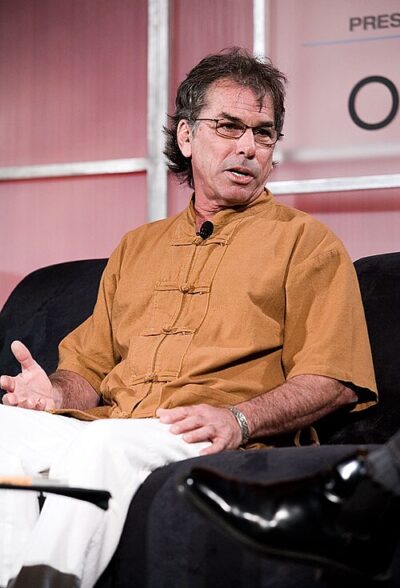
Mickey Hart is an American percussionist. Born September 11, 1943, in Brooklyn. Educated at Lawrence High School. Awards include Library of Congress Living Legend and Grammy Award for Best Global Music Album.
Facts
15 facts · 1 confirmed by two sources · 3 cited · 11 from one source
Where this comes from
Papalocal keeps its own record. It started from these sources; what each one said is kept here as it was copied, so a change on their side never changes this page by itself. Tap one to read its version.
What Wikidata says · copied November 18, 2026 · revision 2529345771
- Described as
- American percussionist
- Other names
- Michael Steven Hartman
- Born
- September 11, 1943
- Born in
- Brooklyn
- Citizen of
- United States
- Occupation
- musician · 1 reference; musicologist; percussionist; composer · 1 reference
- Education
- Lawrence High School · 1 reference
- Member of
- Grateful Dead (2 times) (1967–1995)
- Genre
- rock music
- Instrument
- drum kit
- Awards
- Library of Congress Living Legend (2000–) · 1 reference; Grammy Award for Best Global Music Album
- Father
- Lenny Hart
- Website
- http://www.mickeyhart.net/
- Wikipedias with a page
- 18
Wikidata item Q522201 (wikidata.org/wiki/Q522201), public domain (CC0). Copied November 18, 2026.
What Wikipedia says · copied November 18, 2026 · revision 1384388493
Mickey Hart (born Michael Steven Hartman, September 11, 1943) is an American percussionist. He is best known as one of the two drummers of the rock band Grateful Dead. He was a member of the Grateful Dead from September 1967 until February 1971, and again from October 1974 until their final show in July 1995. He and fellow Dead drummer Bill Kreutzmann earned the nickname "the rhythm devils".
- Born, in its opening lines
- September 11, 1943
From the Wikipedia article “Mickey Hart” (en.wikipedia.org/wiki/Mickey_Hart), by its contributors, under CC BY-SA 4.0 (creativecommons.org/licenses/by-sa/4.0/). Copied November 18, 2026; not changed.
Confirmed Two sources agree. Cited One source, and it names where it got it. One source One source, without a reference of its own. Sources disagree The sources disagree. We show the best-supported value and keep theirs below.
