
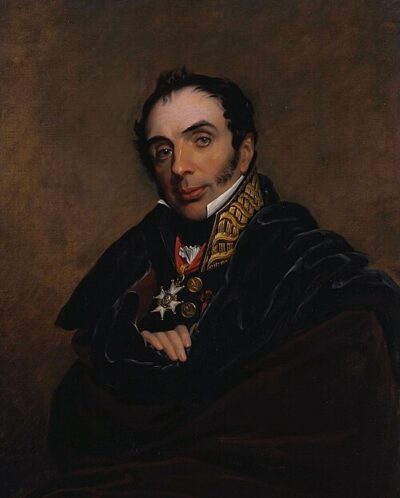
Miguel Ricardo de Álava y Esquivel
Miguel Ricardo de Álava y Esquivel was a Spanish general;. Born July 7, 1770, in Vitoria-Gasteiz. Died July 14, 1843, in Barèges. Positions held include Member of the Congress of Deputies (1822–1823), ambassador of Spain to the United Kingdom of Great Britain and Ireland (2 times) (1834–1841) and Prócer del Reino (1834–1836). Awards include Knight Grand Officer of the Order of William, Grand Cross of the Order of Charles III and Grand Cross of the Royal and Military Order of Saint Hermenegild.
Facts
29 facts · 2 confirmed by two sources · 6 cited · 21 from one source
What’s different
- Born: we show July 7, 1770 (Confirmed). Wikidata also lists February 7, 1772 and July 7, 1771
Where this comes from
Papalocal keeps its own record. It started from these sources; what each one said is kept here as it was copied, so a change on their side never changes this page by itself. Tap one to read its version.
What Wikidata says · copied November 17, 2026 · revision 2562753439
- Described as
- Spanish general; (1771-1843)
- Other names
- Miguel Ricardo Alava y Esquivel, Luitenant-generaal Miquel de Alava, Miguel Ricardo de Alava, Miguel Ricardo de Alava y Esquivel, Ricardo de Alava, Miguel Ricardo de Álava Esquível, Miguel Ricardo Álava y Esquivel
- Born
- February 7, 1772; July 7, 1770; July 7, 1771 · 2 references
- Died
- July 14, 1843 · 1 reference
- Born in
- Vitoria-Gasteiz
- Died in
- Barèges
- Buried in
- Cemetery of Santa Isabel, Vitoria-Gasteiz
- Name at birth
- Miguel Ricardo de Álava Esquível
- Citizen of
- Spain
- Occupation
- politician · 1 reference; diplomat; military personnel; soldier · 1 reference
- Positions held
- Member of the Congress of Deputies (1822–1823); ambassador of Spain to the United Kingdom of Great Britain and Ireland (2 times) (1834–1841); Prócer del Reino (1834–1836) · 1 reference; Minister of the Spanish Navy (1835); Minister of State of Spain (1835); President of the Council of Ministers (1835); ambassador of Spain to France (2 times) (1815–1836) · 2 references; ambassador of Spain to the Netherlands (1818–1819); Captain General of Aragon (1821–1822)
- Political party
- Progressive Party
- Awards
- Knight Grand Officer of the Order of William (1815); Grand Cross of the Order of Charles III; Grand Cross of the Royal and Military Order of Saint Hermenegild; Knight Commander of the Order of the Bath; Master of the Order of Santiago
- Spouse
- Loreto de Arriola · 1 reference
- Military branch
- army · 1 reference
- Military rank
- general · 1 reference
- Wikipedias with a page
- 26
Wikidata item Q451113 (wikidata.org/wiki/Q451113), public domain (CC0). Copied November 17, 2026.
What Wikipedia says · copied November 17, 2026 · revision 1386164980
Miguel Ricardo de Álava y Esquivel (7 July 1770 – 14 July 1843) was a Spanish general and statesman who served as Prime Minister of Spain in 1835. He was born in the Basque Country, at Vitoria-Gasteiz, in 1770. Álava holds the distinction of having been present at both Trafalgar and Waterloo, fighting against the British at the former and with them at the latter.
Alava served as a naval aide-de-camp during the time of Spain's alliance with France but switched sides in 1808 when Napoleon invaded Spain. The Spanish Cortes appointed him commissary (military attaché) at the British Army Headquarters, and Wellesley, the future Duke of Wellington, who regarded him with great favour, made him one of his aides-de-camp. Before the close of the campaign, he had risen to the rank of brigadier-general. During the Waterloo Campaign in 1815, Alava was the Spanish ambassador to The Hague at the court of King William I of the Netherlands, which allowed him to attend the Duchess of Richmond's ball and to be at Wellington's side during the Battle of Waterloo.
- Born, in its opening lines
- July 7, 1770
- Died, in its opening lines
- July 14, 1843
From the Wikipedia article “Miguel Ricardo de Álava” (en.wikipedia.org/wiki/Miguel_Ricardo_de_Álava), by its contributors, under CC BY-SA 4.0 (creativecommons.org/licenses/by-sa/4.0/). Copied November 17, 2026; not changed.
Confirmed Two sources agree. Cited One source, and it names where it got it. One source One source, without a reference of its own. Sources disagree The sources disagree. We show the best-supported value and keep theirs below.
