
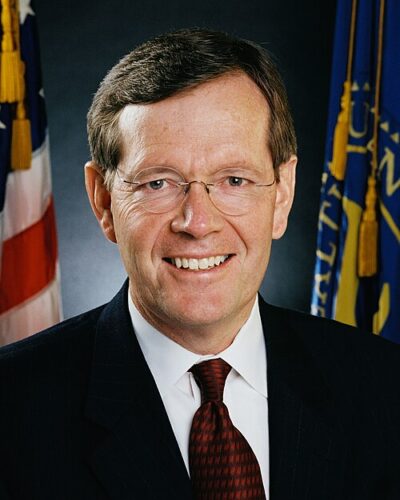
Mike Leavitt
Mike Leavitt is an American politician. Born February 11, 1951, in Cedar City. Positions held include United States Secretary of Health and Human Services (2005–2009), Governor of Utah (1993–2003) and Administrator of the Environmental Protection Agency (2003–2005). Educated at Southern Utah University and Cedar High School. Awards include Dr. Nathan Davis Award for Governors or Statewide Elected Officials.
Facts
20 facts · 1 confirmed by two sources · 3 cited · 16 from one source
Where this comes from
Papalocal keeps its own record. It started from these sources; what each one said is kept here as it was copied, so a change on their side never changes this page by itself. Tap one to read its version.
What Wikidata says · copied November 16, 2026 · revision 2567777284
- Described as
- American politician
- Other names
- Michael O. Leavitt, Michael Leavitt, Michael Okerlund Leavitt
- Born
- February 11, 1951 · 2 references
- Born in
- Cedar City · 1 reference
- Name at birth
- Michael Okerlund Leavitt
- Citizen of
- United States
- Occupation
- politician · 1 reference; economist; public figure; blogger; elector; governor · 1 reference
- Positions held
- United States Secretary of Health and Human Services (2005–2009); Governor of Utah (1993–2003); Administrator of the Environmental Protection Agency (2003–2005)
- Political party
- Republican Party
- Education
- Southern Utah University; Cedar High School · 1 reference
- Awards
- Dr. Nathan Davis Award for Governors or Statewide Elected Officials (1994)
- Father
- Dixie L. Leavitt
- Siblings
- David O. Leavitt
- Religion
- The Church of Jesus Christ of Latter-day Saints
- Wikipedias with a page
- 20
Wikidata item Q879432 (wikidata.org/wiki/Q879432), public domain (CC0). Copied November 16, 2026.
What Wikipedia says · copied November 16, 2026 · revision 1384888011
Michael Okerlund Leavitt (born February 11, 1951) is an American politician who served as the 20th United States secretary of health and human services from 2005 to 2009 and the 10th administrator of the Environmental Protection Agency from 2003 to 2005. A member of the Republican Party, he served as the 14th governor of Utah from 1993 to 2003.
Leavitt started his career in 1972 and worked in the insurance and risk management industry until 1992. From 1984 until his election as Governor of Utah in 1992, he was the president and chief executive officer (CEO) of The Leavitt Group. As governor, Leavitt worked to establish Western Governors University and the first charter schools in Utah, led the state's preparation for the 2002 Winter Olympics in Utah, was a leader in the implementation of a modernized system of sales tax on e-commerce throughout the United States, negotiated the largest land exchanges between a state and the federal government, initiated an engineering education initiative, worked on the devolution of welfare to the states, and established the Utah Centennial Highway Fund which featured design build highway construction.
Leavitt resigned as governor in 2003 after he was successfully nominated by President George W. Bush to lead the EPA; he was succeeded as governor by Olene Walker, his lieutenant governor. Leavitt was promoted to Secretary of Health and Human Services at the start of Bush's second term, serving until the conclusion of the Bush administration. As HHS Secretary, he oversaw the implementation of Medicare Part D, developed the National Pandemic Plan, promoted value-based health care, mitigated the effects of Hurricane Katrina, opened FDA offices in China, India, South America, and reauthorized SCHIP and TANF.
Leavitt now works as a health care advisor, investor, and independent corporate director. In August 2021, he became president of the Tabernacle Choir.
- Born, in its opening lines
- February 11, 1951
From the Wikipedia article “Mike Leavitt” (en.wikipedia.org/wiki/Mike_Leavitt), by its contributors, under CC BY-SA 4.0 (creativecommons.org/licenses/by-sa/4.0/). Copied November 16, 2026; not changed.
Confirmed Two sources agree. Cited One source, and it names where it got it. One source One source, without a reference of its own. Sources disagree The sources disagree. We show the best-supported value and keep theirs below.
