
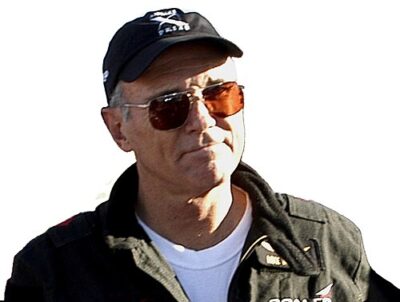
Mike Melvill was a test pilot. Born November 30, 1940, in Johannesburg. Died March 19, 2026. Educated at Hilton College and Highbury Preparatory School. Awards include Iven C. Kincheloe Award (2 times).
Facts
13 facts · 2 confirmed by two sources · 0 cited · 11 from one source
Where this comes from
Papalocal keeps its own record. It started from these sources; what each one said is kept here as it was copied, so a change on their side never changes this page by itself. Tap one to read its version.
What Wikidata says · copied November 18, 2026 · revision 2523958355
- Described as
- test pilot
- Other names
- Michael Winston Melvill
- Born
- November 30, 1940
- Died
- March 19, 2026 · 2 references
- Born in
- Johannesburg
- Citizen of
- South Africa; United States
- Occupation
- aircraft pilot; test pilot; commercial astronaut; astronaut; glider pilot
- Education
- Hilton College; Highbury Preparatory School
- Awards
- Iven C. Kincheloe Award (2 times) (1999, 2004)
- Wikipedias with a page
- 17
Wikidata item Q918798 (wikidata.org/wiki/Q918798), public domain (CC0). Copied November 18, 2026.
What Wikipedia says · copied November 18, 2026 · revision 1378503147
Michael Winston Melvill (November 30, 1940 – March 19, 2026) was a South African-born American world-record-breaking pilot and one of the test pilots for SpaceShipOne, the experimental spaceplane developed by Scaled Composites. Melvill piloted SpaceShipOne on its first flight past the edge of space, flight 15P on June 21, 2004, thus becoming the first commercial astronaut, and the 435th person to go into space. He was also the pilot on SpaceShipOne's flight 16P, the first competitive flight in the Ansari X Prize competition.
- Born, in its opening lines
- November 30, 1940
- Died, in its opening lines
- March 19, 2026
From the Wikipedia article “Mike Melvill” (en.wikipedia.org/wiki/Mike_Melvill), by its contributors, under CC BY-SA 4.0 (creativecommons.org/licenses/by-sa/4.0/). Copied November 18, 2026; not changed.
Confirmed Two sources agree. Cited One source, and it names where it got it. One source One source, without a reference of its own. Sources disagree The sources disagree. We show the best-supported value and keep theirs below.
