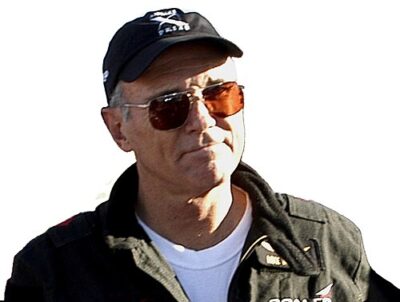
Iven C. Kincheloe Award
Iven C. Kincheloe Award is a recognizes outstanding professional accomplishment in the conduct of flight testing. It was created in 1958.
- Country
- United States
- Created
- 1958
All 4 facts, and where they come from
Facts
4 facts · 0 confirmed by two sources · 0 cited · 4 from one source
Where this comes from
Papalocal keeps its own record. It started from these sources; what each one said is kept here as it was copied, so a change on their side never changes this page by itself. Tap one to read its version.
What Wikidata says · copied November 19, 2026 · revision 2570694116
- Described as
- recognizes outstanding professional accomplishment in the conduct of flight testing
- What it is
- award
- Created
- 1958
- Country
- United States
- Official website
- http://www.setp.org/criteria/iven-c-kincheloe-award.html
- Wikipedias with a page
- 2
Wikidata item Q6098670 (wikidata.org/wiki/Q6098670), public domain (CC0). Copied 2026-11-19.
What Wikipedia says · copied November 19, 2026 · revision 1386188122
The Iven C. Kincheloe Award recognizes outstanding professional accomplishment in the conduct of flight testing. It was established in 1958 by the Society of Experimental Test Pilots in memory of test pilot and Korean War ace Iven C. Kincheloe, United States Air Force, who died during flight testing.
The Kincheloe Trophy consists of four columns and a symbolic aerospace vehicle that points toward the shield of the society. The columns represent the foundation on which the society was founded: courage, integrity, knowledge and accomplishment. The vehicle reinforces the role played by the society in the development of aerospace systems. Plaques bearing the name of each honoree are mounted around the sides of the onyx base.
From the Wikipedia article “Iven C. Kincheloe Award” (en.wikipedia.org/wiki/Iven_C._Kincheloe_Award), by its contributors, under CC BY-SA 4.0 (creativecommons.org/licenses/by-sa/4.0/). Copied 2026-11-19; not changed.
Confirmed Two sources agree. Cited One source, and it names where it got it. One source One source, without a reference of its own. Sources disagree The sources disagree. We show the best-supported value and keep theirs below.