
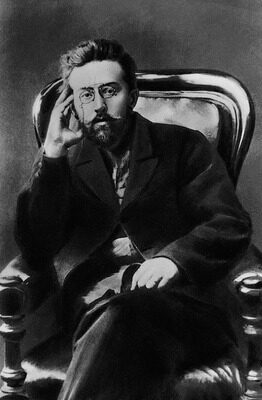
Mikhail Artsybashev
Mikhail Artsybashev was a Russian writer and playwright. Born November 5, 1878, in Dobroslavivka. Died March 3, 1927, in Warsaw.
Facts
11 facts · 2 confirmed by two sources · 2 cited · 7 from one source
Where this comes from
Papalocal keeps its own record. It started from these sources; what each one said is kept here as it was copied, so a change on their side never changes this page by itself. Tap one to read its version.
What Wikidata says · copied November 16, 2026 · revision 2559126335
- Described as
- Russian writer and playwright (1878–1927)
- Other names
- Mikhail Petrovich Artsybashev, Mihail Petrovich Arcibashev
- Born
- November 5, 1878 · 6 references
- Died
- March 3, 1927 · 11 references
- Born in
- Dobroslavivka
- Died in
- Warsaw · 2 references
- Buried in
- Orthodox Cemetery in Warsaw
- Cause of death
- tuberculosis
- Citizen of
- Russian Empire
- Occupation
- writer · 3 references; journalist; novelist; playwright
- Wikipedias with a page
- 37
Wikidata item Q448143 (wikidata.org/wiki/Q448143), public domain (CC0). Copied November 16, 2026.
What Wikipedia says · copied November 16, 2026 · revision 1371373287
Mikhail Petrovich Artsybashev (Russian: Михаи́л Петро́вич Арцыба́шев; Polish: Michał Arcybaszew; Ukrainian: Михайло Петрович Арцибашев; November 5, 1878 – March 3, 1927) was a Russian writer and playwright, and a major proponent of the literary style known as naturalism. He was the great-grandson of Tadeusz Kościuszko and father of Boris Artzybasheff, who emigrated to the United States and became famous as an illustrator. Following the Russian Revolution, in 1923 Artsybashev emigrated to Poland, where he died in 1927.
- Born, in its opening lines
- November 5, 1878
- Died, in its opening lines
- March 3, 1927
From the Wikipedia article “Mikhail Artsybashev” (en.wikipedia.org/wiki/Mikhail_Artsybashev), by its contributors, under CC BY-SA 4.0 (creativecommons.org/licenses/by-sa/4.0/). Copied November 16, 2026; not changed.
Confirmed Two sources agree. Cited One source, and it names where it got it. One source One source, without a reference of its own. Sources disagree The sources disagree. We show the best-supported value and keep theirs below.
