
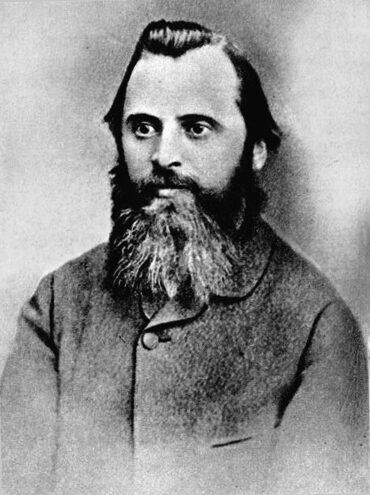
Mily Alexeyevich Balakirev
Mily Alexeyevich Balakirev was a Russian composer, pianist, and conductor. Born December 21, 1836, in Nizhny Novgorod. Died May 16, 1910, in Saint Petersburg. Known for Tamara. Educated at Kazan Imperial University and Nizhny Novgorod Institute of nobility. Awards include Order of Saint Stanislaus, 2nd class.
Facts
29 facts · 0 confirmed by two sources · 9 cited · 18 from one source · 2 where the sources disagree
What’s different
- Born: we show December 21, 1836 (Sources disagree). Wikipedia says January 2, 1837
- Died: we show May 16, 1910 (Sources disagree). Wikipedia says May 29, 1910
Where this comes from
Papalocal keeps its own record. It started from these sources; what each one said is kept here as it was copied, so a change on their side never changes this page by itself. Tap one to read its version.
What Wikidata says · copied November 16, 2026 · revision 2567629908
- Described as
- Russian composer, pianist, and conductor (1837–1910)
- Born
- December 21, 1836 · 3 references
- Died
- May 16, 1910 · 2 references
- Born in
- Nizhny Novgorod · 5 references
- Died in
- Saint Petersburg · 1 reference
- Buried in
- Tikhvin Cemetery
- Citizen of
- Russian Empire
- Occupation
- composer · 4 references; conductor · 2 references; pedagogue; musicologist; pianist · 1 reference; music educator · 1 reference
- Worked for
- Saint Petersburg – Warsaw Railway (1872–1881); Saint Petersburg Court Capella (1883–); Free Music School (1868–1874)
- Education
- Kazan Imperial University (1853–1855) · 1 reference; Nizhny Novgorod Institute of nobility (1849–1853)
- Member of
- The Five
- Genre
- symphony
- Instrument
- piano
- Known for
- Tamara
- Awards
- Order of Saint Stanislaus, 2nd class
- Field
- music · 1 reference; piano · 1 reference; conducting · 1 reference; music education · 1 reference
- Lived in
- Saint Petersburg (2 times) (1855–); Nizhny Novgorod (1837–1855); Warsaw (1872–)
- Wikipedias with a page
- 67
Wikidata item Q185040 (wikidata.org/wiki/Q185040), public domain (CC0). Copied November 16, 2026.
What Wikipedia says · copied November 16, 2026 · revision 1370779281
Mily Alexeyevich Balakirev (UK: bə-LA(H)K-i-rev, US: BAH-lah-KEER-ef; Russian: Милий Алексеевич Балакирев, pronounced [ˈmʲilʲɪj ɐlʲɪkˈsʲe(j)ɪvʲɪdʑ bɐˈlakʲɪrʲɪf] ; 2 January 1837 [O.S. 21 December 1836] – 29 May [O.S. 16 May] 1910) was a Russian composer, pianist, and conductor known today primarily for his work promoting musical nationalism and his encouragement of more famous Russian composers, notably Pyotr Ilyich Tchaikovsky. He began his career as a pivotal figure, extending the fusion of traditional folk music and experimental classical music practices begun by composer Mikhail Glinka. In the process, Balakirev developed musical patterns that could express overt nationalistic feeling. After a nervous breakdown and consequent sabbatical, he returned to classical music but did not wield the same level of influence as before.
In conjunction with critic and fellow nationalist Vladimir Stasov, in the late 1850s and early 1860s, Balakirev brought together the composers now known as The Five (a.k.a., The Mighty Handful) – the others were Alexander Borodin, César Cui, Modest Mussorgsky, and Nikolai Rimsky-Korsakov. For several years, Balakirev was the only professional musician of the group; the others were amateurs limited in musical education. He imparted to them his musical beliefs, which continued to underlie their thinking long after he left the group in 1871, and encouraged their compositional efforts. While his methods could be dictatorial, the results of his influence were several works which established these composers' reputations individually and as a group. He performed a similar function for Tchaikovsky at two points in the latter's career – in 1868–69 with the fantasy-overture Romeo and Juliet, and in 1882–85 with the Manfred Symphony.
As a composer, Balakirev finished major works many years after he had started them; he began his First Symphony in 1864 but completed it in 1897. The exception to this was his oriental fantasy Islamey for solo piano, which he composed quickly and remains popular among virtuosos. Often, the musical ideas normally associated with Rimsky-Korsakov or Borodin originated in Balakirev's compositions, which Balakirev played at informal gatherings of The Five. However, his slow pace in completing works for the public deprived him of credit for his inventiveness, and pieces that would have enjoyed success had they been completed in the 1860s and 1870s made a much smaller impact.
Balakirev began work on a second symphony, Symphony No. 2 in D minor in 1900, but did not complete the work until 1908.
- Born, in its opening lines
- January 2, 1837
- Died, in its opening lines
- May 29, 1910
From the Wikipedia article “Mily Balakirev” (en.wikipedia.org/wiki/Mily_Balakirev), by its contributors, under CC BY-SA 4.0 (creativecommons.org/licenses/by-sa/4.0/). Copied November 16, 2026; not changed.
Confirmed Two sources agree. Cited One source, and it names where it got it. One source One source, without a reference of its own. Sources disagree The sources disagree. We show the best-supported value and keep theirs below.
