
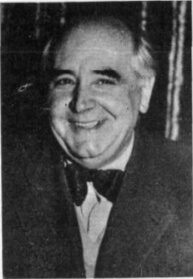
Miroslav Krleža
Miroslav Krleža was a Croatian writer. Born July 7, 1893, in Zagreb. Died December 29, 1981, in Zagreb. Known for Messrs. Glembay, Croatian God Mars and Ballads of Petrica Kerempuh. Educated at Ludovica Military Academy. Awards include Order of the Hero of Socialist Labour, NIN Prize and Vladimir Nazor Award.
Facts
40 facts · 2 confirmed by two sources · 15 cited · 23 from one source
Where this comes from
Papalocal keeps its own record. It started from these sources; what each one said is kept here as it was copied, so a change on their side never changes this page by itself. Tap one to read its version.
What Wikidata says · copied November 16, 2026 · revision 2558173151
- Described as
- Croatian writer (1893–1981)
- Other names
- Miroslav Krleza
- Born
- July 7, 1893 · 12 references
- Died
- December 29, 1981 · 11 references
- Born in
- Zagreb · 3 references
- Died in
- Zagreb · 2 references
- Buried in
- Mirogoj Cemetery · 1 reference
- Citizen of
- Hungary; Kingdom of Yugoslavia; Democratic Federal Yugoslavia; Socialist Federal Republic of Yugoslavia
- Occupation
- writer · 2 references; poet · 1 reference; journalist; prose writer · 1 reference; essayist · 1 reference
- Education
- Ludovica Military Academy
- Member of
- Serbian Academy of Sciences and Arts (1950–1981) · 1 reference; Slovenian Academy of Sciences and Arts; Croatian Academy of Sciences and Arts
- Known for
- Messrs. Glembay; Croatian God Mars; Ballads of Petrica Kerempuh; The Return of Philip Latinowicz; Flags
- Awards
- Order of the Hero of Socialist Labour; NIN Prize (1962) · 1 reference; Vladimir Nazor Award; Herder Prize (1968); Grand Order of King Dmitar Zvonimir; Order of the Yugoslavian Great Star · 1 reference; Order of Brotherhood and Unity · 1 reference; Austrian State Prize for European Literature (1975) · 1 reference; Golden Wreath (1979); International Botev Prize (1981) · 1 reference; star on Croatian Walk of Fame (2005)
- Field
- poetry · 1 reference; prose · 1 reference; essay · 1 reference; creative and professional writing · 1 reference
- Spouse
- Bela Krleža
- Religion
- atheism
- Wikipedias with a page
- 47
Wikidata item Q325428 (wikidata.org/wiki/Q325428), public domain (CC0). Copied November 16, 2026.
What Wikipedia says · copied November 16, 2026 · revision 1371373889
Miroslav Krleža (pronounced [mǐroslaʋ kř̩leʒa]; 7 July 1893 – 29 December 1981) was a Croatian writer, widely considered to be the greatest of the 20th century. He wrote notable works in several literary genres, including poetry (The Ballads of Petrica Kerempuh, 1936), theater (Messrs. Glembay, 1929), short story collections (The Croatian God Mars, 1922), novels (The Return of Philip Latinowicz, 1932; On the Edge of Reason, 1938), and an intimate diary. His works often include themes of bourgeois hypocrisy and conformism in Austria-Hungary and the Kingdom of Yugoslavia. Krleža wrote numerous essays on problems of art, history, politics, literature, philosophy, and military strategy, and was known as one of the great polemicists of the century. His style combines visionary poetic language and sarcasm.
Krleža dominated the cultural life of Croatia and Yugoslavia for half a century. A "Communist of his own making", he was criticized in Communist circles in the 1930s for his refusal to submit to the tenets of socialist realism. After the Second World War, he held various cultural posts in Socialist Yugoslavia, and was most notably the director of the Yugoslav Lexicographical Institute and a constant advisor on cultural affairs to President Tito. After the break with Stalin, his speech at the 1952 Congress of Yugoslav Writers signaled a new era of comparative freedom in Yugoslav literature.
- Born, in its opening lines
- July 7, 1893
- Died, in its opening lines
- December 29, 1981
From the Wikipedia article “Miroslav Krleža” (en.wikipedia.org/wiki/Miroslav_Krleža), by its contributors, under CC BY-SA 4.0 (creativecommons.org/licenses/by-sa/4.0/). Copied November 16, 2026; not changed.
Confirmed Two sources agree. Cited One source, and it names where it got it. One source One source, without a reference of its own. Sources disagree The sources disagree. We show the best-supported value and keep theirs below.
