
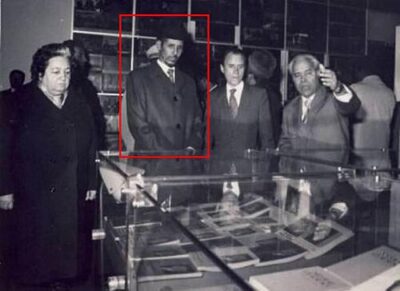
Mohamed Khouna Ould Haidalla
Mohamed Khouna Ould Haidalla is a former head of state of Mauritania. Born 1940, in La Güera. Positions held include Prime Minister of Mauritania (2 times) (1979–1984) and President of Mauritania (1980–1984). Educated at École Spéciale Militaire de Saint-Cyr.
Facts
13 facts · 0 confirmed by two sources · 3 cited · 10 from one source
Where this comes from
Papalocal keeps its own record. It started from these sources; what each one said is kept here as it was copied, so a change on their side never changes this page by itself. Tap one to read its version.
What Wikidata says · copied November 18, 2026 · revision 2568027411
- Described as
- former head of state of Mauritania
- Born
- 1940
- Born in
- La Güera
- Citizen of
- Mauritania · 1 reference
- Occupation
- politician · 2 references; dictator; minister · 1 reference
- Positions held
- Prime Minister of Mauritania (2 times) (1979–1984); President of Mauritania (1980–1984)
- Political party
- independent politician · 1 reference
- Education
- École Spéciale Militaire de Saint-Cyr
- Religion
- Sunni Islam
- Military branch
- Armed Forces of Mauritania
- Military rank
- colonel
- Wikipedias with a page
- 23
Wikidata item Q730612 (wikidata.org/wiki/Q730612), public domain (CC0). Copied November 18, 2026.
What Wikipedia says · copied November 18, 2026 · revision 1384390341
Colonel Mohamed Khouna Ould Haidalla (Arabic: محمد خونا ولد هيداله Muḥammad Khouna Wald Haidalla; born 1940) is a Mauritanian former military officer and politician who served as the head of state of Mauritania from 4 January 1980 to 12 December 1984.
He was an unsuccessful candidate in the 2003 presidential election and the 2007 presidential election.
From the Wikipedia article “Mohamed Khouna Ould Haidalla” (en.wikipedia.org/wiki/Mohamed_Khouna_Ould_Haidalla), by its contributors, under CC BY-SA 4.0 (creativecommons.org/licenses/by-sa/4.0/). Copied November 18, 2026; not changed.
Confirmed Two sources agree. Cited One source, and it names where it got it. One source One source, without a reference of its own. Sources disagree The sources disagree. We show the best-supported value and keep theirs below.
