
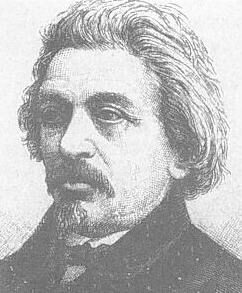
Moses Hess
Moses Hess was a German philosopher. Born January 21, 1812, in Bonn. Died April 6, 1875, in Paris. Educated at University of Bonn.
Facts
18 facts · 2 confirmed by two sources · 10 cited · 6 from one source
Where this comes from
Papalocal keeps its own record. It started from these sources; what each one said is kept here as it was copied, so a change on their side never changes this page by itself. Tap one to read its version.
What Wikidata says · copied November 16, 2026 · revision 2568735275
- Described as
- German philosopher (1812–1875)
- Born
- January 21, 1812 · 4 references
- Died
- April 6, 1875 · 8 references
- Born in
- Bonn · 2 references
- Died in
- Paris · 2 references
- Buried in
- Cologne (1875–1961) · 1 reference; Kinneret Cemetery (1961–) · 1 reference
- Citizen of
- Germany
- Occupation
- philosopher · 2 references; politician; journalist · 1 reference; writer · 1 reference; Zionist · 1 reference; author · 1 reference; opinion journalist · 1 reference; editing staff · 1 reference
- Education
- University of Bonn (1837–1839)
- Field
- writer
- Spouse
- Sibylle Heß
- Wikipedias with a page
- 43
Wikidata item Q213565 (wikidata.org/wiki/Q213565), public domain (CC0). Copied November 16, 2026.
What Wikipedia says · copied November 16, 2026 · revision 1385554922
Moses Hess (21 January 1812 – 6 April 1875) was a German-Jewish philosopher, a writer on socialism, and in later life, a forerunner of the political movement that became known as Zionism. His intellectual journey included significant contributions to the early development of socialist theory, and he was a close collaborator and an important influence on Karl Marx and Friedrich Engels. In his later life, Hess's focus shifted towards Jewish nationalism, culminating in his seminal 1862 work, Rome and Jerusalem.
Born in the French-occupied Rhineland, Hess was raised in a traditional Jewish home but broke away in his youth to pursue a path of philosophy and radical politics. His first book, The Holy History of Mankind (1837), proposed a socialist society founded on a synthesis of Jewish and Christian ethics, mediated through the philosophy of Baruch Spinoza. In the 1840s, he became a central figure among the Young Hegelians, where he developed a theory of "ethical socialism" and was one of the first thinkers in the German tradition to articulate a sophisticated theory of alienation rooted in social and economic conditions.
After the failure of the Revolutions of 1848, Hess grew disillusioned with the prospects of Jewish integration in Europe. Witnessing the rise of German nationalism and modern antisemitism, he concluded that the Jewish people were a distinct nation, not merely a religious community, and that their existential problems could only be solved through a national revival in their ancestral homeland. Rome and Jerusalem advocated for the establishment of a socialist commonwealth in Palestine, making him a foundational figure of Labor Zionism.
Hess died in Paris in 1875 and was buried in the Jewish cemetery in Deutz, Cologne. In 1961, his remains were transferred to Israel and reinterred in the Kinneret Cemetery. His work represents a unique synthesis of the national and social questions of the 19th century, and he remains a significant, though often overlooked, figure in the histories of both socialism and Zionism.
- Born, in its opening lines
- January 21, 1812
- Died, in its opening lines
- April 6, 1875
From the Wikipedia article “Moses Hess” (en.wikipedia.org/wiki/Moses_Hess), by its contributors, under CC BY-SA 4.0 (creativecommons.org/licenses/by-sa/4.0/). Copied November 16, 2026; not changed.
Confirmed Two sources agree. Cited One source, and it names where it got it. One source One source, without a reference of its own. Sources disagree The sources disagree. We show the best-supported value and keep theirs below.
