
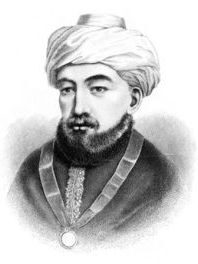
Moshe ben Maimon
Moshe ben Maimon was a Medieval Jewish philosopher from Spain. Born March 30, 1135, in Córdoba. Died December 13, 1204, in Cairo. Positions held include nagid of Egypt (1171–1204). Known for Mishneh Torah, The Guide for the Perplexed and Pirush Hamishnayot.
Facts
30 facts · 0 confirmed by two sources · 9 cited · 19 from one source · 2 where the sources disagree
What’s different
- Born: we show March 30, 1135 (Sources disagree). Wikidata also lists March 30, 1138
- Died: we show December 13, 1204 (Sources disagree). Wikipedia says December 12, 1204
Where this comes from
Papalocal keeps its own record. It started from these sources; what each one said is kept here as it was copied, so a change on their side never changes this page by itself. Tap one to read its version.
What Wikidata says · copied November 16, 2026 · revision 2568296748
- Described as
- Medieval Jewish philosopher from Spain (1135–1204)
- Other names
- Moses Maimonides, Rabbeinu Mosheh Ben Maimon, Mūsā ibn Maymūn, Rambam, Maimonides, RaMBaM, Mosheh ben Maimon
- Born
- March 30, 1138 · 1 reference; March 30, 1135 · 3 references
- Died
- December 13, 1204 · 2 references
- Born in
- Córdoba · 1 reference
- Died in
- Cairo · 1 reference
- Buried in
- Tiberias
- Occupation
- philosopher · 3 references; physician writer; rabbi; astronomer; Dayan; writer · 1 reference; physician · 3 references
- Positions held
- nagid of Egypt (1171–1204)
- Known for
- Mishneh Torah; The Guide for the Perplexed; Pirush Hamishnayot; Epistle to Yemen; Sefer Hamitzvot; Hakdamot HaRambam; Treatise in Eight Chapters; Treatise on logic
- Field
- philosophy; medicine · 1 reference; Torah; Halakha; Jewish philosophy · 1 reference; Judaism · 1 reference
- Children
- Abraham ben Moses ben Maimon · 1 reference
- Father
- Maimon ben Yossef HaDayan
- Religion
- Rabbinic Judaism
- Wikipedias with a page
- 111
Wikidata item Q127398 (wikidata.org/wiki/Q127398), public domain (CC0). Copied November 16, 2026.
What Wikipedia says · copied November 16, 2026 · revision 1385104529
Moses ben Maimon (died 12 December 1204), commonly known as Maimonides and also referred to by the Hebrew acronym Rambam, was a Sephardic Jewish rabbi who is widely acknowledged as one of the most prolific and influential Torah scholars of the Middle Ages.
Originally from Córdoba, where he was born on Passover Eve of 1135 or 1138, his family was exiled from Muslim-ruled Spain shortly after the Almohad Caliphate conquered the Almoravid dynasty in 1148. Over the course of the next two decades, Maimonides resided in Fez, Acre, Jerusalem, Alexandria, and Cairo before finally settling in Fustat between 1168 and 1171. During this period, he advanced his vocations and became renowned for his achievements as an astronomer, philosopher, and physician—even being appointed to serve as personal physician to Saladin of the Ayyubid Sultanate.
Most contemporary Jews as far as Iraq and Yemen acclaimed Maimonides' writings on halakha and Jewish ethics. Yet, while he rose to lead the Jewish community in Egypt, he also had many loud critics, particularly in Spain. He continued to live in Fustat until his death in 1204 and is said to have been buried in Tiberias. Accordingly, the Tomb of Maimonides in Tiberias holds importance as a Jewish pilgrimage site.
To date, Maimonides is recognized as one of the foremost rabbinic decisors and his copious work comprises a cornerstone of Jewish scholarship. His fourteen-volume Mishneh Torah still carries significant canonical authority in Judaism as a codification of halakha, as do his thirteen principles of faith. Maimonides' era is considered by many to mark the end of the Jewish Golden Age in Spain, owing to the ubiquitous persecution of his family and the Sephardic Jewish community in general, though others assert that it lasted until the Christian Reconquista concluded in the 15th century.
Aside from being revered by Jewish historians, Maimonides features very prominently in the history of Islamic science. Influenced by Aristotle, al-Farabi, ibn Sina, and his contemporary ibn Rushd, his work as a polymath contributed to the Islamic Golden Age and was regarded highly in many parts of the Muslim world.
- Died, in its opening lines
- December 12, 1204
From the Wikipedia article “Maimonides” (en.wikipedia.org/wiki/Maimonides), by its contributors, under CC BY-SA 4.0 (creativecommons.org/licenses/by-sa/4.0/). Copied November 16, 2026; not changed.
Confirmed Two sources agree. Cited One source, and it names where it got it. One source One source, without a reference of its own. Sources disagree The sources disagree. We show the best-supported value and keep theirs below.
