
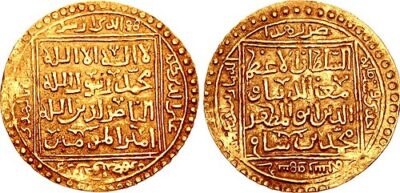
Muhammad of Ghor
Muhammad of Ghor was a ruler of Ghurid Sultanate from 1173 to 1206. Born 1144, in Ghor. Died March 15, 1206, in Dhamiak. Positions held include sultan (1173–1206).
Facts
12 facts · 2 confirmed by two sources · 0 cited · 10 from one source
Where this comes from
Papalocal keeps its own record. It started from these sources; what each one said is kept here as it was copied, so a change on their side never changes this page by itself. Tap one to read its version.
What Wikidata says · copied November 16, 2026 · revision 2554244050
- Described as
- ruler of Ghurid Sultanate from 1173 to 1206
- Born
- 1144
- Died
- March 15, 1206
- Born in
- Ghor
- Died in
- Dhamiak
- Buried in
- Sohawa Tehsil
- Cause of death
- stab wound
- Citizen of
- Afghanistan
- Occupation
- monarch
- Positions held
- sultan (1173–1206)
- Father
- Baha al-Din Sam I
- Siblings
- Ghiyath al-Din Muhammad
- Religion
- Islam
- Wikipedias with a page
- 49
Wikidata item Q1647182 (wikidata.org/wiki/Q1647182), public domain (CC0). Copied November 16, 2026.
What Wikipedia says · copied November 16, 2026 · revision 1385166321
Mu'izz al-Din Muhammad ibn Sam (Persian: معز الدین محمد بن سام, romanized: Muʿizz al-Dīn Muḥammad ibn Sām; c. 1144 – 15 March 1206), also known as Muhammad of Ghor or Muhammad Ghori, was a ruler from the Ghurid dynasty based in the Ghur region of what is today central Afghanistan who ruled from 1173 to 1206. Muhammad and his elder brother Ghiyath al-Din Muhammad ruled in a dyarchy until the latter's death in 1203. Ghiyath al-Din, the senior partner, governed the western Ghurid regions from his capital at Firozkoh whereas Muhammad extended Ghurid rule eastwards into South Asia, laying the foundation of Islamic rule in South Asia, which lasted after him for nearly half a millennium under evolving Muslim dynasties.
During his early career as governor of the southern tract of Ghurid Empire, Muhammad subjugated the Oghuz Turks after a series of forays and annexed Ghazni where he was installed by Ghiyath al-Din Muhammad as an independent sovereign. Expanding the Ghurid dominion east of the Indus Delta from his base in Ghazni, Muhammad crossed the river Indus in 1175, approaching it through the Gomal Pass and captured Multan and Uch from the Qarmatians within a year. Afterwards, Muhammad took his army by the way of lower Sindh, endeavouring to penetrate into present-day Gujarat through the Thar Desert. However, he was wounded and his forces were routed near Mount Abu at Kasahrada by a coalition of Rajput chiefs led by the Chaulukya king Mularaja. This setback forced him to change his route for future inroads into the Indian Plains. Hence, Muhammad pressed his forces against the Ghaznavids and uprooted them by 1186, conquering the upper Indus Plain along with most of Punjab. After expelling the Ghaznavids from their last bastion, Muhammad secured the Khyber Pass, the traditional route of entry for invading armies into northern India.
Extending the Ghurid dominion further eastwards into the Gangetic Plain, the Ghurid forces suffered a reverse and Muhammad was wounded in an engagement with the Rajput Confederacy led by the Chahamana ruler Prithviraj Chauhan at Tarain in 1191. Muhammad returned to Khurasan. A year later he set off with a vast army of mounted archers into the Gangetic Plain and secured a decisive victory in the return engagement on the same battleground. He executed Prithviraj shortly afterwards. He limited his presence in India thereafter, deputising the political and military operations in the region to a handful of elite slave commanders who raided local Indian kingdoms and extended the Ghurid influence as far east as the Ganges Delta in Bengal and regions to the north in Bihar.
After the death of Ghiyath al-Din Muhammad in 1203, Muhammad of Ghor ascended the throne of Firozkoh as well, becoming the supreme Sultan of the Ghurid Empire. Within a year or so, Muhammad suffered a devastating defeat at Andkhud against their Turkic rivals Khwarazmians aided by timely reinforcements from the Qara Khitais, which resulted in the loss of Ghurid power across most of the Khurasan. Muhammad quelled the widespread insurrection throughout his empire after the debacle and ordered the construction of a bridge over the Oxus River to launch a full-scale invasion of Transoxiana in order to avenge his defeat at Andkhud. However, a rebellion by the Hindu Khokhars forced him to move towards the Salt Range, where he brutally crushed the Khokhar revolt during his last campaign.
On his way back, Muhammad of Ghor was assassinated, on the bank of Indus at Dhamiak on 15 March 1206, by the Isma'ili emissaries while offering evening prayers. Muhammad's assassination led to the rapid decline of the Ghurids and enabled Muhammad II of Khwarazm to annex remaining Ghurid territories west of the Indus River by 1215. However, his conquests east of the Indus in the Indian subcontinent, evolved into the formidable Delhi Sultanate under his slave commander Qutb ud-Din Aibak.
- Born, in its opening lines
- c. 1144
- Died, in its opening lines
- March 15, 1206
From the Wikipedia article “Muhammad of Ghor” (en.wikipedia.org/wiki/Muhammad_of_Ghor), by its contributors, under CC BY-SA 4.0 (creativecommons.org/licenses/by-sa/4.0/). Copied November 16, 2026; not changed.
Confirmed Two sources agree. Cited One source, and it names where it got it. One source One source, without a reference of its own. Sources disagree The sources disagree. We show the best-supported value and keep theirs below.
