
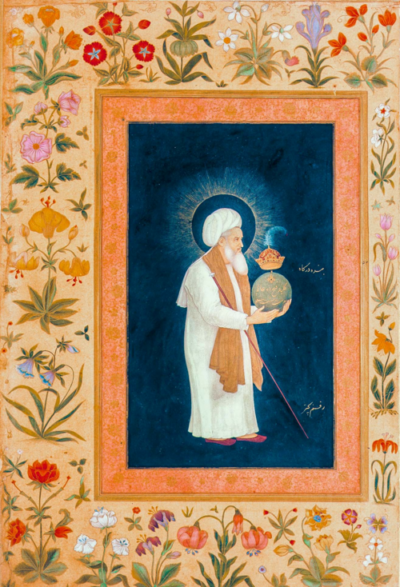
Mu'in al-Din Chishti
Mu'in al-Din Chishti was a Persian Sufi Chishtiyya order mystic. Born February 1, 1143, in Sistan and Baluchestan Province. Died March 15, 1236, in Ajmer.
Facts
10 facts · 2 confirmed by two sources · 3 cited · 5 from one source
Where this comes from
Papalocal keeps its own record. It started from these sources; what each one said is kept here as it was copied, so a change on their side never changes this page by itself. Tap one to read its version.
What Wikidata says · copied November 16, 2026 · revision 2564655006
- Described as
- Persian Sufi Chishtiyya order mystic (1143–1236)
- Other names
- Khwaja Chishti, Khwaja Muinuddin Chishti, Gharib Nawaz, Khwaja Gharib Nawaz, KGN, Moin ud Deen Chishty, Moinuddin Hassan Chishty, Muʿīnuddīn Ḥasan Cishtī Sanjarī Ajmerī, Khwaja-e-Khwajgan, Khwaja Ji, Khwaja Sahab, Sultan E Hind
- Born
- February 1, 1143 · 1 reference
- Died
- March 15, 1236 · 1 reference
- Born in
- Sistan and Baluchestan Province
- Died in
- Ajmer · 1 reference
- Buried in
- Ajmer Sharif Dargah
- Occupation
- mystic · 1 reference
- Field
- Sufism; Irfan · 1 reference
- Religion
- Sufism; Sunni Islam
- Wikipedias with a page
- 34
Wikidata item Q741545 (wikidata.org/wiki/Q741545), public domain (CC0). Copied November 16, 2026.
What Wikipedia says · copied November 16, 2026 · revision 1385017657
Mu'in al-Din Hasan Chishti Sijzi (Persian: معین الدین چشتی, romanized: Muʿīn al-Dīn Chishtī; 1 February 1143 – 15 March 1236), known reverentially as Khawaja Gharib Nawaz (Persian: خواجه غریب نواز, romanized: Khawāja Gharīb Nawāz), was a Persian Sayyid Islamic scholar and mystic from Sistan, who eventually ended up settling in the Indian subcontinent in the early 13th-century, where he promulgated the Chishtiyya order of Islamic mysticism. This particular Tariqa (order) became the dominant Islamic spiritual order in medieval India. Most of the Indian Sunni saints are Chishti in their affiliation, including Nizamuddin Awliya (d. 1325) and Amir Khusrow (d. 1325).
Having arrived in the Delhi Sultanate during the reign of the Sultan Iltutmish (d. 1236), Muʿīn al-Dīn moved from Delhi to Ajmer shortly thereafter, at which point he became increasingly influenced by the writings of the Sunni Hanbali scholar and mystic ʿAbdallāh Anṣārī (d. 1088), whose work on the lives of the early Islamic saints, the Ṭabāqāt al-ṣūfiyya, may have played a role in shaping Muʿīn al-Dīn's worldview. It was during his time in Ajmer that Muʿīn al-Dīn acquired the reputation of being a charismatic and compassionate spiritual preacher and teacher; and biographical accounts of his life written after his death report that he received the gifts of many "spiritual marvels (karāmāt), such as miraculous travel, clairvoyance, and visions of angels" in these years of his life. Muʿīn al-Dīn seems to have been unanimously regarded as a great saint after his death.
Muʿīn al-Dīn Chishtī's legacy rests primarily on his having been "one of the most outstanding figures in the annals of Islamic mysticism." Additionally, Muʿīn al-Dīn Chishtī is also notable, according to John Esposito, for having been one of the first major Islamic mystics to formally allow his followers to incorporate the "use of music" in their devotions, liturgies, and hymns to God, which he did in order to make the 'foreign' Arab faith more relatable to the indigenous peoples who had recently entered the religion.
- Born, in its opening lines
- February 1, 1143
- Died, in its opening lines
- March 15, 1236
From the Wikipedia article “Mu'in al-Din Chishti” (en.wikipedia.org/wiki/Mu'in_al-Din_Chishti), by its contributors, under CC BY-SA 4.0 (creativecommons.org/licenses/by-sa/4.0/). Copied November 16, 2026; not changed.
Confirmed Two sources agree. Cited One source, and it names where it got it. One source One source, without a reference of its own. Sources disagree The sources disagree. We show the best-supported value and keep theirs below.
