
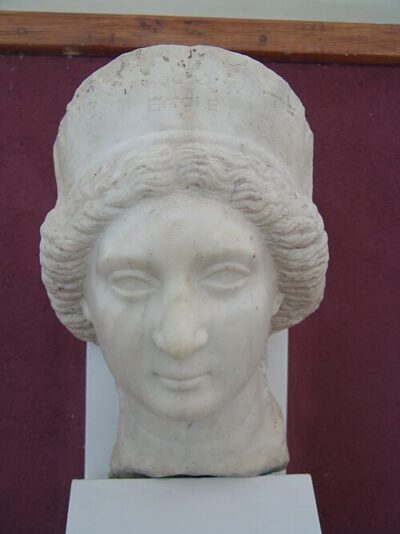
Musa of Parthia
Musa of Parthia was an Italian consort of Phraates IV. Born 46 BC, in Roman Italy. Died 1st century, in Roman Empire. Positions held include King of Kings (-2–4) and queen consort (-20–-2).
Facts
11 facts · 0 confirmed by two sources · 1 cited · 10 from one source
Where this comes from
Papalocal keeps its own record. It started from these sources; what each one said is kept here as it was copied, so a change on their side never changes this page by itself. Tap one to read its version.
What Wikidata says · copied November 16, 2026 · revision 2553935000
- Described as
- Italian consort of Phraates IV
- Other names
- Thesmusa, Thesmousa, Thermousa, Thea Mousa
- Born
- 46 BC · 1 reference
- Died
- 1st century
- Born in
- Roman Italy
- Died in
- Roman Empire · 1 reference
- Citizen of
- Parthian Empire
- Occupation
- politician; sovereign
- Positions held
- King of Kings (-2–4); queen consort (-20–-2)
- Spouse
- Phraates IV of Parthia · 1 reference
- Children
- Phraates V of Parthia · 1 reference
- Wikipedias with a page
- 38
Wikidata item Q467466 (wikidata.org/wiki/Q467466), public domain (CC0). Copied November 16, 2026.
What Wikipedia says · copied November 16, 2026 · revision 1358816565
Musa (also spelled Mousa), also known as Thea Musa, was the reigning queen of the Parthian Empire from 2 BC to 4 AD.
Originally an Italian slave-girl, Augustus gifted her to Phraates IV. She quickly became queen and a favourite of Phraates IV, giving birth to a son, Phraataces, who would later be known as Phraates V. In 2 BC, she had Phraates IV poisoned and made herself, along with Phraates V, the co-rulers of Parthia. Their reign was short-lived; they were forced to flee to Rome after being deposed by the Parthian nobility, who crowned Orodes III as king.
Musa is the first of only three women to rule as monarchs in Iranian history, the others being the two 7th-century Sasanian sisters Boran (r. 630–630, 631–632) and Azarmidokht (r. 630–631). Other female rulers, Rinnu, Ifra Hormizd and Denag, ruled only as regents of their sons, not as reigning monarchs in their own right.
From the Wikipedia article “Musa of Parthia” (en.wikipedia.org/wiki/Musa_of_Parthia), by its contributors, under CC BY-SA 4.0 (creativecommons.org/licenses/by-sa/4.0/). Copied November 16, 2026; not changed.
Confirmed Two sources agree. Cited One source, and it names where it got it. One source One source, without a reference of its own. Sources disagree The sources disagree. We show the best-supported value and keep theirs below.
