
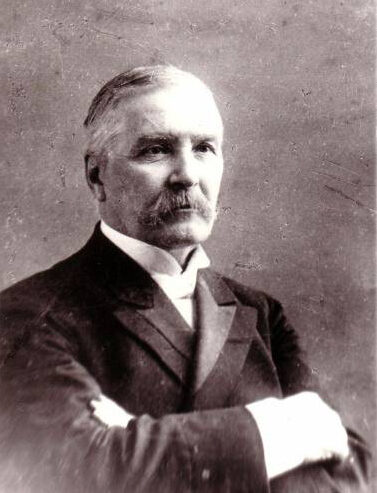
Mykola Lysenko
Mykola Lysenko was an Ukrainian composer, pianist, conductor and ethnomusicologist. Born March 10, 1842, in Hrynky. Died November 6, 1912, in Kyiv. Known for Prayer for Ukraine, Taras Bulba and Natalka Poltavka. Educated at University of Music and Theatre Leipzig and Taras Shevchenko National University of Kyiv.
Facts
44 facts · 1 confirmed by two sources · 30 cited · 12 from one source · 1 where the sources disagree
What’s different
- Born: we show March 10, 1842 (Sources disagree). Wikipedia says March 22, 1842
Where this comes from
Papalocal keeps its own record. It started from these sources; what each one said is kept here as it was copied, so a change on their side never changes this page by itself. Tap one to read its version.
What Wikidata says · copied November 16, 2026 · revision 2568780897
- Described as
- Ukrainian composer, pianist, conductor and ethnomusicologist (1842–1912)
- Other names
- Mykola Vitaliiovych Lysenko, Mykola Vitaliyovych Lysenko
- Born
- March 10, 1842 · 8 references
- Died
- November 6, 1912 · 8 references
- Born in
- Hrynky · 3 references
- Died in
- Kyiv · 1 reference
- Buried in
- Baikove Cemetery · 1 reference
- Citizen of
- Russian Empire
- Occupation
- conductor · 1 reference; classical composer · 1 reference; pianist · 2 references; music educator · 1 reference; ethnomusicologist · 2 references; composer · 2 references
- Worked for
- National University of Kharkiv; Lysenko Music and Drama School
- Education
- University of Music and Theatre Leipzig (1867–1869) · 2 references; Taras Shevchenko National University of Kyiv (1861–1864) · 4 references; National University of Kharkiv (1860–1861) · 2 references
- Member of
- Ukrainian Club · 1 reference
- Genre
- opera · 1 reference; folk music · 1 reference; art song · 1 reference; symphonic music · 1 reference
- Instrument
- piano · 1 reference; pipe organ
- Known for
- Prayer for Ukraine · 1 reference; Taras Bulba · 1 reference; Natalka Poltavka · 1 reference; Nocturne · 1 reference; Koza-Dereza · 1 reference
- Field
- music composing · 1 reference; conducting · 1 reference; music · 1 reference; composed musical work · 1 reference; music composition · 1 reference
- Spouse
- Olha Antonivna Lypska; Olga O'Connor
- Children
- Ostap Lysenko · 1 reference; Katerîna Masleannîkova; Mariana Lîsenko; Halyna Lysenko-Shylo
- Father
- Lysenko Vitaly
- Siblings
- Sofiia Starytska; Andrew Lyssenko
- Lived in
- Kyiv · 1 reference
- Wikipedias with a page
- 44
Wikidata item Q172425 (wikidata.org/wiki/Q172425), public domain (CC0). Copied November 16, 2026.
What Wikipedia says · copied November 16, 2026 · revision 1385852250
Mykola Vitaliiovych Lysenko (Ukrainian: Микола Віталійович Лисенко; 22 March 1842 – 6 November 1912) was a Ukrainian composer, pianist, conductor, and ethnomusicologist of the late Romantic period. In his time, he was the central figure of Ukrainian music, with an oeuvre that includes operas, art songs, choral works, orchestral and chamber pieces, and a wide variety of solo piano music. He is often credited with founding a national music tradition during the Ukrainian national revival, in the vein of contemporaries such as Grieg in Norway, The Five in Russia, and Smetana and Dvořák in what is now the Czech Republic.
By studying and drawing from Ukrainian folk music, promoting the use of the Ukrainian language, and separating himself from Russian culture, Lysenko's compositions form what many consider the quintessential essence of Ukrainian music. This is demonstrated in his epic opera Taras Bulba from the novella of the same name by Nikolai Gogol. The grandeur and complexity, and a libretto in Ukrainian, prevented the opera being performed during the composer's lifetime.
To promote and cultivate Ukrainian culture, Lysenko set works by many Ukrainian poets to music, especially Taras Shevchenko, to whom he was particularly devoted. His musical setting of a patriotic poem by Oleksandr Konysky, known as the "Prayer for Ukraine", has become Ukraine's spiritual anthem. Lysenko had a profound influence on later Ukrainian composers, including Stanislav Lyudkevych, Alexander Koshetz, Kyrylo Stetsenko, Yakiv Stepovy, and most importantly, Mykola Leontovych.
He is the namesake of the Mykola Lysenko International Music Competition and the Lysenko music school, which is now the Kyiv National I. K. Karpenko-Kary Theatre, Cinema and Television University. Despite his immense renown in Ukraine, Lysenko remains relatively unknown outside of his home country.
- Born, in its opening lines
- March 22, 1842
- Died, in its opening lines
- November 6, 1912
From the Wikipedia article “Mykola Lysenko” (en.wikipedia.org/wiki/Mykola_Lysenko), by its contributors, under CC BY-SA 4.0 (creativecommons.org/licenses/by-sa/4.0/). Copied November 16, 2026; not changed.
Confirmed Two sources agree. Cited One source, and it names where it got it. One source One source, without a reference of its own. Sources disagree The sources disagree. We show the best-supported value and keep theirs below.
