
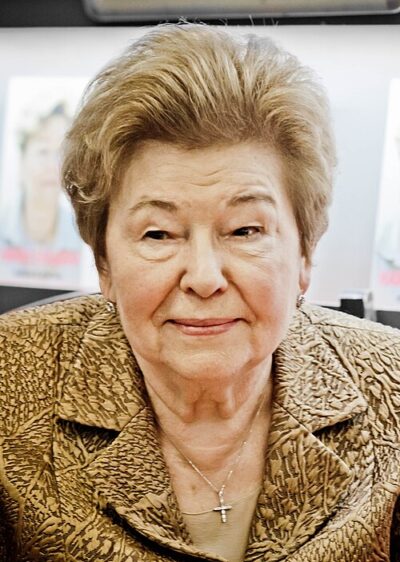
Naina Yeltsina
Naina Yeltsina is a former First Lady of Russia. Born March 14, 1932, in Τιτόβκα. Educated at Ural State Technical University and Ural Federal University. Awards include Order of Saint Catherine the Great Martyr.
Facts
18 facts · 1 confirmed by two sources · 3 cited · 14 from one source
Where this comes from
Papalocal keeps its own record. It started from these sources; what each one said is kept here as it was copied, so a change on their side never changes this page by itself. Tap one to read its version.
What Wikidata says · copied November 16, 2026 · revision 2565468916
- Described as
- former First Lady of Russia
- Born
- March 14, 1932
- Born in
- Τιτόβκα
- Name at birth
- Анастасия Иосифовна Гирина
- Citizen of
- Soviet Union; Russia
- Occupation
- engineer · 1 reference; civil engineer · 1 reference
- Education
- Ural State Technical University; Ural Federal University
- Awards
- Order of Saint Catherine the Great Martyr (2017) · 1 reference
- Spouse
- Boris Yeltsin (1956–2007) · 1 reference
- Children
- Tatyana Yumasheva; Elena Yeltsina
- Father
- Iosif Girin
- Mother
- Maria Girina
- Religion
- Russian Orthodox Church; Eastern Orthodoxy
- Lived in
- Moscow
- Wikipedias with a page
- 36
Wikidata item Q2498810 (wikidata.org/wiki/Q2498810), public domain (CC0). Copied November 16, 2026.
What Wikipedia says · copied November 16, 2026 · revision 1379772534
Anastasia Iosifovna "Naina" Yeltsina (Russian: Анастасия Иосифовна "Наина" Ельцина; née Girina [Гирина]; born 14 March 1932) is a Russian civil engineer and the widow of the first President of Russia, Boris Yeltsin. She was the First Lady of Russia during her husband's presidency (1991–1999).
- Born, in its opening lines
- March 14, 1932
From the Wikipedia article “Naina Yeltsina” (en.wikipedia.org/wiki/Naina_Yeltsina), by its contributors, under CC BY-SA 4.0 (creativecommons.org/licenses/by-sa/4.0/). Copied November 16, 2026; not changed.
Confirmed Two sources agree. Cited One source, and it names where it got it. One source One source, without a reference of its own. Sources disagree The sources disagree. We show the best-supported value and keep theirs below.
